
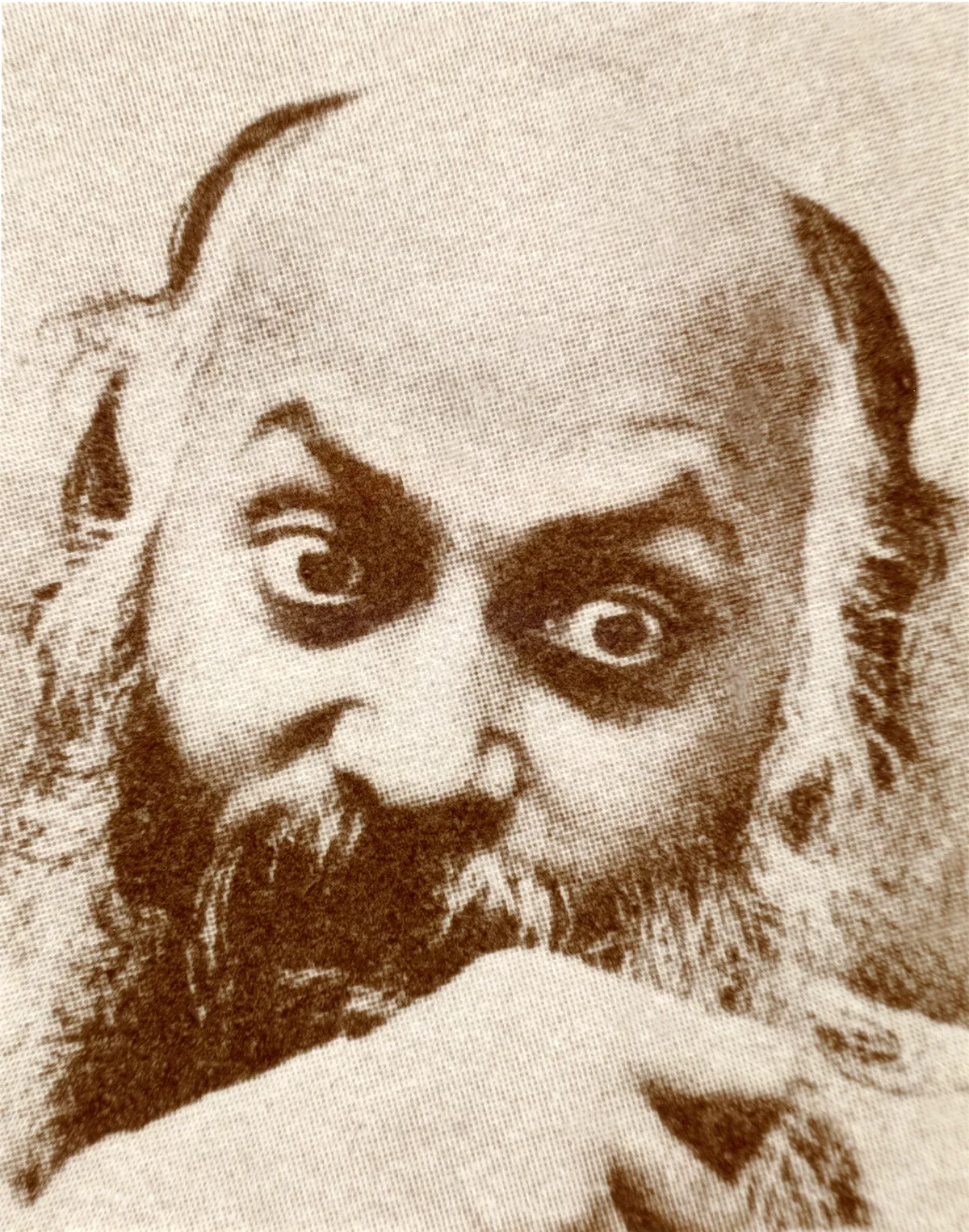
According to Osho, truth, beauty and goodness are not God’s inherent qualities; they are human ways of experiencing the divine. The infinite is frameless, but our mind frames it through three windows: intellect perceives truth (jnana), heart perceives beauty (bhakti), and action perceives goodness (karma). Thus these categories reflect our limitations, not God’s nature; without us, divinity would be beyond such attributes.
God isn’t made of truth, beauty, or goodness—those are just the different ways our minds look at the same limitless mystery.
From the Discourses
Passages where Osho speaks to this question — each links to the complete discourse.
In indian philosophy, the nature of ultimate truth has been described as truth, satyam, beauty, sundram and goodness, shivam. Are these the characteristics of god?
We do not know if animals perceive the divine, we do not know how they perceive things at all, but one thing is certain: they will not perceive the divine in human terms. If they perceive the divine at all, they will feel and perceive it in quite a different way from us. The qualities they perceive will not be the same as they are for us. When a person is predominantly intellectual, he cannot conceive of how you can say God is beautiful. The very concept is absolutely foreign to his mind. And a poet cannot conceive that truth can mean anything except beauty. It cannot mean anything else to him. Truth is beauty; all else is simply intellectual. For a poet, for a painter, for a man who perceives the world in terms of the heart, truth is a naked thing without beauty. It is just an intellectual…
Please talk to us more about the holy trinity -- truth, beauty and love.
The first thing: you have inserted "love" on your own; it is not part of the holy trinity. I have said, satyam -- satyam means truth; shivam -- shivam means goodness; sundram -- sundram means beauty. Don't try to cheat me; it is impossible! Love simply happens. The man of truth cannot but be loving. The man who understands beauty cannot but be loving. The man who lives all that is good cannot but be loving. Hence, love has not been included in the trinity; it is a by-product. These three things have been included in the trinity because they are independent of each other; they are not by-products. It is possible that the man of truth may not have any sense for beauty; it is possible that the man of sensitivity for beauty may not have any regard for truth. It is possible that a man may respect beauty…
Truth cannot be created. Reproduction is biological and natural, and creativity is imagination. Discovering is simply uncovering that which is already there, that which is already the case. And to know the truth is to know all that is worth knowing. Truth liberates it liberates one from darkness, from misery, from hell, and opens the doors of paradise. Anadi means beginningless. Life is eternal; there is no beginning, no end. We begin at the time of birth and we end at the time of death. That means we have not yet known our real life. We have known only the container, not the content. The container changes; it becomes old and it needs a change. The body is only a container, so you can use it for seventy, eighty, ninety or one hundred years, then you have to change the house.
The experience of bliss will give you for the first time, a beauty that is indestructible. Not only that, it will give you for the first time, an insight into the very phenomenon of beauty. Not only does it make you beautiful, it suddenly transforms the whole world. The whole world becomes beautiful because the world reflects you, it is a mirror. If you are carrying ugly things inside you those ugly things are bound to be reflected. From the trees, from the mountains, from the rivers, you cannot get more than that which you put in. And you don't have anything beautiful to put in. That's why people live such monotonous, bored lives.
Beloved Osho, is there any definition of the ultimate experience other than satyam-shivam-sundram -- "truth, godliness and beauty"?
But in the first definition the word sundram, beauty, gives a sense that your eyes are capable of seeing it; perhaps your hands can feel it, perhaps your ears can hear the beautiful music in it. The word 'beauty' functions almost as a bridge. In the second definition there is no bridge, but a quantum leap. You simply jump from the mind to no-mind. Only no-mind can be aware of truth; only no-mind can be filled with consciousness; only no-mind can be showered with thousands of flowers of bliss. Nothing relates to your ordinary world. In this way it is purer. Both have their own pros and cons, and I want you to be aware of them. But remember: don't choose the definition. First choose the experience, then the definition will come on its own accord. If you choose the definition first, it may not fit your individuality and the…