
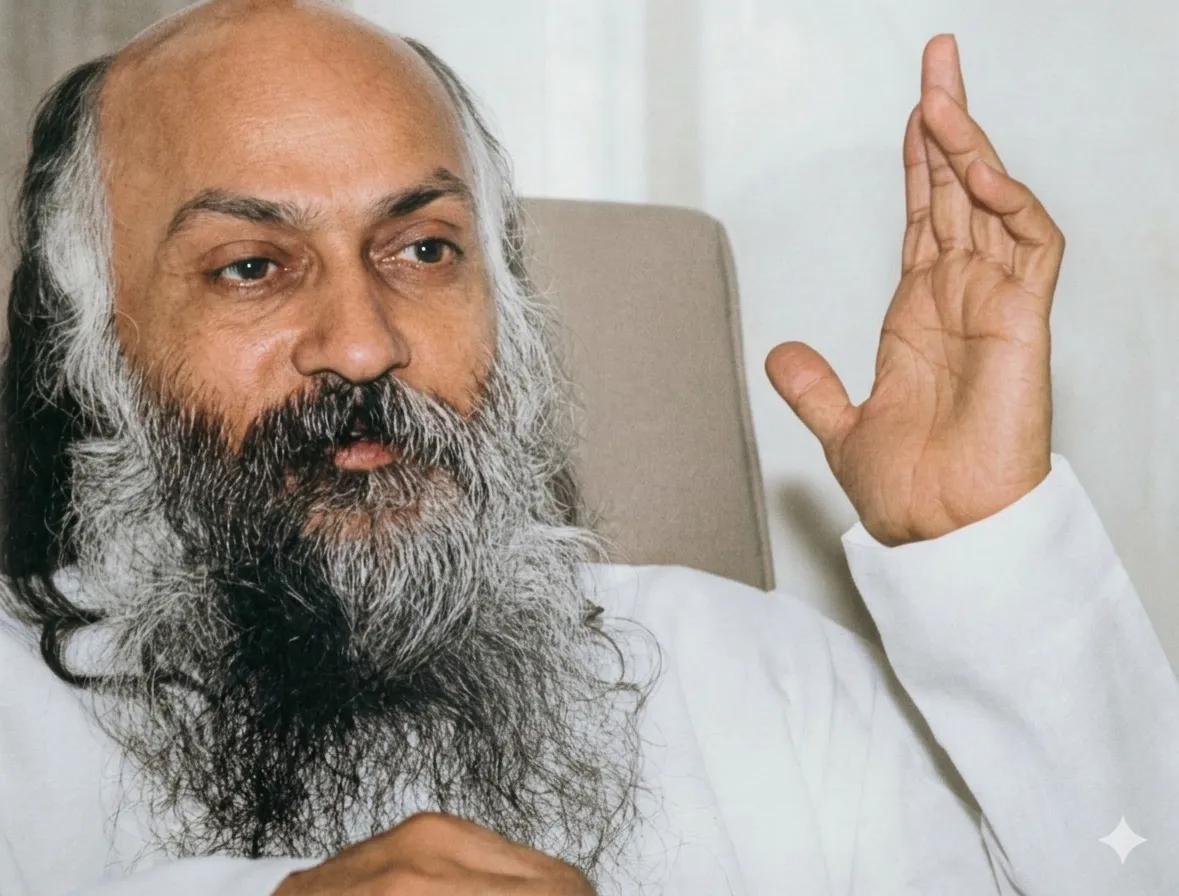
Osho's original Hindi beside Osho Live's English translation, matched passage by passage.
न सुख है, न इतना दुख है; और जितना है वह बहुत ध्यान देने योग्य नहीं है। लेकिन हम उसे बहुत बड़ा करके देखते हैं। दोनों को जाग कर देखिए, तो दोनों खत्म हो जाते हैं।
There is neither happiness, nor that much sorrow; and whatever there is is hardly worth much attention. Yet we enlarge it enormously. See both with awareness — and both disappear.
हां।
Yes.
...और लाओत्सु एक जंगल में एक पहाड़ी के पास बैठा है, धूल में बैठा हुआ है। कनफ्यूशियस मिलने आया। तो कनफ्यूशियस से उसने यह भी नहीं कहा कि बैठ जा कनफ्यूशियस। तो कनफ्यूशियस ने कहा: कम से कम इतना शिष्टाचार तो अब रखिए कि मुझसे कहिए कि मैं बैठ जाऊं। उसने कहा कि मैं समझता था कि तू बूढ़ा हो गया तुझे अक्ल आ गई होगी, तू अभी ये रंग-बिरंगे कपड़े पहन कर और नवाब बना हुआ है। लाओत्सु ने उससे कहा, मैं समझता था तू कि अब बूढ़ा हो गया, तुझे कुछ अक्ल आ गई होगी, और अभी तू ये अपने मंत्री-वंत्री के कपड़े पहन कर अभी तक बच्चा बना हुआ है। इसलिए फिर मैंने कहा, क्या कहना इससे बैठना।
...and Lao Tzu is sitting in a forest near a hill, sitting in the dust. Confucius came to meet him. Lao Tzu didn’t even say to Confucius, “Sit down.” So Confucius said, “At least keep this much courtesy—say to me that I should sit.” He said, “I thought you had grown old and come to your senses; but you are still wearing these gaudy clothes and playing the grandee.” Lao Tzu said to him, “I had thought that now you are old you would have gained some sense—and yet you still wear your ministerial attire and remain a child. So then why should I say anything? What is the point of telling such a man to sit?”
फिर वह कनफ्यूशियस कहने लगा कि आपका क्या खयाल है, क्या नियम होने चाहिए?
Then that Confucius began to ask, “What do you think—what rules should there be?”
तो उसने कहा कि जब तक नियम होंगे, तब तक आदमी झूठा होगा। हम तो उस आदमी को चाहते हैं जिसका कोई नियम नहीं, जो स्वभाव है।
So he said, “As long as there are rules, man will remain false. We want the man who has no rules, who is pure nature.”
(प्रश्न का ध्वनि-मुद्रण स्पष्ट नहीं है।)
(The audio recording of the question is unclear.)
वह वैसा ही है जैसा है। उसके रिफरेंसेस फिर बहुत हैं। च्वांगत्सु उसका शिष्य, उसके बहुत रिफरेंस हैं। और फिर तो पूरे चीन में फैले हुए हैं। और सच बात यह है कि इन सबके हिस्टारिक होने का कोई मतलब नहीं है इन सारी बातों का। लेकिन वह ऐसा फिगर है लाओत्सु कि फिर उसके बाबत कथाएं जोड़ी जाती रहीं, जोड़ी जाती रहीं। और वह फिर एक, जिसको कहें मिथ बन गया। वह उसका अब कोई यह सवाल नहीं है। यह कोई सवाल नहीं है!
He is just as he is. There are many references to him. Chuang Tzu, his disciple—there are many references to him. And then they spread all over China. And the truth is that whether these things are historical has no meaning for such matters. But Lao Tzu is such a figure that stories went on being added about him, added and added. And he became what you would call a myth. That is no issue about him now. That is no issue at all!
प्रबुद्ध कात्यायन एक व्यक्ति था, अजित केशकंबली एक व्यक्ति था, मक्खली गोशाल। गोशालक का तो बहुत उल्लेख महावीर के उसमें आता है। ये आठ लोग थे एक साथ, और बिहार में ही थे आठों के आठों। और उधर चीन में लाओत्सु, कनफ्यूशियस, च्वांगत्सु, वह सारे लोग थे। और यह सारी दुनिया में बेल्ट की तरह एक लहर उठी। और उस पीक पर जिन लोगों ने छुआ है, उनका फिर मुकाबला नहीं हुआ पीछे। वे बहुत अदभुत लोग हुए।
तो ह्यूमन कांशसनेस में कभी लहरें आती हैं। हमको ऐसा लगता न ऊपर से देखने में कि मैं अलग, आप अलग, हम अलग, मगर हमारी कांशसनेस इतनी इकट्ठी है कि जब लहर आती है--मुझमें जब लहर आएगी, तो मेरे साथ बहुत से लोगों को छू लेगी, जिनका हमें पता भी नहीं चलेगा।
There was a man named Prabuddha Katyayana, a man named Ajita Kesakambali, and Makkhali Goshal. Of Goshalak there is much mention in the accounts of Mahavira. There were eight such people together, and all eight were in Bihar. And over in China were Lao Tzu, Confucius, Chuang Tzu—all those figures. Across the whole world a wave rose like a belt. And those who touched that peak—no one later could match them. They were very extraordinary people. So in human consciousness waves do come. It seems to us, from the surface, that I am separate, you are separate, we are separate; but our consciousness is so interwoven that when a wave comes—when a wave arises in me—it will at the same time touch many others, whom we may never even know about.
अनेक लोग। अनेक लोग। अनेक लोग। असल में बताना एक बात है और जानना बिलकुल दूसरी बात है।
बुद्ध से किसी ने पूछा, बुद्ध के साथ दस हजार भिक्षु चलते थे। किसी ने बुद्ध से पूछा कि आप इतने दिन से सिखा रहे हैं तीस वर्षों से, ये दस हजार भिक्षु सुनते हैं, इनमें से कुछ आप जैसे हुए कि नहीं?
बुद्ध ने कहा: बहुत।
तो उसने कहा: लेकिन उनका कोई पता नहीं चलता।
तो बुद्ध ने कहा: वे चुप हैं, मैं बोलता हूं।
और यही फर्क जैनों में--तीर्थंकर और केवली का फर्क है। तीर्थंकर भी केवली है, लेकिन तीर्थंकर टीचर भी है साथ में। और केवली सिर्फ केवली है, वह कुछ बोलता नहीं है, वह टीचर नहीं है। बस इतना ही फर्क है। महावीर जैसे बहुत लोग हुए हैं, लेकिन महावीर तीर्थंकर हैं।
Many people. Many people. Many people. In truth, to tell is one thing, and to know is an altogether different thing. Someone asked Buddha—ten thousand bhikkhus walked with him. Someone asked Buddha: You have been teaching for thirty years; these ten thousand monks listen—have any among them become like you or not? Buddha said: Many. He said: But one hears nothing of them. Buddha replied: They are silent; I speak. And this is exactly the difference in Jainism between a Tirthankara and a Kevali. A Tirthankara is also a Kevali, but a Tirthankara is a teacher as well. A Kevali is simply a Kevali; he does not speak, he is not a teacher. That is the only difference. Many like Mahavira have been, but Mahavira is a Tirthankara.
हमेशा हैं। लेकिन होता क्या है न, कि अब जैसे कि एक अगर मीरा जैसी किसी मैया को ज्ञान मिल जाए, तो वह गाएगी, नाचेगी और प्रकट करेगी, क्योंकि वह जो ट्रैनिंग है उसके माइंड की वह नाचने-गाने की है, वह ज्ञान उसका नाच-गाने से ही निकलेगा पीछे।
अगर कोई आदमी टीचर है, और माइंड उसका टीचर का है, और अगर वह ज्ञान को उपलब्ध हो जाए, तो वह ज्ञान टीचिंग्स से बहेगा। लेकिन एक आदमी टीचर नहीं है, एक आदमी नाचने वाला नहीं है, एक आदमी कवि नहीं है और वह ज्ञान को उपलब्ध हो जाए, तो उसका ज्ञान रुका रह जाए, उसके बहने का कोई निकास नहीं है। तो अनेक लोग चुप रह जाते हैं।
There always are. But what happens is this: if a woman like Meera were to attain enlightenment, she would sing, dance, and reveal it, because her mind has been trained in singing and dancing; her realization will naturally express itself through song and dance. If someone is a teacher, with a teacher’s mind, and he comes to realization, that knowing will flow as teachings. But if a person is not a teacher, not a dancer, not a poet, and he comes to realization, his knowing remains dammed up; there is no outlet for its flow. So many people remain silent.
नहीं-नहीं, मन का सवाल नहीं है, व्यक्त करने का माध्यम नहीं होता। शक्ति आ जाएगी, वह सब उसका मानसिक बल है, अपना है।
No, no—it’s not a matter of the mind; the medium for expression is not there. The energy will come; all that is his own mental force, his own.
भगवान का कुछ लेना-देना नहीं है उसका। वह तुममें पैदा हो जाएगी, बिलकुल पैदा हो जाएगी। और उसी से ऐसा लगने लगेगा कि भगवान से शक्ति मिल रही है हमको। वह तुम्हारी अपनी शक्ति है, तुम्हारा अपना विल फोर्स है।
God has nothing to do with it. It will arise within you—absolutely it will. And from that, it will seem as if we are receiving power from God. But it is your own power, your own will-force.
मेरी बात समझ लीजिए।
संयम करने को मैं चारित्र्य नहीं कहता हूं। और जो स्त्री के सामने देखने से डरता है वह चरित्रहीन है।
Understand me well. I do not call self-restraint character. And one who is afraid to meet a woman’s gaze is without character.
चरित्रहीनता है। चरित्रहीनता है। इतना भय किससे? इतना भय किस बात से?
It is characterlessness. It is characterlessness. So much fear—of whom? So much fear—of what?
कोई नीचे नहीं जा रहा है।
(प्रश्न का ध्वनि-मुद्रण स्पष्ट नहीं है।)
साइकोलॉजी है। साइकोलॉजी है। जागरूक आदमी जिस तरह से जीता है, वह चरित्र है; और सोया हुआ आदमी जिस तरह से जीता है, वह चरित्रहीनता है। जागरूक आदमी जो भी करेगा, वह चरित्र है।
इसलिए असली सवाल भीतर जागे हुए होने का है।
तो जागा हुआ आदमी न स्त्री से डरता है, न भागता है, न स्त्री का पीछा करता है। वह सोए हुए आदमी के दोनों लक्षण हैं--सोया हुआ आदमी या तो स्त्री का पीछा करेगा, और या स्त्री से भागेगा। वह दोनों हालत में स्त्री को मानता है।
No one is going down. (The audio recording of the question is not clear.) It’s psychology. It’s psychology. The way an awakened person lives—that is character; and the way a sleeping person lives—that is characterlessness. Whatever the awakened person does is character. Therefore the real issue is to be awakened within. So an awakened person neither fears woman, nor runs from her, nor chases her. Those are both signs of the sleeping person—the sleeping person will either chase a woman or run away from her. In both cases he gives the woman importance.
हां, बिलकुल आते हुए मालूम पड़ेंगे।
Yes, they will indeed seem to be coming in.
नहीं, वह कल्पना भी नहीं है। वह कल्पना भी नहीं है। वह असल में, हमारी जो इंद्रियां हैं, उनके बहुत सूक्ष्म अनुभव संगृहीत होते हैं। जैसे, आंख के स्नायुओं में प्रकाश के सूक्ष्म अनुभव संगृहीत हो जाते हैं। तो जैसे पीछे के स्नायु रिलैक्स होंगे, वे सूक्ष्म बिंदु प्रकाश के वहां से रिलीज होंगे। कान के अनुभव, कान के, अब उसमें, एक तो कान यहां ऊपर दिखाई पड़ रहा है, यह असली कान नहीं है। असली कान तो भीतर का यंत्र है जो सूक्ष्म इंद्रिय है। उसमें ध्वनि के बहुत से अनुभव संगृहीत हैं। सूक्ष्मतम तरंगें संगृहीत हो गई हैं। तो जब वे रिलैक्स होंगी, तो बहुत ध्वनियां बजेंगी भीतर। जिसको कि साधु-संन्यासी समझते हैं कि अनहद नाद हो रहा है। कुछ नहीं हो रहा है। वे जो कान के सूक्ष्मतम संगृहीत अनुभव हैं, वे संगृहीत अनुभव रिलीज हो रहे हैं।
No, it is not imagination. Not even imagination. In fact, the very subtle impressions of our senses get stored. For example, in the optic nerves, subtle impressions of light are stored. So as the nerves at the back relax, those subtle points of light are released from there. As for the ear—now, the ear you see up here is not the real ear. The real ear is the inner mechanism, the subtle sense. In it, many impressions of sound are stored; the subtlest vibrations have been stored. So when they relax, many sounds will resound within—which sadhus and sannyasins take to be the Anahad Nada. Nothing is happening. Those subtlest stored impressions of the ear are being released.
हूं-हूं, बस उसको सबको देखना है। प्रकाश के बिंदु हों, ध्वनियां हों, सुगंध आ सकती है।
Mm-hmm. Just witness it all. Whether points of light appear, or sounds, even a fragrance may arise.
हां, वह तो नाक के अनुभव हैं सूक्ष्म। बहुत अदभुत सुगंधें आ सकती हैं।
Yes—those are subtle experiences of the nose. Very wondrous fragrances can arise.
हां, वे तो जब जैसे इंद्रियां भीतर से रिलैक्स होना शुरू होती हैं, तो कई अनुभव रिलीज होते हैं। जिनका आपको पता भी नहीं कि ये अनुभव भी हमारे पास हैं। तो उन सबको देखना है। उसमें कुछ मूल्यवान नहीं है मामला। वह कुछ ऐसा नहीं है कि कोई बहुत ऊंचा। लेकिन एक बात तय है कि वह ध्यान गहरा जाता है तभी यह सब होना शुरू होता है।
Yes. When the senses begin to relax from within, many experiences are released—ones you didn’t even know you were carrying. Simply watch them all. There’s nothing particularly valuable in them; it’s not something very high. But one thing is certain: only when meditation goes deeper do these things begin to happen.
हां, उनको बढ़ा कर देखें, शांति से देखते रहें। वे धीरे-धीरे, धीरे-धीरे विलीन हो जाएंगे।
Yes, magnify them; keep watching calmly. Slowly, slowly—slowly, slowly they will dissolve.
जब वह आए, तो उसके प्रति जागरूक हों। उससे बहुत फायदा होगा। उससे बहुत फायदा होगा!
When it comes, be aware of it. It will be very beneficial. It will be very beneficial!
मैं समझ गया। सन्नाटे की आवाज आ रही है।
I understand. The sound of silence is coming.
सब हो सकते हैं। सब मानसिकता है।
Anything is possible. It's all a matter of the mind.
जैसे कि शरीर है हमारा, हमें अंदाज नहीं है। राममूर्ति है, उसने शरीर की कुछ शक्तियां जगा ली हैं, जो हमारे शरीर में भी हैं। राममूर्ति के पास कोई विशेष शरीर नहीं है, शरीर तो यही है, स्ट्रक्चर यही है, सब मामला यही है। ये ही फेफड़े हैं, यही हार्ट है, ये ही हाथ हैं, ये ही पैर हैं। लेकिन निरंतर चेष्टा करके इन सबकी शक्तियां सूक्ष्मतम बढ़ा ली हैं। तो वह कार के नीचे लेट जाता है, छाती पर से कार निकल जाती है। और वह हाथी को छाती पर खड़ा कर सकता है। और वह ट्रेन के इंजन को भी पीछे पकड़ ले, तो आगे बढ़ना मुश्किल है। यह शरीर की सूक्ष्मतम शक्तियों का विकास है।
Take our body, for example—we have no real idea of it. There is Ramamurti; he has awakened certain powers of the body that are in our bodies too. Ramamurti does not have any special body—the body is the same, the structure is the same, everything is the same. The same lungs, the same heart, the same hands, the same feet. But through continuous effort he has refined these powers to a very subtle degree. So he lies down under a car and the car passes over his chest. And he can have an elephant stand on his chest. And if he holds a train engine from behind, it becomes difficult for it to move forward. This is the development of the subtlest powers of the body.
हां। तो इसी तरह माइंड की सूक्ष्म शक्तियों की कसरतें हैं, और उनसे सिद्धियां हो जाती हैं। माइंड की सूक्ष्म शक्तियों की कसरतें हैं।
Yes. In the same way, there are exercises for the subtle powers of the mind, and through them siddhis happen. There are exercises for the subtle powers of the mind.
हां-हां, यह बिलकुल, इसमें जरा भी कठिनाई नहीं है। जरा भी कठिनाई नहीं है। बल्कि शरीर को राममूर्ति जैसा बनाना थोड़ा कठिन मामला है। क्योंकि शरीर बहुत स्थूल माध्यम है। उसके साथ ज्यादा मेहनत करनी पड़ती है। माइंड बहुत सूक्ष्म माध्यम है। उसके साथ कम मेहनत करनी पड़ती है।
Yes, yes—absolutely; there is not the slightest difficulty in it. Not the slightest difficulty. In fact, making the body like Ramamurti’s is a bit more difficult. Because the body is a very gross medium. With it you have to work harder. The mind is a very subtle medium. With it you have to work less.
चंचल उसकी शक्ति है। चंचल होना उसकी शक्ति है। चंचल न हो, तो तुम बुद्धू हो गए।
Its restlessness is its power. To be restless is its strength. If it were not restless, you would have become a simpleton.
बिलकुल स्वभाव है।
Absolutely—it is its very nature.
और चंचलता उसकी शक्ति है। अगर वह चंचल न रहे, तो तुम डेड हो गए। ईडियट का चंचल नहीं रहता, पता है? जितना बुद्धिमान आदमी, उतना चंचल मन होता है। वह चंचलता तो उसकी गति है, डाइनामिज्म है उसके भीतर।
And its playfulness is its strength. If it were not playful, you’d be dead. An idiot’s mind is not playful, you know? The more intelligent a person, the more playful the mind. That playfulness is its movement, the dynamism within.
हां। चंचलता को रोक कर या चंचलता को एक ही बिंदु पर लगा कर केंद्रित करते हैं--वह चंचलता ही है--वह उसमें चंचलता में फर्क नहीं पड़ता।
Yes. Whether you restrain the restlessness or fix it on a single point and concentrate it—it is still restlessness—there is no change in the restlessness itself.
जैसे कह रहा: राम, राम, राम, राम--माइंड का कूदना जारी है। अगर राम, कृष्ण, बुद्ध, महावीर ऐसा कहे, तो हमको लगेगा कि बदल रहा है। वह कहता, राम, राम, राम, तो हमको लग रहा बदल नहीं रहा। लेकिन बदल रहा है पूरे वक्त। एक राम से दूसरे राम पर जाने में उतनी ही छलांग है जितनी राम से बुद्ध पर जाने में, जंप है वह उतना ही है, गैप जो है वह उतना ही है। लेकिन वह एक ही शब्द की वजह से एक ही जगह कूद रहा है, जगह नहीं बदल रहा है, कुलान जारी है।
तो माइंड तो पूरे वक्त ही कूदता है। जब तक है, तब तक कूदता ही है। तो अगर उसको एक जगह कुदाया जाए, तो उस जगह की शक्तियां जगनी शुरू हो जाती हैं जिस जगह कूदा है। उसके सेंटर्स हैं सब, सारी शक्तियों के।...
For example, repeating: Ram, Ram, Ram, Ram—the mind’s jumping continues. If it were to say Ram, Krishna, Buddha, Mahavira, it would seem to us that it is changing. When it says Ram, Ram, Ram, it appears to us that nothing is changing. But it is changing the whole time. The leap from one “Ram” to the next “Ram” is exactly as big as the leap from “Ram” to “Buddha”; the jump is the same, the gap is the same. Only, because it is the same word, it keeps jumping in the same spot; the place does not change, the hopping continues. So the mind keeps jumping all the time. As long as it exists, it keeps jumping. If you make it jump in one place, then the energies of that place begin to awaken—the very spot where it is made to jump. There are centers for all this—for all the energies...