
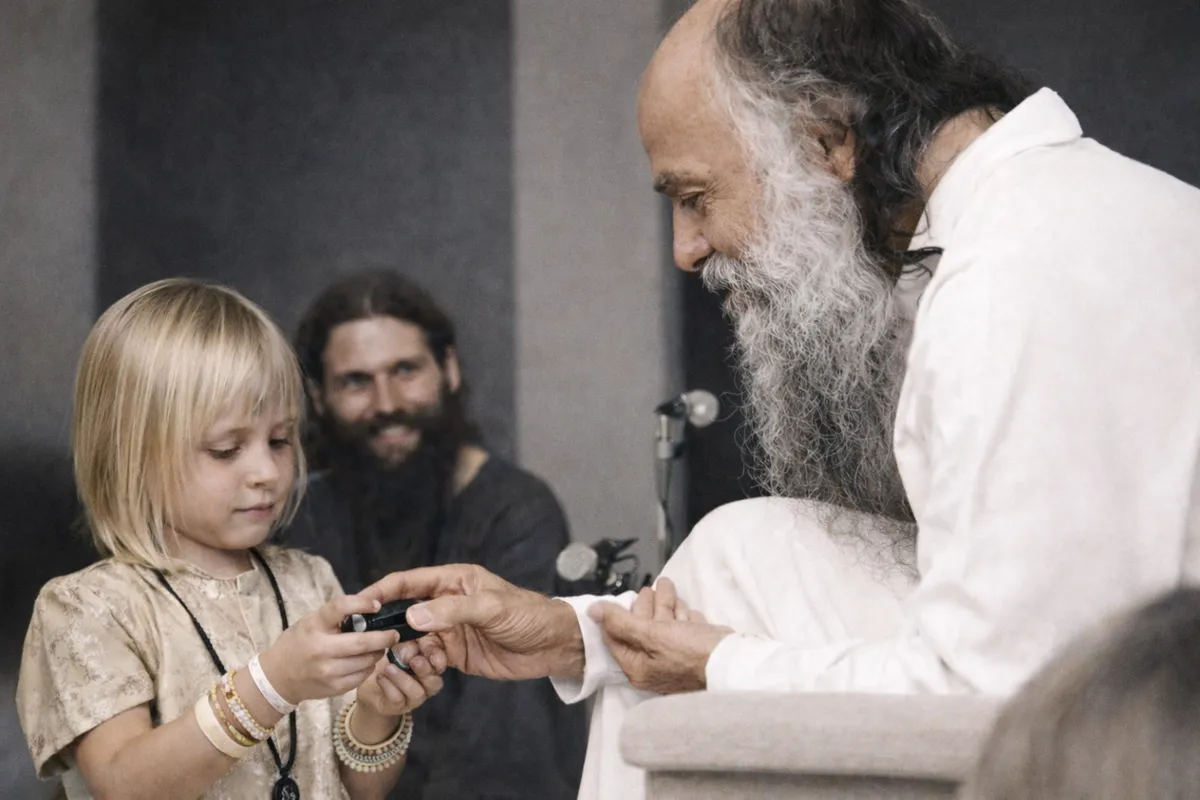
Osho's perspective on Vivek
When Osho Spoke About Vivek
Passages from the discourses where this theme comes alive.
Osho, is it necessary to qualify awakening with the adjective “discernment” (vivek), or not? Because perhaps there could be an undiscerning awakening as well.
No, an undiscerning awakening is not possible. Awakening is intrinsically discerning. In fact, awakening and vivek mean the same. Just as we cannot speak of a living corpse, we cannot speak of an undiscerning awakening; they are opposing terms. Vivek means awakening. What commonly comes to mind with the word vivek is discrimination—hence your question: the idea of sorting out, “this is wrong and this is right.” But so long as you are making such discriminations—so long as you are saying, “let me take this as right and that as wrong”—you do not yet have vivek. Up to that point you have merely picked up what the truly discerning have lived as right and what they have regarded as wrong. The day real vivek dawns, there is no need to decide, “this is wrong, this is right.” What is right simply happens; what is wrong does not happen. From one…
प्रश्न: ओशो, जागरण के साथ विशेषण विवेक का लगाना जरूरी है अथवा नहीं? क्योंकि अविवेकपूर्ण भी जागरण हो सकता है।
… विवेक यानी जागरण। विवेक से जो आम खयाल पैदा होता है, वह होता है डिस्क्रिमिनेशन का। इसलिए आप कह रहे हैं। विवेक से आम खयाल होता है कि यह गलत है और यह सही है, ऐसा डिस्क्रिमिनेशन करने का। लेकिन ऐसा डिस्क्रिमिनेशन आप जब तक करते हैं, जब तक आप कहते हैं कि यह ठीक मानूं, यह गलत मानूं, तब तक आपको विवेक नहीं है। तब तक विवेकशील लोगों ने जिसको ठीक जीया है और जिसको उन्होंने गलत माना है, वह आपने पकड़ लिया है। जिस दिन आपका विवेक होगा, उस दिन यह तय नहीं करना पड़ता, यह गलत है, यह सही है। जो सही है, वह होता है; जो गलत है, वह नहीं होता। जो सही है, वही होता है जागे हुए व्यक्ति से। …
Ordinarily people think anger is sin because it hurts others. Not necessarily. If the other is a Buddha, no matter how much you rage, he will not be hurt. Yet anger will still be sin—whether it hurts a Buddha or not. Anger is sin because it hurts you. Hurting the other is incidental, it may happen, but it is not the point. The important thing is that you are hurt—you become disordered within, agitated. You lose inner peace; the mirror within becomes clouded. And if you are continually in anger, greed and attachment, your inner lake never gets the chance to become still—it stays in storm. Then you gradually forget that beneath the waves the ocean is hidden, because there is no occasion to see it. Only when all waves fall asleep—when not a single ripple remains—will your ocean be revealed to you.
आमतौर से लोग सोचते हैं कि क्रोध इसलिए पाप है, इससे दूसरों को चोट पहुंचती है। नहीं, यह जरूरी नहीं है कि दूसरे को चोट पहुंचे; क्योंकि दूसरा अगर बुद्ध हो तो तुम कितना ही क्रोध करो, उसको चोट न पहुंचेगी। फिर भी क्रोध तो पाप रहेगा ही--चाहे चोट बुद्ध को पहुंचे या न पहुंचे। नहीं, क्रोध पाप है, क्योंकि उससे तुम्हें चोट पहुंचती है। दूसरे को चोट तो अनुषांगिक है, पहुंच सकती है, मगर वह महत्वपूर्ण नहीं है। महत्वपूर्ण यही है कि तुम्हें चोट पहुंचती है; तुम भीतर अस्त-व्यस्त हो जाते हो, आंदोलित हो जाते हो। तुम भीतर की शांति खो देते हो, भीतर का दर्पण धुंधला हो जाता है। और अगर सतत तुम क्रोध, लोभ और मोह में पड़े हो, तो तुम्हारे भीतर की झील को शांत होने का अवसर ही नहीं मिलता, वह हमेशा तूफान में ही बनी रहती है। तब तुम धीरे-धीरे भूल ही जाते हो कि इन लहरों के नीचे सागर छिपा है, क्योंकि उसको देखने का मौका ही नहीं आ पाता। जब सब लहरें सो जाएं, जब एक भी लहर न हो, तब तुम्हारा सागर तुम्हें प्रतीत होगा।
But the discipline that comes from within — based on these three formulas, where vivek awakens — makes the personality beautiful, fills the life-breath with music. Then a spontaneous conduct is born. Moment to moment we live in awareness, with vivek; and only what is right happens through us. The unrighteous does not happen. The inauspicious needs no suppression; the auspicious needs no cultivation. The auspicious comes; the inauspicious does not arise. One small story, then I will complete. And then we will sit for meditation. A prince took initiation with Buddha. The very next day Buddha sent him for alms to the house of a laywoman. On the way and returning, two or three events happened that disturbed him. On the way he thought: ‘Foods I love will no longer be available.’ But at the laywoman’s house, he found on the plate exactly the foods he loved.
तीसरा सूत्र है: अमूर्च्छित जीवन-व्यवहार। अमूर्च्छित जीवन-व्यवहार तीसरा सूत्र है। पहले दो सूत्र मैंने कहे: संदेह की भूमि, आत्म-निरीक्षण की खाद और अमूर्च्छित जीवन-व्यवहार की वर्षा। अगर ये तीन बातें जीवन में हों, तो विवेक के बीज सबके भीतर मौजूद हैं, वे अंकुरित हो जाएंगे। और विवेक जाग्रत हो जाए, तो एक आत्मानुशासन पैदा होता है, एक डिसिप्लिन पैदा होती है, एक अनुशासन पैदा होता है जो स्वयं के भीतर से आता है, बाहर से नहीं। एक अनुशासन है जो बाहर से आता है, वह झूठा है। एक अनुशासन है जो भीतर से जगता है, एक आचरण है जो भीतर से जगता है, वह अदभुत है, उसका सौंदर्य अदभुत है। जो अनुशासन बाहर से आता है, वह कुरूप कर देता है व्यक्तित्व को, क्रिपिल्ड कर देता है, पंगु कर देता है। उससे ज्यादा अग्लीनेस और कुछ भी नहीं है, उससे ज्यादा कुरूप स्थिति और कोई भी नहीं है। …
Third, remember: if you try to organize things on the same plane, repression will enter your life. The whole life will become poisoned. But if you awaken the power of the higher plane, there is no need for repression. In the presence of the higher power, the lower becomes humble, it bows down. There is mind, and all difficulty is of the mind. People come to me and ask: how to get rid of this mind? But whatever methods they adopt to get rid of mind are all activities of mind. To get rid of mind they go to temples. The temple too is mind’s play. To get rid of mind they begin reading scriptures. Those scriptures are mind’s creations. To be free of mind they begin chanting mantras. The chanting too remains within mind’s circumference. They count on beads. They take vows. They swear oaths.
तीसरी बात स्मरण रखें कि अगर आप उसी तल पर व्यवस्था जुटाने की कोशिश करेंगे, तो आपके जीवन में दमन, रिप्रेशन हो जाएगा। और सारी जिंदगी विषाक्त हो जाएगी। लेकिन अगर दूसरे तल को आप सजग करते हैं, तो दमन की कोई भी जरूरत नहीं है। दूसरे तल की शक्ति के मौजूद होते ही पहला तल विनत हो जाता है, झुक जाता है। मन है और मन की ही सारी कठिनाई है। लोग मेरे पास आते हैं, वे कहते हैं, इस मन से कैसे छुटकारा हो? लेकिन मन से छुटकारे का वे जो भी उपाय करते हैं, वह भी सब मन का ही काम है। मन से छुटकारे के लिए मंदिर चले जाते हैं। वह मंदिर भी मन का बनाया हुआ खेल है। मन से छुटकारे के लिए शास्त्र पढ़ने लगते हैं। वे शास्त्र भी मन से निर्मित हुए हैं। मन से छूटने के लिए मंत्रोच्चार करने लगते हैं। वे मंत्रोच्चार मन की ही परिधि में हैं। माला जपने लगते हैं। व्रत-नियम ले लेते हैं। कसमें खा लेते हैं। वे कसमें भी मन ही खा रहा है।
What is meant by 'vivek'?
definitionWhat is the significance of vivek?
definitionProfound Quotes on Vivek
Explore our structured collection of meaning-mapped quotes regarding Vivek.