
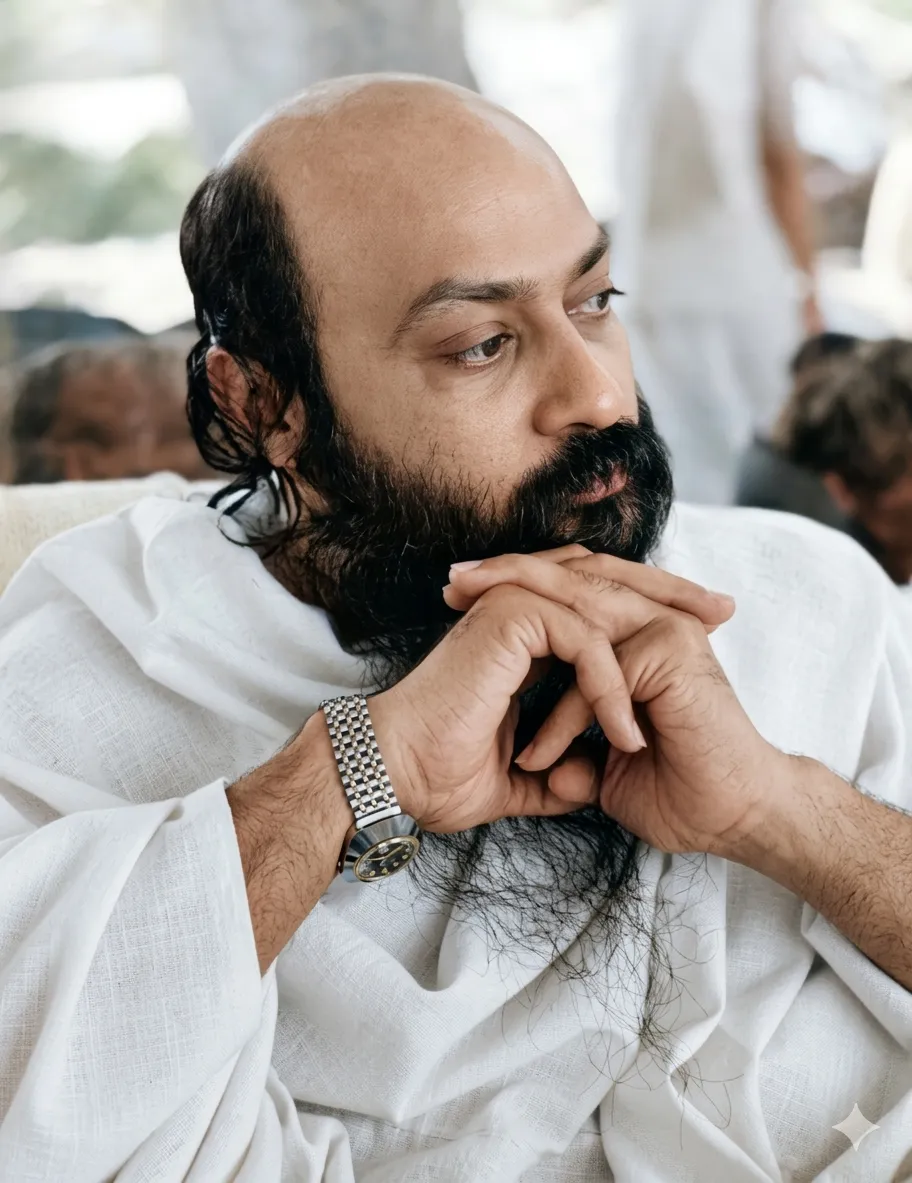
Osho's perspective on Omkar
When Osho Spoke About Omkar
Passages from the discourses where this theme comes alive.
Om is the fundamental sound of Sanskrit. In Om, all the sounds of Sanskrit are included. Om is made of A, U, and M—the joining of three sounds: A, U, M. These are the three primal vowels; the rest of language is born from them. All words are then constructed of these. Om is the root; A, U, M are its three branches; and from these three branches the whole web of sound and the birth of all words happens. The Jews would call Om the Logos; Christians would call it the Word. This sutra concerns this Om. Understand this sutra well. For those who would enter within can very easily do so with the support of this sound—because it is resonating within. Every moment this sound is echoing inside. This sound is your very life-breath. If this sound disappears within, you disappear.
… ओम बना है अ, उ और म--तीन ध्वनियों के जोड़ से। ए, यू, एम। ये तीन मूल स्वर हैं। बाकी सारी भाषा इन्हीं से पैदा होती है। सारे शब्द फिर इनसे ही निर्मित होते हैं। ओम मूल है, अ, उ, म उसकी तीन शाखाएं हैं। और फिर इन तीन शाखाओं से सारी ध्वनि का जाल और सारे शब्दों का जन्म होता है। ओम को लोगोस कहेंगे यहूदियों की भाषा में; शब्द कहेंगे ईसाइयों की भाषा में। इस ओम के संबंध में यह सूत्र है। और इस सूत्र को बहुत ठीक से समझ लेना। क्योंकि भीतर जिन्हें प्रवेश करना है, वे इस ध्वनि के सहारे बड़े आसानी से भीतर प्रवेश कर सकते हैं। क्योंकि यह ध्वनि भीतर निनादित हो रही है। प्रतिक्षण यह ध्वनि भीतर गूंज रही है। यह ध्वनि ही आपका प्राण है। …
Osho, why was Om chosen as a symbol? What are its special features?
There are two reasons Om was chosen. First, the search was for a word that has no meaning, to which you cannot attach meaning; because if you do, it falls on this side of the fifth. A word was needed that, in one sense, is meaningless. Or say: beyond meaning. Both are the same. All our words are meaningful. We coin words precisely so they bear meaning. If there is no meaning, what need is there for a word? We make words to speak, and the purpose of speaking is that I may convey something to you; when I speak, there should be a hint of meaning for you. When people returned from the seventh—or went to the seventh—they felt: whatever word we make, if it carries meaning, it will immediately fall before the fifth body. The dictionary will write out its meaning; people will read and think they have…
Osho, you opposed Omkar; this hurt the mind. Please explain why the rishis and sages have always supported Omkar?
Who opposed Omkar? I did? You are here, yet not present. You hear me, yet you ruminate your own notions. I said that nothing will happen by chanting Om-Om, and you concluded I was against Omkar! I said, “Don’t chant Om-Om,” precisely because the one who chants Om-Om will never have Omkar arise within. I am a partisan of Omkar—that is why I said it. Now this is the difficulty. Neither Muslims will understand me nor Hindus. I am a partisan of Muhammad; that is why I opposed the Kaaba. And I am a partisan of Omkar; that is why I opposed the chanting of Om. But when will you understand? Will you understand or not? When you chant Om-Om you are imposing Om-Om upon yourself from the surface mind. You do not know that within you a continuous stream of Omkar is already flowing. It has to be heard,…
आखिरी प्रश्न: ओशो, ओंकार का आपने विरोध किया, इससे मन को ठेस पहुंची। कृपया समझावें कि ऋषि-मुनियों ने सदा ओंकार का समर्थन क्यों किया है?
… मैं तो ओंकार का पक्षपाती हूं, इसलिए कहा। अब यह बड़ी मुश्किल है। न मुसलमान मुझे समझेंगे न हिंदू मुझे समझेंगे। मैं मुहम्मद का पक्षपाती हूं, इसलिए काबा का विरोध किया। और मैं ओंकार का पक्षपाती हूं, इसलिए ओम के जाप का विरोध किया। मगर कब तुम समझोगे? समझोगे या नहीं समझोगे? जब तुम ओम-ओम जपते हो तो तुम अपने ऊपर से चित्त से थोप रहे हो ओम-ओम, तुम्हें पता नहीं है कि तुम्हारे भीतर ओंकार की सतत धारा बह रही है। उसे सुनना है, जपना नहीं है। ओंकार सुना जायेगा, जपा नहीं जाता। तुम शांत हो जाओ, मौन हो जाओ, बिलकुल चुप हो जाओ, सन्नाटा पैदा करो। उतना काम तुम्हारा है। चित्त का शोरगुल बंद करो और अचानक तुम पाओगे एक घड़ी, जब सारा शोरगुल जा चुका है और चित्त के मार्ग पर कोई यात्री नहीं, कोई विचार नहीं, कोई कल्पना नहीं, कोई वासना नहीं। जब चित्त निर्विचार है, अचानक तुम्हारे भीतर के अंतर्तम से ओंकार उठेगा। वह अनाहत नाद है। तुम्हारे करने का सवाल नहीं है।
Omkar means the basic reality — the fundamental truth that abides forever. Upon it forms rise and fall, aggregates are made and scattered, organizations stand and collapse — but it remains. It simply remains. The sound of that which remains forever, the music of that — its name is Omkar. It is the ultimate of human experience. It is the supreme experience. Therefore do not think that by sitting and chanting Om, Om you will come to know Omkar. The Om you utter is only an utterance. It is a sound produced by you. Hence gradually the lips must be closed — do not use the lips. Then chant Om within without lips. But even that is not the real Omkar. For still inner muscles and bones are being used. They too must be left. Do not even chant in the mind.
इस ओंकार का अर्थ है, दि बेसिक रियलिटी; वह जो मूलभूत सत्य है, जो सदा रहता है। उसके ऊपर रूप बनते हैं और मिटते हैं, संघात निर्मित होते हैं और बिखर जाते हैं, संगठन खड़े होते हैं और टूट जाते हैं, लेकिन वह बना रहता है। वह बना ही रहता है। यह जो सदा बना रहता है, इसकी जो ध्वनि है, इसका जो संगीत है, उसका नाम ओंकार है। यह मनुष्य के अनुभव की आत्यंतिक बात है। यह परम अनुभव है। इसलिए आप यह मत सोचना कि आप बैठकर ओम, ओम का उच्चार करते रहें, तो आपको ओंकार का पता चल रहा है। जिस ओम का आप उच्चार कर रहे हैं, वह तो उच्चार ही है। वह तो आपके द्वारा पैदा की गई ध्वनि है। इसलिए धीरे-धीरे होंठ को बंद करना पड़ेगा। होंठ का उपयोग नहीं करना पड़ेगा। फिर बिना होंठ के भीतर ही ओम का उच्चार करना। लेकिन वह भी असली ओंकार नहीं है। क्योंकि अभी भी भीतर मांस-पेशियां और हड्डियां काम में लाई जा रही हैं। उन्हें भी छोड़ देना पड़ेगा। भीतर मन में भी उच्चार नहीं करना होगा। तब एक उच्चार सुनाई पड़ना शुरू होगा, जो आपका किया हुआ नहीं है। …
Profound Quotes on Omkar
Explore our structured collection of meaning-mapped quotes regarding Omkar.