
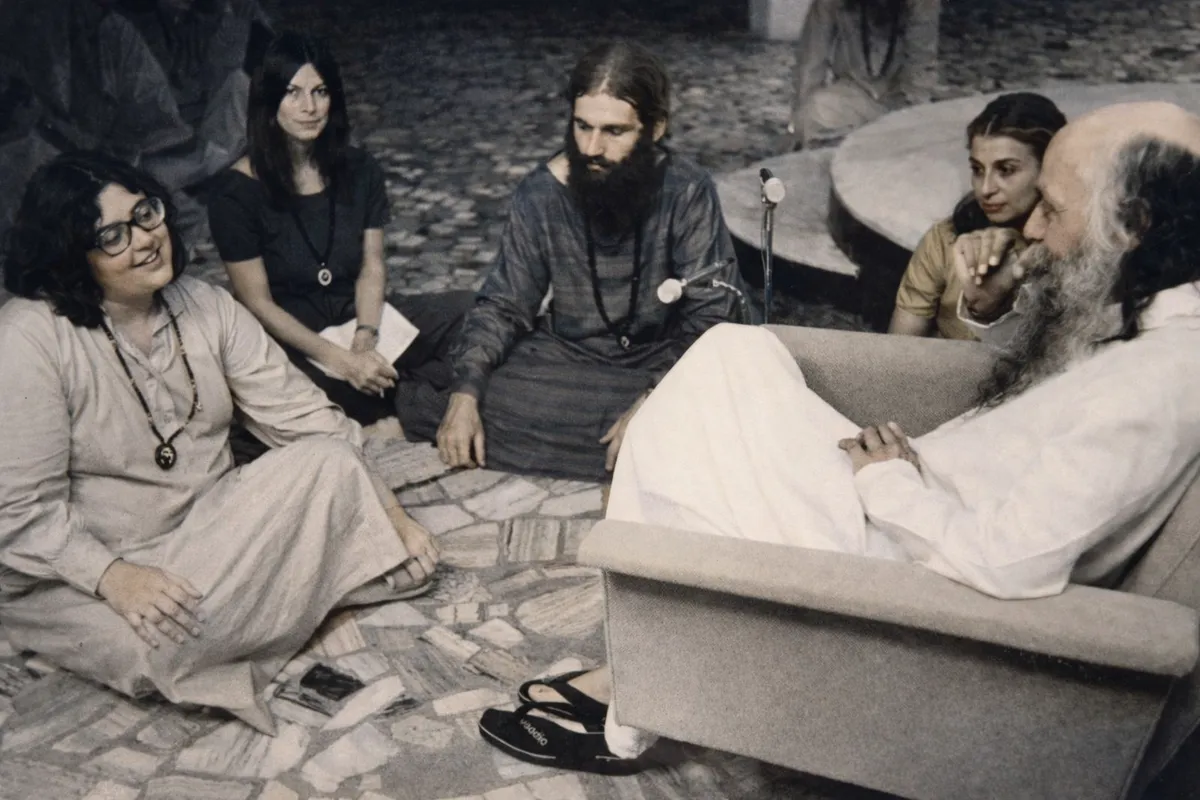
Osho's perspective on Desireless Action
When Osho Spoke About Desireless Action
Passages from the discourses where this theme comes alive.
When no desire arises for objects worthy of being enjoyed, know this as the limit of nonattachment. When no I-ness arises, know this as the limit of knowing.
WHEN THE DISSOLVED DESIRES DO NOT ARISE BACK AGAIN, THIS IS THE LIMIT OF RELAXEDNESS, AND SUCH A STHITPRAGYA, A SEEKER, STABLE IN WISDOM, EVER REMAINS IN BLISS. HE WHOSE SELF IS ABSORBED ONLY IN BRAHMA, THE ULTIMATE REALITY, REMAINS DESIRELESS AND ACTIONLESS. WHEN PURIFIED BY ITS ONENESS WITH BRAHMA AND DROWNED IN THIS ONE SINGLE RAPTURE, THE ACTIVITIES OF MIND ARE CHOICELESS AND REMAIN ONLY AS THE CONSCIOUSNESS, THEN IT IS CALLED PRAGYA, THE WISDOM. HE WHO ALWAYS HAS SUCH A PRAGYA IS CALLED JIVANAMUKTA, THE ONE LIBERATED WHILE LIVING. ONE WHO HAS NO I-NESS FOR HIS BODY AND THE SENSES, AND NO MY-NESS FOR THE OTHER THINGS, IS A JIVANAMUKTA, THE ONE LIBERATED WHILE LIVING. WHEN NO DESIRE ARISES FOR OBJECTS WORTHY OF BEING ENJOYED, THEN KNOW THIS AS THE LIMIT OF NONATTACHMENT. ... WHEN NO I-NESS ARISES, KNOW THIS AS THE LIMIT OF KNOWING. ... People come to me
Osho, another difficulty has arisen. Today there is such a gap between the private sector and the public sector that if we destroy the private sector, initiative disappears—and when initiative disappears, movement stops. In the same way, when one descends into non-attachment, or desirelessness, or karma-sannyas, it seems that initiative, zest, and drive all get converted into inactivity. That possibility seems real.
Where we claim to go against biology but still obey biology’s rule—being attracted to the opposite—everything turns dull and empty. Houses remain huts, pressed to the ground; all activity wanes; no one sings; a singing person seems criminal; bright clothes disappear; color, charm, beauty are lost; everything becomes sad, subdued, and shrunken. My own view is that both have their own laws, and a true culture stands on both. A true culture will be sex-free in the sense of being un-repressed: it will rejoice in sex, be festive in sex, and vast worldly activity will arise. And true spirituality, based on the right choice of type, will spread a web of spiritual activity. Krishna stands rightly in his own type; Buddha in his own; Mahavira in his own. Hence Krishna acts in one way, but it is not that Buddha does not act. Buddha’s life, too, is a vast web…
ओशो, एक तकलीफ और पैदा हो गई है। जैसे आज प्राइवेट सेक्टर और पब्लिक सेक्टर, दो में इतना अंतर है कि अगर हमने प्राइवेट सेक्टर को नष्ट कर दिया तो इनिशिएटिव खत्म हो जाता है। और इनिशिएटिव खत्म हो जाने से गति रुक जाती है। तो अनासक्ति में उतर जाने पर या निष्काम में उतर जाने पर या कर्म-संन्यास में उतर जाने पर ऐसा लगता है कि जो पहल है, जो स्फूर्ति है, जो इनिशिएटिव है, वह सारी चीज कनवर्ट हो जाती है निष्क्रियता में। इसकी संभावना तो है।
जिन मुल्कों में हम कहेंगे कि हम जीवशास्त्र के विपरीत चलते हैं, और नियम जीवशास्त्र का ही मानेंगे--विपरीत से आकर्षित होंगे--वहां सब उदास, शून्य हो जाएगा। वहां मकान झोपड़े रह जाएंगे, जमीन से लग जाएंगे; वहां सब गतिविधि क्षीण हो जाएगी, वहां कोई गीत नहीं गाएगा, गीत गाता हुआ आदमी अपराधी मालूम पड़ेगा; वहां रंग-बिरंगे कपड़े खो जाएंगे, वहां रंग-रौनक, सौंदर्य खो जाएगा, वहां सब उदास, दीन-हीन और क्षीण हो जाता है। अब मेरा अपना मानना यह है कि दोनों के अपने नियम हैं, और ठीक पूरी संस्कृति दोनों नियमों पर खड़ी होती है। ठीक संस्कृति काम-मुक्त होगी, काम में आनंद लेगी, काम में उल्लसित होगी, तो क्रिया पैदा होगी, विराट क्रिया का जाल फैलेगा। और ठीक अध्यात्म, ठीक टाइप के चुनाव से अगर होगा, तो आध्यात्मिक क्रिया का जाल फैलेगा। कृष्ण ठीक अपने टाइप में हैं। बुद्ध अपने टाइप में हैं। महावीर अपने टाइप में हैं। इसलिए कृष्ण एक तरह की क्रिया करते हैं, लेकिन ऐसा नहीं है कि बुद्ध कोई क्रिया नहीं करते। …
Beloved Osho, I feel and realize the futility of desiring. There seems to be no ambition in me. But yet there is a thirst, a yearning, and an inner sense of unfulfillment. Please explain whether this too is a part of desiring.
Yes, this too is a part of desiring -- the negative part. Everything has two parts, the positive and the negative. The positive part of desiring is to desire something, to be ambitious. To be aware of the object of desire is a positive desire. The negative desire is: one is not aware of the object of desire, but one is aware only of the thirst of desire -- of the yearning. These are the two parts. The subjective feeling of unfulfillment is the negative part of ambition and being obsessed with an object of desire is the positive part of ambition. Both are ambition. And if you intellectually understand that desire is futile, the negative part will remain with you -- if you INTELLECTUALLY understand that desire is futile and this is not an existential experience. You have been hearing things, you have been listening and you have been…
Osho, why does every desire come carrying its opposite? Is its dividedness inevitable? And is no whole and undivided desire possible? What is desire?
One day, by mistake, he wandered into the camp of a Muslim chieftain. He was going along in ecstasy, dancing; the camp happened to be in the way—that was all. The women, frightened, screamed. A naked man, dancing in ecstasy, had walked in—they thought he was mad. Seeing a naked sadhu intrude, the chieftain, too, grew angry. He drew his sword and struck. One of Sadashiva’s hands was cut off and fell to the ground. But Sadashiva’s joy suffered no interruption. The hand fell, blood began to flow, yet the dance continued. Just as he had been dancing, he turned and kept dancing as he walked away. The chieftain was astonished, and also pained—he had never seen such ecstasy. And that a hand could be cut off and he would not even notice—such ecstasy! The man was in some other realm. Looking into his eyes, it was as if he…
दूसरा प्रश्न: ओशो, प्रत्येक कामना अपना प्रतिपक्ष लिए क्यों आती है? उसका विभाजित रहना क्या अनिवार्य है? और क्या कोई अखंड और अविभाजित कामना संभव नहीं है? यह कामना क्या है?
यह उन्हीं की घटना है! उन्होंने जीवन भर मौन रहने की साधना स्वीकार कर ली थी, मौन थे और नग्न।नग्न रहते और चुप, बड़ी झंझटें आती थीं। एक तो मौन, बोलते नहीं, और नग्न घूमते! समाधि उनकी निरंतर लगी रहती थी। मस्त ही रहते थे अपनी मस्ती में। एक दिन भूल से एक मुसलमान सरदार के शिविर में चले गए। मस्ती में जा रहे थे नाचते, शिविर बीच में पड़ गया होगा तो पड़ गया, कोई शिविर के लिए गए नहीं थे। स्त्रियों ने डरकर चीख लगा दी। कोई नंगा मस्ती में नाचता हुआ चला आ रहा है, वे समझे कोई पागल है। नग्न साधु को घुसा देखकर सरदार भी क्रोध में आ गया। और उसने तलवार उठा ली और हमला कर दिया। सदाशिव का एक हाथ कटकर नीचे गिर गया। लेकिन सदाशिव के आनंद में कोई बाधा न पड़ी। हाथ कटकर गिर गया, लहू बहने लगा, लेकिन नाच जारी रहा। जैसे नाचते आए थे वैसे ही नाचते चलने, वापस लौटने लगे। सरदार हैरान हुआ, दुखी भी हुआ--यह मस्ती, ऐसी मस्ती कभी देखी न थी। और हाथ कट जाए और पता न चले, ऐसी मस्ती! किसी और लोक में था यह आदमी। …
Profound Quotes on Desireless Action
Explore our structured collection of meaning-mapped quotes regarding Desireless Action.