
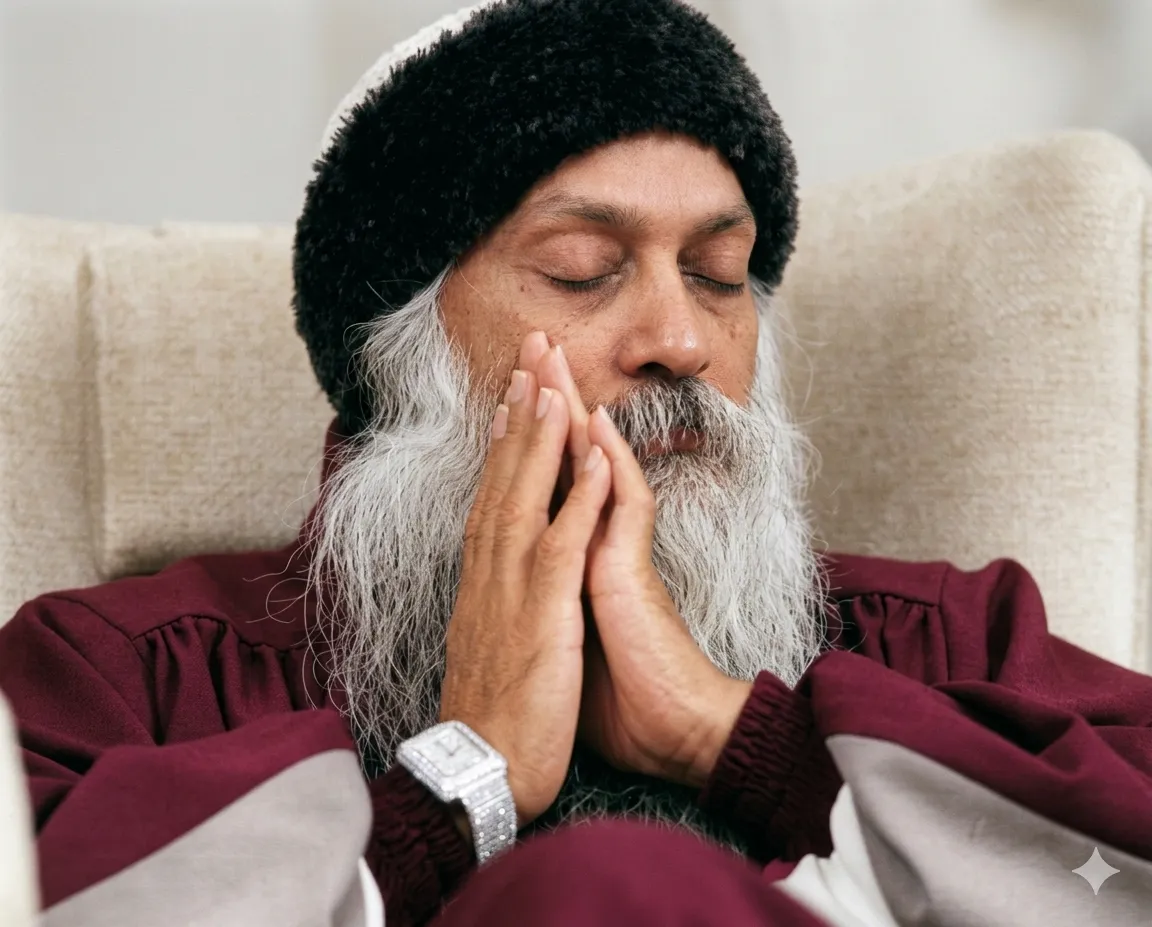
Names make us pick sides and forget we share the same inner awareness, so skip labels to stay together.
From the Discourses
Passages where Osho speaks to this question — each links to the complete discourse.
Why?
Here, merely taking someone’s name becomes a troublesome affair. If I so much as mention a name, you’ll at once land in difficulty. And then I am continually having to deal with your difficulties... If you are prepared for your own difficulties, I could give examples beyond counting. But that would only stir up quarrels; there’s no point in that. You understand, don’t you? And then, what you have to struggle against is Indian society itself—and its entire tradition. You don’t have to fight the Western tradition. Another advantage is this: when I give an example from the West or from abroad, for you it remains just an example in thought; you have no connection with the context surrounding that example. If I take Gurdjieff’s name, your connection is only with the point I have just made; beyond that you have no idea what Gurdjieff is or is not. But…
प्रश्न: क्यों? यहां नाम ही लेना तो झंझट की बातें हैं। अगर जरा सा नाम लिया तो तुम अभी दिक्कत में पड़ जाओ। तो तुम्हारी दिक्कतें मुझे निरंतर...। तुम्हारी दिक्कतों की तैयारी हो, तो मैं तो इतने उदाहरण दूं जिसका कोई हिसाब नहीं। वह तो झगड़ा खड़ा होता, उससे कोई मतलब नहीं है। समझे न? और फिर, फिर जिस चीज से तुम्हें लड़ना है वह भारत के ही समाज से लड़ना है। और उसकी पूरी ट्रेडीशन से लड़ना है। तुमको पश्चिम की ट्रेडीशन से तो लड़ना नहीं है। दूसरा मजा यह है कि पश्चिम का या परदेशी कोई भी उदाहरण देने से तुम्हें सिर्फ उदारहण खयाल में होता है। बाकी उस उदारहण के आस-पास का तुमसे कोई संबंध नहीं होता।
अगर मैंने गुरजिएफ का नाम लिया, तो जितनी मैंने बात कही उससे ही संबंध है तुम्हारा। उससे तुम्हारा तुम्हें कोई पता नहीं कि गुरजिएफ और क्या है, क्या नहीं है। अगर मैं राम का नाम लेकर कुछ भी कहता हूं, तो तुमको राम की और हजार बातें मालूम हैं, और तुम्हारे दिमाग में और कंफ्यूजन शुरू होता है कि उसमें तो राम ने तो यह किया और राम ने तो वह किया और इन्होंने यह कह दिया और यह कैसा है और कैसा नहीं है। फ्रैग्मेंट्स हैं न उदाहरण तो, टुकड़े हैं। पूरी जिंदगी का उनसे कोई संबंध नहीं है। कभी मैं गांधी की किसी बात की तारीफ करता हूं, कभी किसी बात का विरोध करता हूं। लोग मेरे पास आते हैं कि आपने उस दिन तो गांधी की तारीफ की थी। मैंने जिस बात की तारीफ की थी उससे मुझे मतलब है, न मुझे गांधी की तारीफ से मतलब। जिस बात का मैंने विरोध किया, वहां भी गांधी के विरोध से मुझे कौड़ी भर मतलब नहीं है। जिस बात का मैंने विरोध किया उसका मैंने विरोध किया। लेकिन हमारी समझ भी बहुत कमजोर है। …
Osho, why has this silent experience of the Nameless been given dualistic names like Heaven and Earth, or consciousness and matter? Why has nonduality not been expressed?
Expression can only be of duality; nonduality remains inexpressible. So, at the most, in speaking, what can be done is two—in speech. The nearest to truth that speech can come is two—in speech. Outside speaking, only one remains. But language cannot say anything without breaking it into two. If Lao Tzu is speaking, writing, he is committing the minimum mistake possible. Nothing more accurate can be done with words. And even if we want to deny this, we will still have to use words. Then we say “nondual”—not two. Yet to say “not two” we still use the two. Even to say “not,” one has to say it. The two will follow us. As long as we make the effort to speak, the two will follow us. Leave speaking, and the one remains. You may say, “Why don’t we just say ‘one’?” But we don’t notice what happens. The moment…
प्रश्न: ओशो, अनाम की इस मौन अनुभूति को स्वर्ग और पृथ्वी या चेतना व पदार्थ, ऐसा द्वैतमूलक नाम क्यों दिया गया है? अद्वैत की अभिव्यक्ति क्यों नहीं की गई है?
अभिव्यक्ति द्वैत की ही हो सकती है; अद्वैत अनभिव्यक्त रह जाता है। तो जो अधिकतम किया जा सकता है, वह दो--बोलने में। निकटतम जो सत्य के है, वह दो--बोलने में। बोलने के बाहर तो एक ही रह जाता है। लेकिन भाषा किसी भी चीज को दो में तोड़े बिना नहीं बोल सकती है। लाओत्से बोल रहा है, लिख रहा है, तो जो न्यूनतम भूल हो सकती है, वह कर रहा है। इससे ज्यादा ठीक बात नहीं हो सकती। और अगर हमें इसे भी इनकार करना हो, तो भी शब्द का ही उपयोग करेंगे। तो हम कहेंगे अद्वैत, दो नहीं। लेकिन फिर भी हमें दो का तो उपयोग करना ही पड़ेगा। नहीं कहने के लिए भी कहना पड़ेगा, दो नहीं। वह दो तो हमारा पीछा करेगा ही। जब तक हम बोलने की चेष्टा करेंगे, दो हमारा पीछा करेगा ही। बोलना छोड़ें, तो एक रह जाता है।
Question: OSHO, HOW DO YOU ALWAYS FIND NEW NAMES TO GIVE TO YOUR SANNYASINS? ... Hence I change the name -- to give you a break, to give you the idea that name is just a given thing. Your old name disappears, a new name becomes your reality, but now you will not get so much identified because you are now more mature. The first name was given when you were a small child; you were not aware. Now you are a little bit aware. And by becoming a sannyasin you are becoming committed to more and more awareness, to a life of witnessing in which all identities have to be dropped. A man is absolutely free only when there is no identity left.
O how may I ever express that secret word? O how can I say he is not like this, and he is like that? If I say that he is within me, the universe is ashamed. If I say that he is without me, it is falsehood. He makes the inner and the outer worlds to be indivisibly one; the conscious and the unconscious, both are his footstools. He is neither manifest nor hidden, he is neither revealed nor unrevealed: there are no words to tell that which he is.
II. 56. dariya ki lahar dariyao hai ji THE RIVER AND ITS WAVES ARE ONE SURF: WHERE IS THE DIFFERENCE BETWEEN THE RIVER AND ITS WAVES? WHEN THE WAVE RISES, IT IS THE WATER; AND WHEN IT FALLS, IT IS THE SAME WATER AGAIN. TELL ME, SIR, WHERE IS THE DISTINCTION? BECAUSE IT HAS BEEN NAMED AS WAVE, SHALL IT NO LONGER BE CONSIDERED AS WATER? WITHIN THE ABSOLUTE, THE WORLDS ARE BEING TOLD LIKE BEADS. LOOK UPON THAT ROSARY WITH THE EYES OF WISDOM. THE TRUTH IS KNOWN AND YET NOT KNOWN -- known in a sense and not known in another -- known because we are part of it, but not known because we are not separate from it. To know something, the knower has to be separate; and yet again, to know something really, how can you know it if you are separate? This is the basic…
Question: Maneesha is asking, "WHAT IS IN A NAME? ... Looking at me he said, "It cannot be coincidence that you have come at the right time. I was waiting, because I wanted to thank you before I leave the body. These years have been difficult in dropping knowledge, information, and finding that which is hidden behind names. But you have put me on the right track, and now I can say all names are false, and all knowledge may be useful but is not existential, is not true. I am dying with absolute peace, the silence which you have been talking about again and again. I had to delay because it seemed that he was going to die within a few minutes, or maybe a few hours at the most. Within five or six hours he died, but he died with such peace, with such joy.