
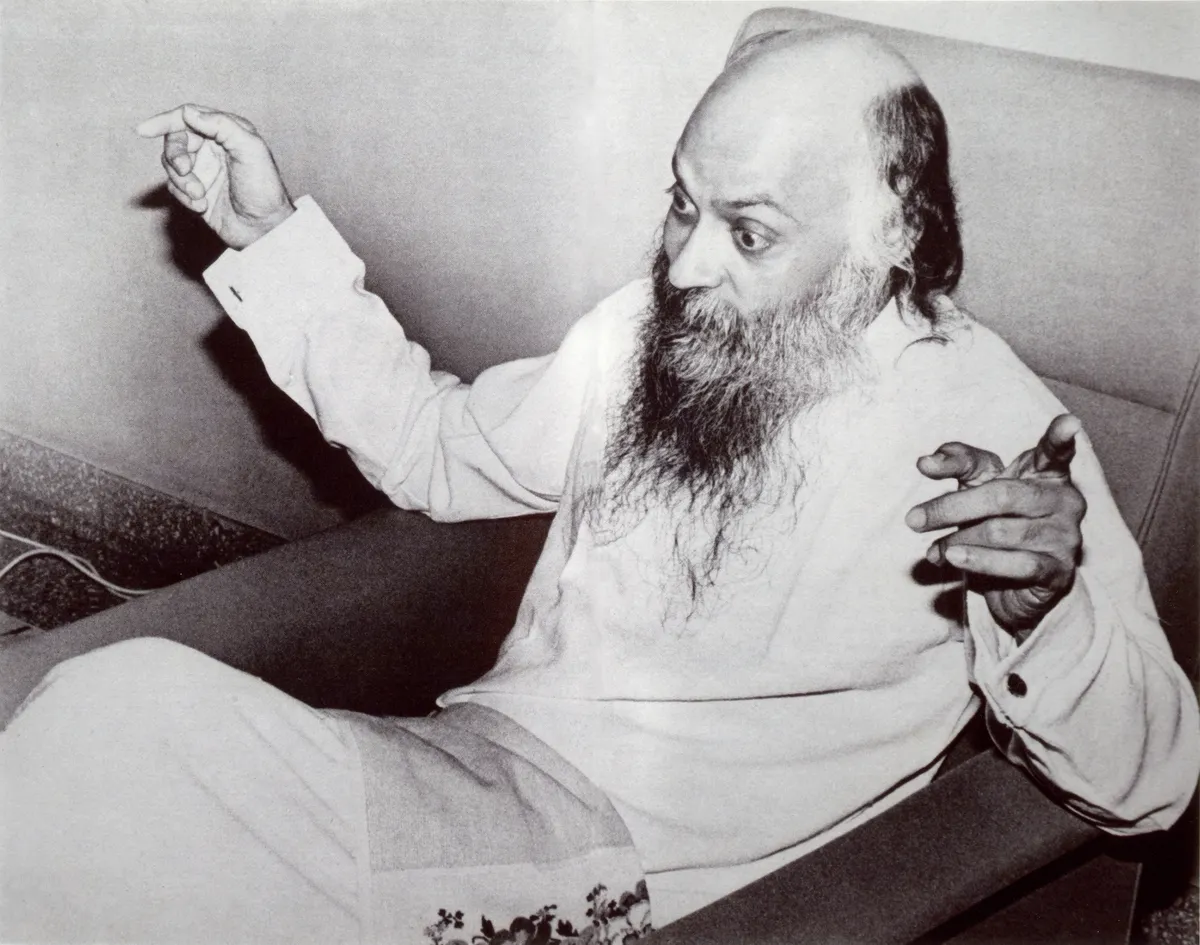
He says the name because everyone knows a light, funny question is coming, so people relax and smile.
From the Discourses
Passages where Osho speaks to this question — each links to the complete discourse.
I am terribly scared to ask this question. Why do you mention swami yoga chinmaya's name when he asks a question? And why does something in me have to ask this question?
THIS is from Deva Nirvesh. First, Swami Yoga Chinmaya's name makes you laugh -- and it saves me a joke. That is economical. Second it makes you happy, it makes Swami Chinmaya happy, it makes me happy. You are happy, you laugh; Chinmaya is happy, his name has been mentioned; I am happy because you all are happy. So at no cost everybody is simply happy! That's why. And it is a tacit understanding now that when Swami Yoga Chinmaya asks a question it is bound to be ridiculous. So just mentioning the name is enough! He is a great seeker and when you are a great seeker you stumble upon many ridiculous questions. He goes on thinking about everything and when you go on thinking about everything you are bound to find many ridiculous questions. In fact, deep down, every question is ridiculous. Life simply is; it is not…
Osho, as you were stepping down from the stage after today’s discourse, the moment you said, “Sohan!” it was as if a wave swept through the entire Buddha Hall. With that one word you seemed to pluck the veena of many hearts. A strange scene descended. There was a smile on our lips and tears in our eyes. The state of Ma Sohan and Manik Babu was a sight to behold! Even with so bitter a topic as Dattabal before us, what is the magic you work, Osho, that even that is transformed into nectar?
Satya Niranjan! Even poison, too, is elixir—veiled, covered, concealed. As a rose grows among thorns. If you look rightly, poison also turns to nectar. It is all the art of seeing. It is all a matter of vision. The whole secret lies in the gaze. Nowhere is anything truly bitter. Everything is to be made lovable, made sweet. And I am preparing the veena of your heart. Every day this preparation is going on. When the veena is ready, any excuse can set it resonating. Even a gust of wind can make its strings tingle. The veena is ready; that is why such an incident happens. There is no crowd here. This is not a path for everyone. This is a settlement of madmen. This is a fair of moths to the flame. And so, you say there was a smile on our lips and tears in our eyes. Both…
दूसरा प्रश्न: ओशो, आज के प्रवचन के पश्चात मंच की सीढ़ियां उतरते समय जैसे ही आपने कहा, ‘सोहन!’ मानो पूरे बुद्ध हाल में लहर-सी दौड़ गई। उस एक शब्द से कई के हृदय की वीणा जैसे आपने छेड़ दी। एक अजीब-सा दृश्य छा गया। हमारे ओंठों पर हंसी और आंखों में आंसू थे। मा सोहन व माणिक बाबू की स्थिति तो देखते ही बनती थी! दत्ताबाल जैसा कटु विषय सामने होते हुए भी आप क्या जादू कर देते हो ओशो कि उसका भी अमृत में रूपांतरण हो जाता है?
सत्य निरंजन! जहर भी है तो अमृत ही--ढंका-ढंका, आवृत, आच्छादित। जैसे गुलाब का फूल कांटों के बीच ऊगा। ठीक से देखोगे तो जहर भी अमृत हो जाता है। सारी बात देखने की कला की है। सारी बात नजर की है। सारा राज नजर का है। कहीं कुछ कटु नहीं है। और सभी कुछ को प्रीतिकर कर लेना है, मीठा कर लेना है। और तुम्हारी हृदय की वीणा तैयार तो कर रहा हूं। रोज उसी की तैयारी चल रही है। वीणा तैयार हो तो कोई भी बहाना उसे छेड़ दे सकता है। हवा का झोंका भी उसके तारों को झनझना दे सकता है। वीणा तैयार है, इसलिए ऐसी घटना घट जाती है। यहां कोई भीड़ तो नहीं है। यहां हर कोई के लिए तो मार्ग नहीं है। यह तो दीवानों की बस्ती है। यह तो परवानों का मेला है। …
Osho, you have given me the name—Yogananda. Explain the secret behind it.
The looks and the wits are different—“Nainsukh” (Delight-of-the-eyes) turned out one-eyed; Babu Sundarlal (Mr. Beautiful) was made with bulging eyes. Says “Kaka,” the poet: Dayaramji swats mosquitoes, And Vidhyadhar (Bearer-of-knowledge) finds letters as black as a buffalo—utterly illiterate. Munshi Chandalal’s complexion is like tar, While Shyamlal (Darky) is fair as radiant sunshine. Fair as sunshine, smart in bush-shirt and pants, Gyanchand (Moon-of-knowledge) failed the tenth grade six times. Says “Kaka”: Jwalaprasad (Flame-grace) is absolutely cool, Pandit Shantiswaroop (Embodiment-of-peace) has been seen wielding sticks. Look—Asharfilal (Mr. Gold-coin) has a broken cot at home, While Seth Chhadammilal (Mr. Counterfeit) runs eight mills. Eight mills keep running, yet the accounts of karma don’t erase; Dhani Ramji (Mr. Wealthy) I’ve often seen destitute. Says “Kaka”: Dulheram (Bridegroom) died a bachelor, Poor Pritam Singh (Beloved) pines without a beloved. Jagpal (Protector-of-the-world) couldn’t fill his own stomach all his life, And you meet hundreds of Ganeshilals…
चौथा प्रश्न: ओशो, आपने मुझे नाम दिया है--योगानंद। इसका रहस्य समझाएं।
नल पर नहातीं गोदावरी, गोमती, गंगा। कहं ‘काका’ कवि लज्जावती दहाड़ रही हैं, दर्शनदेवी लंबा घूंघट काढ़ रही हैं। कलियुग में कैसे निभे पति-पत्नी का साथ, चपलादेवी को मिले बाबू भोलानाथ। बाबू भोलानाथ, कहां तक कहें कहानी पंडित रामचंद्र की पत्नी राधारानी। ‘काका’ लक्ष्मीनारायण की पत्नी रीता, कृष्णचंद्र की वाइफ बन कर आईं सीता। अज्ञानी निकले निरे, पंडित ज्ञानीराम, कौशल्या के पुत्र का रक्खा दशरथ नाम। रक्खा दशरथ नाम, मेल क्या खूब मिलाया दूल्हा संतराम को आई दुलहिन माया। ‘काका’ कोई-कोई रिश्ता बड़ा निकम्मा-- पार्वती देवी हैं शिवशंकर की अम्मा। योगानंद, कोई राज वगैरह नहीं है। योग से तुम्हारा क्या नाता? न आनंद से कोई संबंध। बस एक लेबल चिपका दिया। कामचलाऊ हैं सब नाम। लेकिन हर चीज में रहस्य खोजने की आदत गलत आदत है। जीवन को सरलता से स्वीकार करो, जैसा है वैसा स्वीकार करो। हर चीज में रहस्य खोजने के कारण न मालूम कितने मूरख तुम्हारा शोषण करते हैं, क्योंकि वे तुम्हें रहस्य में रहस्य बताते रहते हैं। …
Osho, how do you choose the names of people being initiated into sannyas just by taking one look at them?
Shraddhanand! An old hippie was getting his hair cut. The barber asked, “Were you ever in the navy?” The hippie asked in surprise, “How did you know? Are you also...!” “No, sir,” the barber said, “I just now found this sailor’s cap tangled in your hair.” It doesn’t take much investigation. Now, for example, Shraddhanand, I looked at you—no shraddha (faith), no anand (bliss)—so I said, all right: Shraddhanand! There are two things you need: shraddha and anand. This is a prescription, brother. It’s not your name; it’s a prescription for the medicine you need—these two things. On your face I saw doubt, your expression funereal, as if you were about to cry any moment, if not already crying—so I quickly said: Shraddhanand! Brother, don’t cry! What’s done is done. Hearing “Shraddhanand,” you did brighten a little; you felt steadied, heartened. The very word anand cheered you up: “Ah, me…
चौथा प्रश्न: ओशो, आप संन्यास में दीक्षित हो रहे व्यक्तियों को बस एक नजर देख कर उनका नाम कैसे चुन लेते हैं?
श्रद्धानंद! एक पुराना हिप्पी नाई से बाल कटवा रहा था। नाई ने पूछा: क्या आप किसी समय नौसेना में थे? हिप्पी ने आश्चर्य से पूछा: तुमने कैसे जाना? क्या तुम भी...! नहीं साहब, नाई ने कहा, अभी-अभी मुझे आपके बालों के बीच यह टोपी मिली। कुछ ज्यादा खोज-बीन थोड़े ही करनी पड़ती है। अब जैसे, श्रद्धानंद, तुम्हारी तरफ देखा--न श्रद्धा, न आनंद--मैंने कहा कि ठीक, श्रद्धानंद! दो चीजों की तुम्हें जरूरत है: श्रद्धा की और आनंद की। यह प्रिस्क्रिप्शन है भैया। यह तुम्हारा नाम नहीं। यह तुम्हारे लिए दवाई का नुस्खा है कि ये दो चीजें तुम्हें चाहिए। …
Osho, you constantly tell your sannyasins to keep laughing. But in the locket of the mala you give at initiation, your picture shows a serious expression. Why this seriousness?
Ashtavakra says: to know that state, one needs the same state. Christians say Jesus never laughed. That is false. Yet the Christians are also right, because on the plane on which they can understand laughter, Jesus never laughed. On the plane on which I understand laughter, I know Jesus was bubbling with laughter—he was laughing even on the cross. Have you seen a laughing statue of Buddha? Impossible. Have you heard Mahavira’s titter? Impossible. If you make a laughing statue of Mahavira, the Jains will sue you and drag you into court, saying you have disfigured our Mahavira’s face. Mahavira—and laughing? It cannot be! In one sense they are right too: a Mahavira like you would never laugh. Your laughter bears the imprint of tears. Mahavira’s laughter is very silent, serene—serene like Mahavira himself, without any disturbance. Perhaps there is no giggling in it—there cannot be. It rises from emptiness;…
आखिरी प्रश्न: ओशो, आप निरंतर अपने संन्यासियों को हंसते रहने का उपदेश करते हैं। लेकिन आप दीक्षा में जो माला उन्हें देते हैं, उसके लाकेट में लगा आपका तो चित्र गंभीर मुद्रा लिए है। यह गंभीरता क्यों?
अष्टावक्र कहते हैं: उस अवस्था को जानने के लिए वैसी ही अवस्था चाहिए। ईसाई कहते हैं: जीसस कभी हंसे नहीं। यह बात झूठी है। मगर ईसाई भी ठीक ही कहते हैं, क्योंकि जिस तल पर वे हंसी को समझ सकते हैं, उस तल पर ईसा कभी नहीं हंसे। जिस तल पर मैं हंसी को समझता हूं, मैं जानता हूं ईसा खिलखिलाते रहे, सूली पर भी हंस रहे थे। तुमने बुद्ध की हंसती हुई मूर्ति देखी? असंभव। तुमने महावीर की खिलखिलाहट सुनी? असंभव। अगर महावीर की हंसती हुई मूर्ति बना दो, जैनी तुम पर मुकदमा चला देंगे, अदालत में घसीटेंगे कि इन्होंने हमारे महावीर का चेहरा बिगाड़ दिया। महावीर, और हंसते हुए? यह हो ही नहीं सकता! एक बात ठीक भी है, तुम्हारे जैसे महावीर कभी हंसे भी नहीं। तुम्हारी हंसी में तो रोने की छाप है! महावीर की हंसी बड़ी मौन है, शांत है--महावीर जैसी शांत है, निर्विकार है। शायद हंसी में खिलखिलाहट नहीं है। खिलखिलाहट हो भी नहीं सकती। शून्य से उठती है, शून्य का स्वाद लिए है। लेकिन हंसी निश्चित है। …