
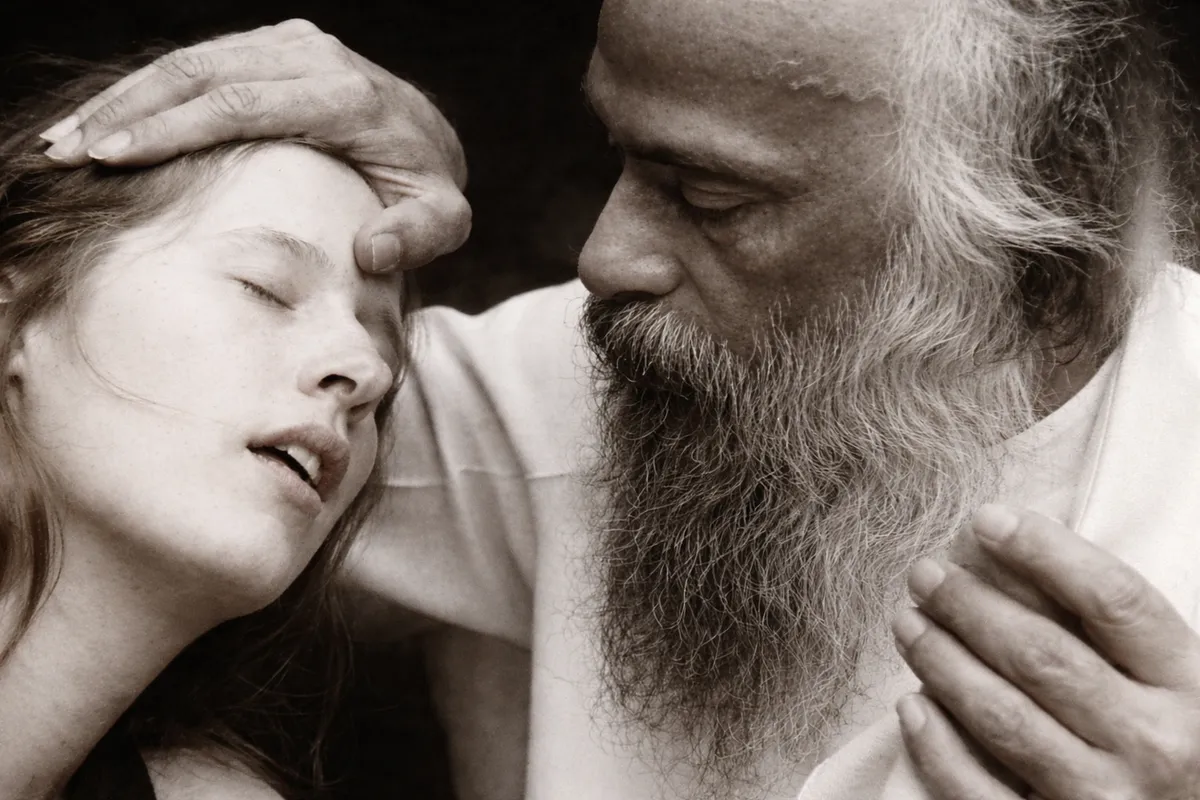
Don’t hunt for the right question—be still, look within, and let the urge to ask melt into quiet, clear knowing.
From the Discourses
Passages where Osho speaks to this question — each links to the complete discourse.
Beloved Osho, for ages I have wanted to ask: please, tell me, what should I ask? Accept my pranam, my bowing salutation.
Dulari has asked. It is absolutely true: I have known her for years, and she has never asked anything. Very few people have never asked. This is the first time, and still she doesn't ask anything: "For ages I have wanted to ask: please, you tell me, what should I ask? The real question of life is such that it cannot be asked. A question you can ask is not worth asking. What you cannot ask -- that is worth asking. The real question of life cannot be put into words. Life questions can only be said with eyes thirsting for rain, eyes filled with the longing to know. I know Dulari. She has never asked, but I have heard her question. And her question is not hers, because what you are able to ask is yours. What you are unable to ask is everyone's. The same question is inside…
Osho, I have always wanted to ask a question, but no question ever takes shape. And the ones that do don’t seem worth asking. What should I do now?
You are fortunate that such a question is arising in you and refuses to be formed. It clearly means the hour to go within has arrived. You have asked a lot of questions outside and gotten many answers outside—now don’t create more wounds. Inquiry is good, as against mere curiosity—remember—but it is nothing compared to mumuksha. Understand these three words well. Curiosity asks anything and everything; it is like small children. A child is walking and he asks, “Why is this bush big? Why the dog’s tail? Why the sun in the sky?” He keeps on asking anything. If you don’t answer, it’s no big deal to him—he keeps asking anyway. He isn’t even much concerned whether you answered or not. Even while you are answering, he has another question ready. He doesn’t even hear your answer. You answer and you find he has no taste for it; his joy…
चौथा प्रश्न: ओशो, मैं सदा से चाहता हूं कि कोई प्रश्न पूछूं, लेकिन कोई प्रश्न बनता ही नहीं है। और जो बनते हैं, वे पूछने जैसे नहीं मालूम होते हैं। अब मैं क्या करूं?
सौभाग्यशाली हो कि ऐसा प्रश्न तुम्हारे भीतर उठता है जो बंध नहीं रहा है। इसका मतलब साफ है कि भीतर जाने की घड़ी आ गयी। पूछ लिए बाहर बहुत प्रश्न और पा लिए बाहर बहुत उत्तर, अब और घाव मत बनाओ। जिज्ञासा अच्छी है, कुतूहल के मुकाबले, ध्यान रखना, लेकिन मुमुक्षा के मुकाबले कुछ भी नहीं है। इन तीन शब्दों को ठीक से समझ लेना। कुतूहल कुछ भी पूछता रहता है। छोटे बच्चों जैसा होता है। जैसे छोटा बच्चा चल रहा है तो वह पूछता है, यह झाड़ बड़ा क्यों? यह कुत्ते की पूंछ क्यों? कि आकाश में सूरज क्यों? वह कुछ भी पूछता रहता है। तो तुम उत्तर न भी दो तो भी कोई फिकर नहीं उसे, वह पूछता ही चला जाता है। उसे कोई मतलब भी नहीं है कि तुमने उत्तर दिया है कि नहीं। तुम उत्तर दो भी तो वह कोई बहुत फिकर नहीं करता तुम्हारे उत्तर की। जब तक तुम उत्तर दे रहे, तब तक वह दूसरा प्रश्न तैयार कर लेता है। तुम्हारा उत्तर सुनता भी नहीं। तुम उत्तर देकर पाते हो कि जैसे उसे कोई रस ही नहीं है उत्तर में, उसे तो पूछने में मजा है। …
Osho, I have heard that a seeker has to pass through four stages of sadhana: tariqat, shari’at, marifat, and haqiqat. The last is haqiqat, where the seeker meets his beloved and comes face to face with Truth. Osho, please explain the first three states.
These words are from the Sufis—very significant, and very straightforward. The first is tariqat. Tariqat means: the way, the method, the discipline, the means, the yoga. Tariqat means: something has to be done; only then will you attain—without doing, you will not receive. One has to walk a path; find the way; make a footpath. One has to bring some discipline into life, give it an order. Tariqat means learning the way to become worthy of it. When you go to have an audience with an emperor, you learn the etiquette of his court. You don’t just walk in. If you do, you will not be accepted. You learn how to sit there, how to stand there, how to bow there. If you are going to meet an emperor, you must taste something of the flavor of the emperor’s way of life. If you are going to meet the Divine,…
दूसरा प्रश्न: ओशो, मैंने सुना है कि साधक को साधना के चार चरणों से गुजरना पड़ता है: तरीकत, शरीअत, मारिफत और हकीकत। अंतिम है हकीकत, जहां साधक अपने सनम से मिलता है और सत्य के साथ उसका साक्षात्कार हो जाता है। ओशो, कृपया पहली तीन स्थितियों को समझायें।
… बहुत सीधे-साफ भी हैं। पहला है तरीकत। तरीकत का अर्थ होता है: तौर-तरीका, विधि-विधान, उपाय, योग। तरीकत का अर्थ होता है: कुछ करना है, तो उसे पा सकेंगे; बिना किये तो न मिलेगा। कुछ रास्ता चलना है; मार्ग खोजना है; पगडंडी बनानी है। कुछ जीवन में अनुशासन लाना है, व्यवस्था देनी है। तरीकत का अर्थ होता है, उसके योग्य हो सकें, इसका तौर-तरीका सीखना है। तुम किसी सम्राट के दर्शन करने जाते हो, तो तुम उसके दरबार का तौर-तरीका सीखते हो। ऐसे ही तो नहीं चले जाते। ऐसे ही तो स्वीकार न हो सकोगे। तुम सीखोगे कि कैसे वहां बैठेंगे, कैसे वहां उठेंगे, कैसे वहां झुकेंगे। सम्राट से मिलने जा रहे हो तो सम्राट के जीवन का जो ढंग है उस ढंग का कुछ स्वाद तुम्हें लेना होगा।
Osho, what question could I ask, and what answer could you give! You are the question and the answer too. In love, should there be a question, or an answer, or silence?
Life’s ultimate peaks are peaks of paradox. Words are noise, a spectacle; in the ocean of feeling they are sugar-candy that melts. Do not speak the heart’s secret with your lips; silence alone is the language of feeling. Weep—your tears will speak. Dance—your gestures will tell. Hum. Yesterday evening it so happened. Vani, a sannyasin, has come from Germany. I asked her, “Is there something you want to say?” And I felt she had so much to say; her heart was full. She had come from so far, and could stay only for a day or two. She cannot remain long. Every two or three months she rushes here. Even if time allows only two or three days, sometimes only a single day—she comes from Germany to Poona even for a single day! Once she stayed only five hours. So she comes to say something, to make some offering. I…
चौथा प्रश्न: ओशो, मैं क्या प्रश्न करूं और आप क्या जवाब दें! प्रश्न भी आप हैं और उत्तर भी। प्रेम में प्रश्न हो, या उत्तर हो, या चुप्पी?
रोओ, आंसू कह देंगे। नाचो, भावभंगिमा कह देगी। गुनगुनाओ.कल सांझ ऐसा हुआ। वाणी, एक संन्यासिनी, जर्मनी से आयी है। उससे मैंने पूछा, कुछ कहने को है? और मुझे लगा बहुत कुछ कहने को है उसके पास, हृदय भरा है। उतने दूर से आयी है। दो-चार दिन के लिए ही आ पायी है। ज्यादा देर रुक भी न सकेगी। दो-चार महीने में भागी चली आती है। दो-चार दिन के लिए समय मिलता, कभी एक दिन के लिए भी समय मिलता--तो जर्मनी से पूना आना एक दिन के लिए! लेकिन उतने दिन के लिए भी आती है। एक बार तो सिर्फ पांच घंटे ही रुकी। तो कहने को आती है। कुछ निवेदन करने को है।
I myself am a question. I know not who I am. What to do? Where to go?
REMAIN WITH THE QUESTION. Don t do anything, and don t go anywhere; and don't start believing in any answer. Remain with the question. That is one of the most difficult things to do -- to remain with a question, and not to seek the answer; because the mind is very cunning, it can supply a false answer. It can console you; it can give you something to cling to; and then the question is not answered but suppressed. Then you go on believing in the answer, and the question remains deep down in your unconsciousness like a wound. The healing has not happened. If you remain with the question, I'm not saying that you will receive the answer. Nobody has ever received any answer. If you remain with the question, by and by the question disappears. Not that the answer is received; there is no answer. There cannot be,…