
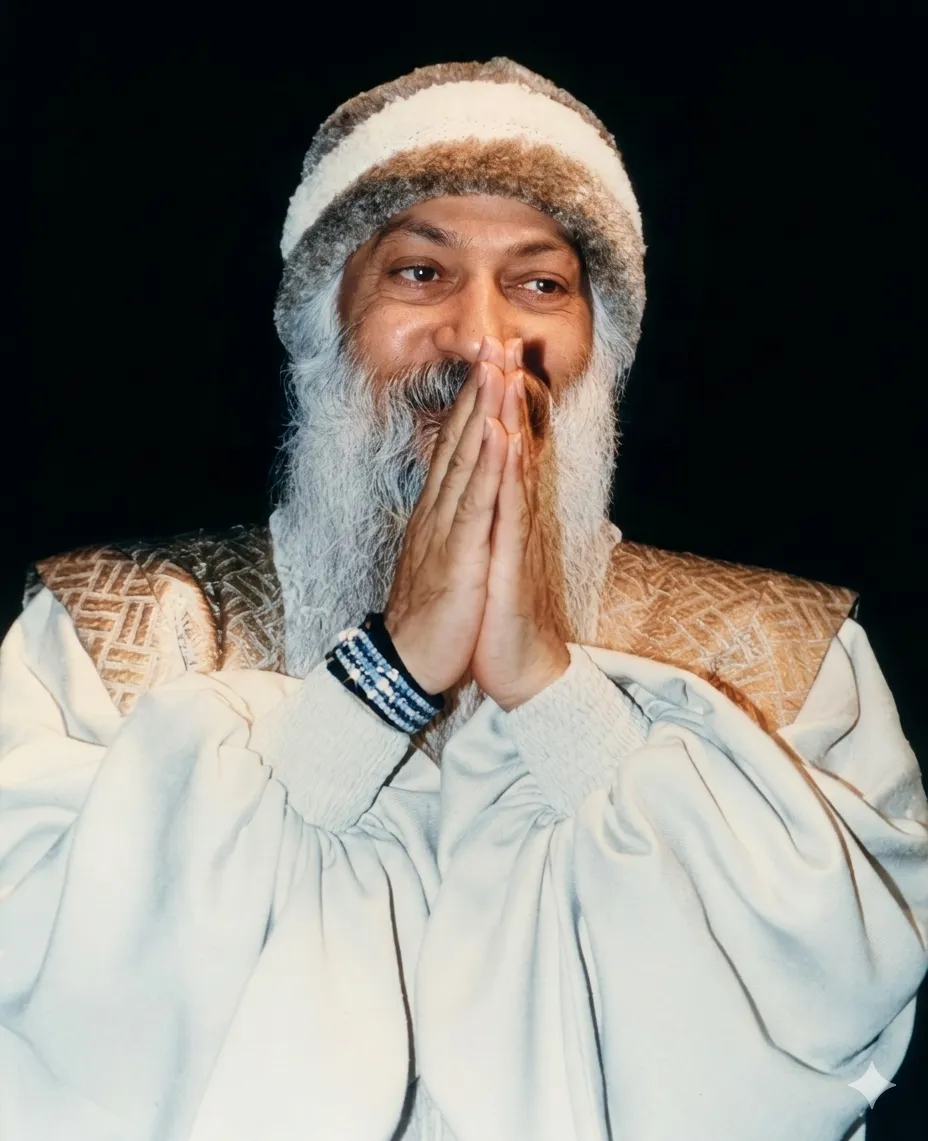
He’s saying: if you ask a real master, be ready to be hurt as your pretend self is cut away so your real self can grow.
From the Discourses
Passages where Osho speaks to this question — each links to the complete discourse.
Osho, a disciple asked a satguru, “May I ask you a question?” The satguru replied, “Why do you want to wound yourself?” Please explain the meaning of this.
The very meaning of a satguru is this: in whose presence, in whose satsang, a disciple slowly melts and disappears. The satguru is the disciple’s death. Therefore only one who has the courage to dissolve deserves to be a disciple. And even after dissolving, something remains. In truth, only what remains after you dissolve is worth preserving. What vanishes ought to vanish. There is much rubbish inside a person, and people mistake that rubbish for their being. The diamonds are lost and life passes in the mud. What you call your personality is not you; and what you truly are, you have no acquaintance with. Until the old identity is broken, there is no way for a new knowing to arise. In this world a satguru is the most dangerous person. If by chance you meet one, run as fast as you can; don’t even look back. Yes—if you have…
प्रश्न: ओशो, एक शिष्य ने सदगुरु से पूछा--क्या मैं आपसे एक प्रश्न करूं? सदगुरु ने उत्तर दिया--व्हाई यू वांट टु वूंड योरसेल्फ? क्यों तुम अपने को घाव करना चाहते हो? कृपया इसका अर्थ समझाएं।
सदगुरु का अर्थ ही यही है कि जिसकी उपस्थिति में, जिसके सत्संग में शिष्य धीरे-धीरे पिघलते-पिघलते मिट जाए। सदगुरु शिष्य की मृत्यु है। और इसलिए शिष्य होने का हकदार वही है, जिसमें मिट जाने का साहस है। मिट कर भी कुछ बचता है। सच कहो तो मिट कर ही जो बचता है, वही बचाने योग्य है। जो मिट जाता है, वह मिट ही जाना चाहिए। व्यक्ति के भीतर बहुत कुछ है जो कूड़ा-कचरा है। और लोग उस कूड़े-कचरे को ही अपना होना समझ लेते हैं। ऐसे हीरे तो खो जाते हैं और कीचड़ में ही जिंदगी बीत जाती है। जिसे तुम व्यक्तित्व कहते हो, वह तुम नहीं हो। और जो तुम हो, उससे तुम्हारी कोई पहचान नहीं। …
Osho, the arrows you let fly from behind the shelter of Baba Maluk, Krishna, Buddha, Mahavira and Christ have wounded me. When will the balm and bandage be applied to the wounded?
This alone is the meaning of a true Master: he makes you hear of the other shore. You may resist hearing, yet he keeps telling it. And one day a dream is stirred within you; you begin to dream of that far shore. This shore starts to seem futile. When there appears no substance here, then the trouble begins. On this shore nothing seems substantial; life here no longer feels meaningful. There is no relish now in earning money. No purpose now in the race for position. Even relationships look like children’s toys—wife, husband, sons, daughters. Now it is a big difficulty. Until now you managed to distract yourself with your toys; now you see they are toys. The real is across. Long were you bewitched by the counterfeit here. But now how...? Between lies a vast ocean. The real is over there and between is a great sea. To…
पहला प्रश्न: ओशो, आप बाबा मलूक, कृष्ण, बुद्ध, महावीर और क्राइस्ट की आड़ से जो तीर चलाते हैं, उनसे मैं घायल हो गया हूं। घायल की मलहम-पट्टी कब होगी?
सदगुरु का इतना ही अर्थ है कि उस तट की बात तुम्हें सुना दे। तुम लाख चाहो, न सुनो, लेकिन सुनाता जाए। और एक दिन तुम्हारे भीतर एक सपना जाग उठे; और तुम उस तट के सपने देखने लगो। और यह तट तुम्हें व्यर्थ मालूम होने लगे। और इस तट पर तुम्हें कुछ सार न दिखाई पड़े, फिर अड़चन होगी। इस तट पर सार दिखाई पड़ता नहीं; यहां जीने में अर्थ मालूम होता नहीं। धन कमाने में अब रस नहीं। पद की दौड़ में अब प्रयोजन नहीं। अब संबंध भी सब बच्चों के खिलौने मालूम होते--पत्नी, पति, बेटे, बेटियां। अब बड़ी मुश्किल हुई। अभी तक तो किसी तरह भुलाए थे अपने खिलौनों में, अब पता चला कि ये सब तो खिलौने हैं; असली तो उस पार है। यहां नकली में तो खूब भरमाए रहे। लेकिन अब कैसे...?
Osho, true and deep thirst by itself brings one to the Divine; then by praising the master again and again, aren’t you making us crippled?
You are crippled! You can’t be made any more crippled than you already are. You are blind; there is no way to close the eyes any further. Where does it hurt when you hear the master being praised? It is the ego that suffers greatly on hearing the master’s glory. The egoless one is filled with awe and gratitude. In him, the master’s praise becomes a shower of nectar, but the egoistic feels great pain—because the praise of the master means you will have to disappear. A master means you must become a “no.” As long as you are, the master cannot be. The master is death. He will efface you, wipe you out completely. This creates panic. That is why somewhere the praise of the master hurts. If it hurts, look closely within: the ego is standing there. And that ego is very cunning; it looks for big arguments…
पहला प्रश्न: ओशो, सच्ची और गहरी प्यास स्वयं परमात्मा तक पहुंचा देती है फिर आप बार-बार गुरु की महिमा बतला कर क्या हमें पंगु नहीं बना रहे हैं?
… अंधे तुम हो, आंख को और ज्यादा बंद करने की कोई व्यवस्था की नहीं जा सकती। गुरु की महिमा सुन कर चोट कहां लगती है? अहंकार को बड़ी पीड़ा होती है गुरु की महिमा सुन कर। निर-अहंकारी तो अहोभाव से भर जाता है। गुरु की महिमा उसके भीतर एक अमृत की वर्षा बन जाती है, लेकिन अहंकारी को बड़ी पीड़ा लगती है। क्योंकि गुरु की महिमा का अर्थ है, तुम्हें मिटना पड़ेगा। गुरु का अर्थ है, तुम्हें ‘न’ हो जाना पड़ेगा। जब तक तुम हो, तब तक गुरु न हो सकेगा। गुरु मृत्यु है। वह तुम्हें मिटाएगा, पोंछ डालेगा बिलकुल। इससे घबड़ाहट होती है। इससे गुरु की महिमा सुन कर कहीं न कहीं चोट लगती है। …
Osho, this humble servant begs you: whenever in discourse you say “before I leave this world,” or “when I am no more,” you tear my heart apart. It causes great pain. Please do not say such words.
The dream works like the springs in a car. The car goes over a pothole; the springs swallow the jolt; you ride on. The more expensive the car, the better the springs. Railroad cars have buffers between them so if there’s a sudden stop, the cars don’t crash into each other. The buffers absorb the shock. A dream is a buffer. It saves you through the night; otherwise a thousand disturbances would awaken you. A mosquito buzzes in your ear; you think it’s Lata Mangeshkar! The dream has saved you. Lata Mangeshkar is singing! The dream offers you a trick: “Why be bothered? It’s no mosquito; it’s Lata singing. Listen closely!” You start hearing a film song. The mosquito’s whine is drowned in the melody. A buffer has come in between and swallowed the bump. All night the dream protects your sleep. But when a dream becomes something sleep cannot…
आखिरी प्रश्न: ओशो, आपसे इस दास का निवेदन है कि आप प्रवचन में जब भी कभी कहते हैं, ‘इस दुनिया से जाने के पहले’, या, ‘जब मैं नहीं रहूंगा,’ तब मेरे कलेजे को चीर देते हैं। बहुत वेदना होती है। कृपया इन शब्दों को मत कहें।
सपना इस तरह काम करता है जैसे कार में लगे स्ंिप्रग काम करते हैं। कार जा रही है, गड्ढा पड़ता है तो स्ंिप्रग गड्ढे को पी जाता है; तुम अंदर बैठे हो, चलते रहते हो। जितनी कीमती कार हो, उतने बहुमूल्य स्ंिप्रग होते हैं। रेलगाड़ियों के दो डिब्बों के बीच में बफर लगाए होते हैं। वे बफर इसलिए लगाए होते हैं कि अगर कोई टकराहट हो जाए, एकदम से रेलगाड़ी रोकनी पड़े, कुछ हो जाए, तो दो डिब्बे टकरा न जाएं। बफर धक्का पी जाते हैं। सपना एक ‘बफर’ है। सपना तुम्हें रात भर बचाए रखता है, नहीं तो हजार उपद्रव आते हैं। एक मच्छर आकर कान के पास गुनगुनाने लगा, तुम सोचते हो कि लता मंगेशकर! सपने ने तुमको बचा दिया। लता मंगेशकर गा रही है! सपने ने एक तुमको तरकीब पकड़ा दी; सपने ने कहा, तुम कहां परेशान हो रहे हो, कोई मच्छर-वच्छर नहीं है, लता मंगेशकर गा रही है। जरा गौर से गीत सुनो! तुम एक फिल्मी धुन सुनने लगे। मच्छर की धुन फिल्मी धुन में दब गई। बफर आ गया। बीच में बफर ने आकर गड्ढे को पी लिया। रात भर सपना तुम्हें बचा रहा है। …
Osho, this game began unknowingly, in laughter and play. I had no idea it would drown me. Ahead there is darkness, behind a chasm. Nothing can be seen ahead, and going back feels impossible. The day somehow passes—why does this dark night come?
Days of fear, nights of fear—and you call it heaven! No one thinks so in childhood; only in old age do people look back and say, “Ah, how beautiful those days were!” It is a way to console the mind. The same happens to societies on a large scale. They say the golden age is gone—Satya Yuga was in the past; now is Kali Yuga. “Rama-rajya was before!” Was there Rama-rajya even in Rama’s time? What kind? Rama’s own life was full of suffering—let others be. His father deceived him—and at whose behest? An old man married to a young woman—the usual plight of old husbands. They are the most accommodating—obey their youthful wives like slaves. Dasharatha, a slave to his bird-like queen! He exiled a son like Rama for fourteen years—no backbone. And what joy in Rama’s life? Fourteen years wandering; then war with Ravana; he lost his wife;…
पहला प्रश्न: ओशो, यह खेल तो अनजाने में, हंसी-हंसी में शुरू हुआ। यह तो खबर न थी कि यह हमें ही ले डूबेगा। आगे अंधेरा, पीछे खाई। आगे कुछ दिखाई नहीं देता और पीछे जाना नामुमकिन लगता है। दिन तो निकल जाता है, यह अंधेरी रात क्यों आती है?
दिन भय हैं, रात भय हैं--और बच्चों का जीवन तुम स्वर्ग समझ रहे हो! सब तरह से सताए जाते हैं बच्चे। बचपन में कोई नहीं जानता कि यह स्वर्ग है। यह तो बुढ़ापे में लौट-लौट कर पीछे लोग सोचने लगते हैं कि अहह, कैसे सुंदर दिन थे! यह मन को समझाना है। यही बात बड़े पैमाने पर समाजों में घटती है। तो समाज कहते हैं कि बीत गए स्वर्ण-युग, सतयुग, अब तो कलयुग है! रामराज्य पहले था! कब था रामराज्य? राम के जमाने में भी था! यह किस तरह का रामराज्य था कि राम का खुद का जीवन बिचारों का कष्ट में बीता--औरों की तो छोड़ो! औरों की क्या गुजरी, यह तो कुछ बात ही करनी व्यर्थ है! जरा, राम की हालत तो देखो! और धोखा दें तो दें, बाप ही धोखा दे गया! और बाप ने भी किस की मान कर धोखा दे दिया! बुढ़ापे में विवाह कर लिया था एक स्त्री से, नवयुवती से... तो अक्सर बूढ़े पतियों की जो हालत हो जाती है! बूढ़े पति एक लिहाज से बड़े अच्छे पति होते हैं। नवयौवना पत्नियों की खूब मान कर चलते हैं, जो कहें, वैसा ही मानते हैं। एकदम गुलाम होते हैं। …