
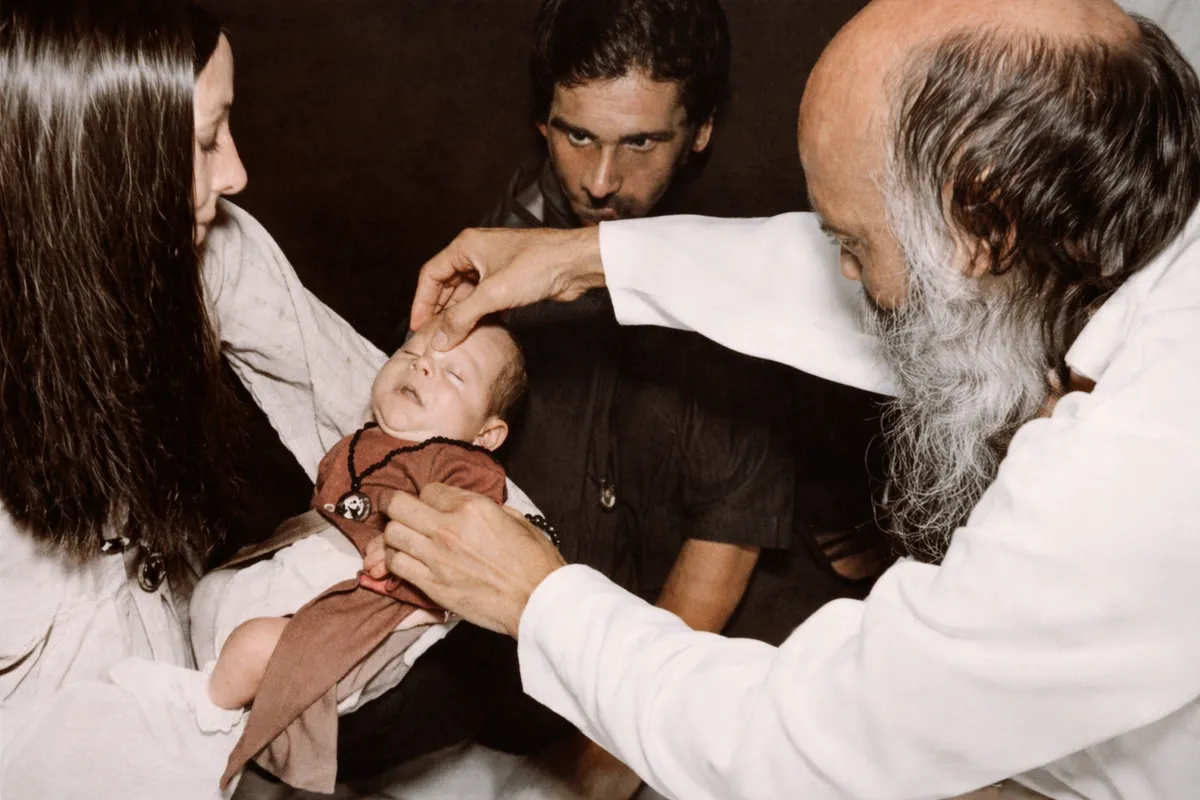
According to Osho, service to the saints matters not as utility but as a loving pretext to remain near the master. In that nearness one 'catches' their presence, is dyed in their color, and gains the courage to leap into the unknown. Proximity becomes transmission: Upanishadic insight arises, the heart hears the sky's call, and the disciple's wings unfurl.
Serving saints keeps you close to their presence so their wisdom and courage naturally rub off on you.
From the Discourses
Passages where Osho speaks to this question — each links to the complete discourse.
Question: Last question: Osho, why is service to the saints so important? Anand Maitreya! Serving the saints is only a pretext; the disciple wants to be near his master. He looks for a pretext—any pretext! It is not that the master’s feet are hurting and that is why he is massaging them. He massages because he wants to be near the master. Pressing the feet is just an excuse to linger here a little longer, to stay a little longer, to soak a little longer, to breathe this air a little longer, to behold this beauty a little longer, to drink a little more of the prasad. Pressing the feet is a pretext to do some small task for the master—sweep his courtyard, wash his clothes, cook his bread—these are all excuses.Read the full discourse →
If you give people life, what will they do with it? If you give them health, what will they do? If you give them education, what will they do? They will do only what they are. A sword in a child’s hand, or poison—what will he do? It won’t happen through service. You must awaken. And through your awakening, your bliss, your gratitude, perhaps you can awaken others. Awakening is no small thing. It is not the name of worldly amenities, nor mere freedom from illness or blindness. Awakening is the experience that the Divine abides within. Then whatever flows from your life is auspicious. Maluk is right— “Maluka is the saint who knows the other’s pain.” He says: I call him a saint who knows the other’s suffering. But what does it mean to know suffering? Malukdas opened no hospitals and no schools.Read the full discourse →
Osho! Who are you?
She bundled up everything, brought them that night. The next morning, and the next... nothing returned. She grew anxious. She asked Gurdjieff. He burst into laughter: “Yours will not be returned. Hers were returned because she truly gave; without any expectation. I had to give them back. Yours—where have I received them? You haven’t given—why should I return?” She was aghast: “I gave—and you say you haven’t received?” But Gurdjieff was right. If you can truly give to the Master, all returns—perhaps a thousandfold; often no giving or taking is needed—the spirit suffices. But dishonesty won’t do. At last Gurdjieff threw her out: “This is no business. We are engaged in inner revolution. Come when not a trace of expectation remains—not even the hope of return. And even then, I do not promise to return.” She never returned. Offer body, mind, and wealth to the saint. The sun is harsher,…Read the full discourse →
Kailash has asked a question: Sannyas? A question mark attached—and then the buts and howevers.
Sannyas—then what place is there for “but” and “however”? “But” and “however” are a man’s tricks. Either yes or no—where do buts fit in? Either you feel something is right and you do it, or you don’t feel it is right and you don’t do it. But man is dishonest. He wants to persuade himself: “The thing does seem right to me; I am so intelligent—how could it not seem right? Only, the circumstances aren’t suitable yet for me to take sannyas.” So he tacks on a but. Understand: whenever someone adds a “but,” politics has entered. “But–however” is the language of politics. The language of religion is straight and clear—yes or no. People are afraid of the company of a saint; they are frightened. They find many excuses. But they don’t want to look at the real thing. The real thing is one fear: “If I go there, I…Read the full discourse →
Prabhu Mandir Ke Dwar Par · Discourse 8
1969-06-11 · Ahmedabad · Hindi
Another friend has asked: Osho, what is the relationship between the method of meditation and jati-smaran (recollection of past lives)?
But the one who becomes skilled in this—who can fully awaken any day’s memory up to the age of five—will find that the memories begin to awaken completely. And you should test it. As today passes, note down some events and lock them up. After two years, try to recall today. Most of it will have been forgotten. Then remember—and after remembering, break the lock and compare whether what you recalled matches what you had written. You will be amazed—astonished—that besides what you wrote, many more details have come back which you did not even note at the time. They will all be there in memory. Buddha called this alaya-vijnana. There is a corner of the human mind he called the storehouse of consciousness. Like a junk room in the house where we keep all the odds and ends, there is a storehouse that collects memories—where everything from birth after…Read the full discourse →