
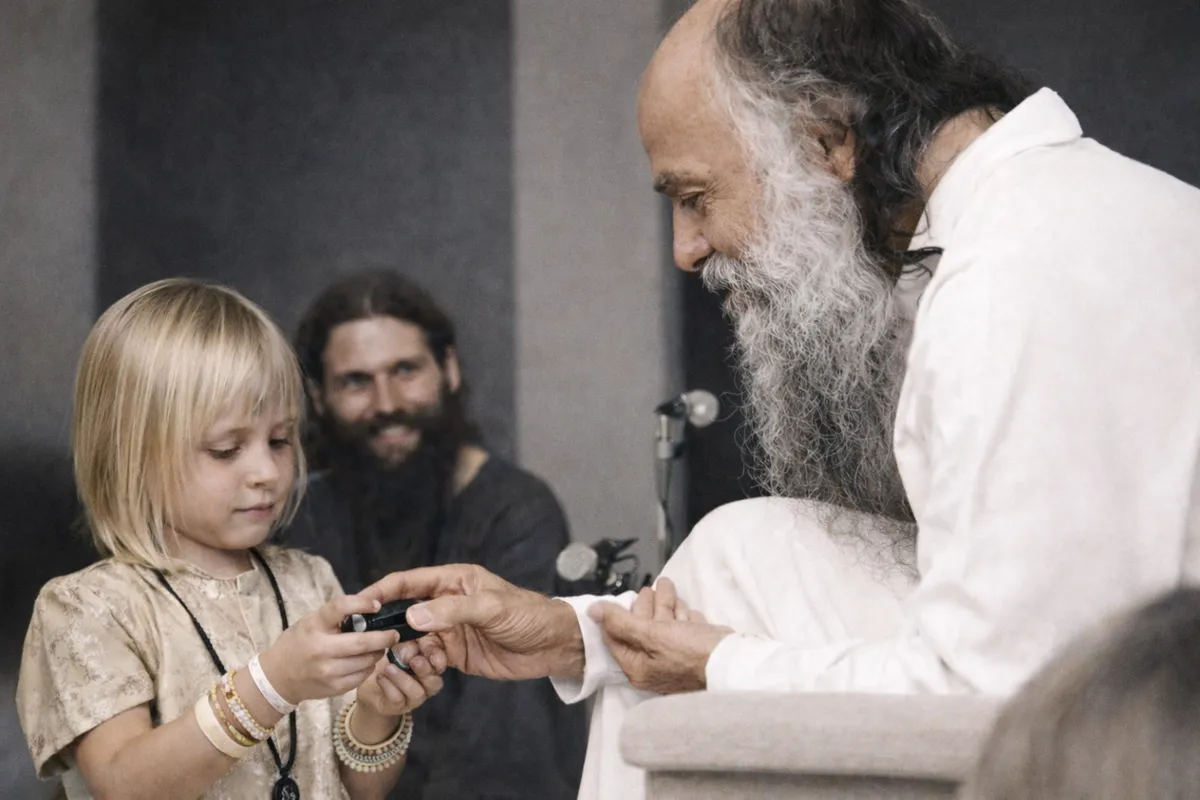
We hold on to hurt because our ego enjoys the drama; once we see this silly habit and stop feeding it, letting go and forgetting happen by themselves.
From the Discourses
Passages where Osho speaks to this question — each links to the complete discourse.
Osho, why is it so difficult to forgive, to stop clinging to hurts long since past?
It is very essential to understand because you are all disciples here, and you all will be carrying some grudge or other against me, for the simple reason because I am trying to destroy your ego. That I have to do; that's the function of the Master, to destroy your ego. And you can become very revengeful, and you can carry deep wounds through it. Katyayani, you ask me: WHY IS IT SO DIFFICULT TO FORGIVE, TO STOP CLINGING TO HURTS LONG SINCE PAST? For the simple reason that they are all that you have got. And you go on playing with your old wounds so that they keep fresh in your memory. You never allow them to heal. A man was sitting in a compartment in a train. Across from him was sitting a Catholic priest who had a picnic basket beside him. The man had nothing else to…
But many people ask—one friend even asked today—how to be free of the ego?
You won’t get rid of the ego directly. Grow love. As love grows, the ego will begin to dissolve. For the very energy that becomes ego is the energy that becomes love. In both love and ego, the same force is at work. So if you are very egoistic, don’t be discouraged. A great capacity for love lies hidden within you. Do not be disheartened; you have a vast source. If this same energy is freed, it will turn into love. But don’t fight the ego head-on. Whatever you do directly against it will not erase it. Begin instead to expand toward love. Start letting love spread from anywhere. Wherever your inclination goes, let love flow in that direction. Keep just one thing in mind: don’t let it stop. Let it go on increasing. Let its boundaries widen as much as they can. In that widening, one day you will…
लेकिन बहुत लोग पूछते हैं, एक मित्र ने आज भी पूछा है कि अहंकार से कैसे छुटकारा हो?
… जैसे-जैसे प्रेम बढ़ेगा, अहंकार विसर्जित होने लगेगा। क्योंकि जो शक्ति अहंकार बनती है, वही प्रेम बनती है। प्रेम और अहंकार में एक ही शक्ति काम करती है। इसलिए अगर आप बड़े अहंकारी हैं, तो निराश मत हों। आपके पास प्रेम की बड़ी क्षमता छिपी पड़ी है। दुखी मत हों; आपके पास बड़ा स्रोत है। यही ऊर्जा मुक्त हो जाए, तो प्रेम बन जाएगी। लेकिन सीधा अहंकार से मत लड़ें। आप जो कुछ भी करेंगे सीधा, उससे अहंकार नहीं मिटेगा। आप तो प्रेम की तरफ फैलाव शुरू कर दें। कहीं से भी प्रेम को फैलाना शुरू करें। जिस तरफ लगाव जाता हो, उसी तरफ प्रेम को बहाएं। एक ही खयाल रखें कि उसको रुकने मत दें। उसे बढ़ते जाने दें। उसकी सीमाएं जितनी विस्तीर्ण होने लगें, होने दें। यह विस्तीर्ण होती सीमा, एक दिन आप अचानक पाएंगे आपके अहंकार का घाव तिरोहित हो गया। …
Osho, why can I not forget my past? Even though in my past there is nothing but suffering.
Perhaps for precisely that reason. Man keeps scratching at his sorrows to remember them—because there is a certain pleasure in suffering. You will be surprised. You will say, “Pleasure in suffering? What kind of pleasure?” There is a pleasure in suffering: suffering is the food of the ego. In a state of bliss the ego dissolves; in a state of suffering the ego becomes very dense. People have not chosen suffering for nothing; they have chosen it cleverly, knowingly. People are not miserable by accident; they are miserable because only in suffering does the ego survive. “I am somebody!”—this remains only in pain. The moment a wave of bliss comes, you are swept away; the ego cannot remain. So people talk about bliss, but they do not want to be blissful; they are afraid. If they become blissful, this sense of “I” will not survive. That is why all the…
दूसरा प्रश्न: ओशो, मैं अपने अतीत को क्यों नहीं भूल पाता हूं? यद्यपि मेरे अतीत में दुखों के अतिरिक्त और कुछ भी नहीं है।
शायद इसीलिए। आदमी दुखों को कुरेद-कुरेद कर याद करता है। क्योंकि दुख में एक मजा है। तुम चौंकोगे। तुम कहोगे: दुख में और मजा! दुख में कैसा मजा? दुख में एक मजा है। दुख अहंकार का भोजन है। आनंद की अवस्था में अहंकार विलीन हो जाता है। दुख की अवस्था में अहंकार खूब सघन हो जाता है। लोगों ने दुख ऐसे ही थोड़े ही चुन लिया है! …
[NOTE: This is an unedited tape transcript of an unpublished darshan diary, which has been scanned and cleaned up. It is for reference purposes only.] Misery is something like going downhill: it is so easy, no intelligence is needed, no work upon yourself is needed. You can simply go on rolling down, under the influence of the magnetic field of the earth, by gravitation. But if you want to go uphill then intelligence will be needed, work upon yourself will be needed -- and not a hectic kind of work but something constant. One never knows at what point the breakthrough happens; one has just to go on hammering. Sometimes it happens that you stop just before it was going to happen; just one more step and the goal would have been achieved. So one has to go on -- it is unpredictable.
Osho, you have earlier said, “Live moment to moment, live in the present.” Now you are saying, “Return to the past.” What should we do?
So it is with the mind—there are ruts. The past means endless grooves. However much you understand, your intellect agrees, you make decisions, you resolve—at the moment of resolve you feel something is going to change. But not even an hour passes before your decision breaks. Then only self-condemnation is produced, nothing else. Your saints, your fakirs, your priests and pundits—most of the time they only succeed in producing self-condemnation in you, nothing else. Their words are logically correct. You cannot even say they are wrong; you have to admit they are right. In that admission you take a decision. But against what are you deciding? Inside are grooves carved since who knows when, deep tracks. Walking in them has become a habit. It is easy to walk in them. They will pull you again and again. The meaning of returning into the past is: these grooves must be erased.…
दूसरा प्रश्न: ओशो, आपने पहले कहा है, क्षण-क्षण जीयो, वर्तमान में जीओ। अब आप कह रहे हैं, अतीत में लौटो। हम क्या करें?
ठीक मन पर लीकें हैं। अतीत का अर्थ है, अनंत लीकें। तो आप कितनी ही बातें समझ लेते हैं; बुद्धि सहमत हो जाती है; निर्णय ले लेते हैं; संकल्प कर लेते हैं। और जब संकल्प करते हैं, तब सोचते हैं कि कुछ होने-जाने वाला है। घड़ी भी नहीं बीत पाती कि जो आपने निर्णय लिया था, वह टूट जाता है। और तब सिर्फ आत्मग्लानि पैदा होती है, और कुछ भी नहीं। आपके संत, आपके फकीर, आपके पंडित-पुरोहित, आप में सिर्फ आत्मग्लानि पैदा करवा पाते हैं और कुछ भी नहीं। क्योंकि उनकी बातें तो तर्कयुक्त हैं। आप भी कह नहीं सकते कि वे गलत कह रहे हैं। स्वीकार करना पड़ता है कि ठीक कह रहे हैं। उस स्वीकृति में आप निर्णय लेते हैं। लेकिन निर्णय किसके खिलाफ ले रहे हैं! न मालूम कितनी लंबी लकीरें भीतर हैं, गहरे खांचे हैं। उनमें चलने की आदत हो गई है। उनमें चलना सुगम है। …