
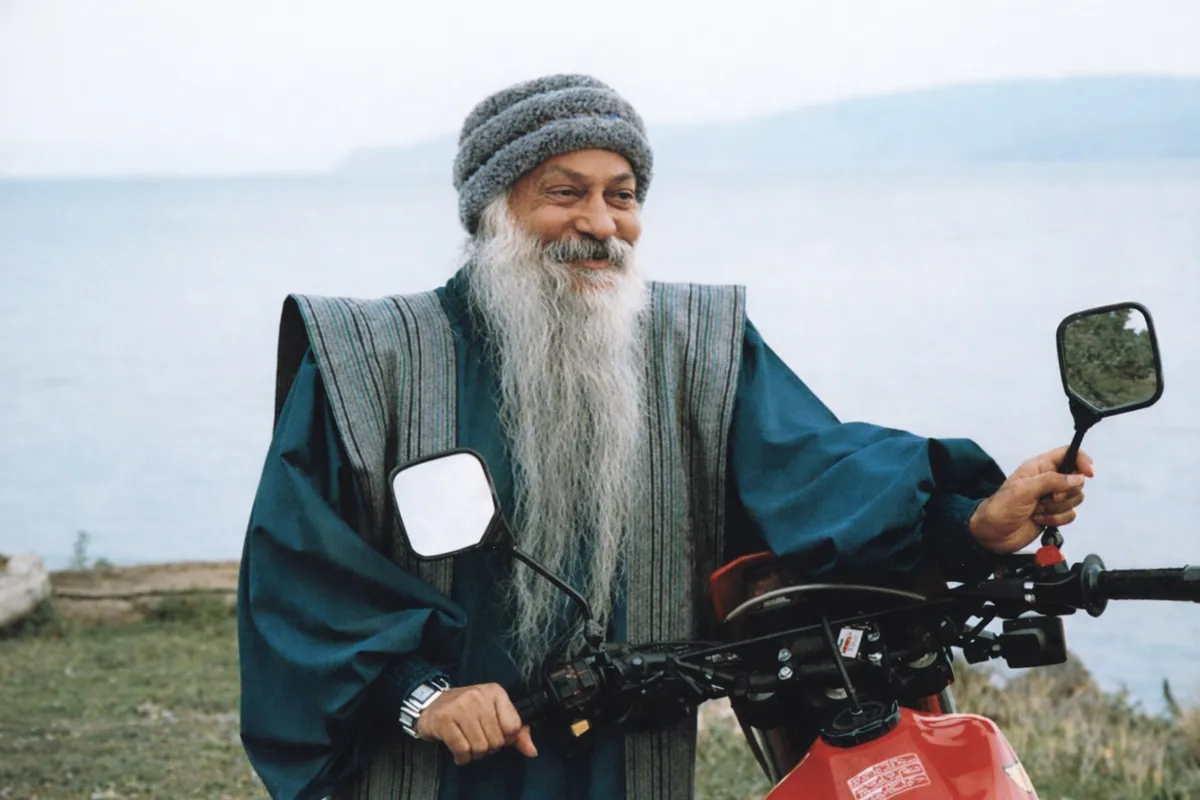
Because real meditation means the old “you” must completely disappear, which feels scary, so we prefer music or dance where we vanish only for a tiny, safe moment.
From the Discourses
Passages where Osho speaks to this question — each links to the complete discourse.
Question: Maneesha has asked: OUR BELOVED MASTER, OUR LOVE FOR MUSIC, POETRY, DANCE, OUR LOVE FOR LOVE ITSELF -- DOESN'T THAT SUGGEST AN URGE IN US TO DISAPPEAR? IF THAT IS SO, WHY DOES MEDITATION, THE ART OF DISAPPEARING, NOT COME MORE NATURALLY TO US? Maneesha, music, poetry, dance, love are only half way. You disappear for a moment, then you are back. And the moment is so small.... Just as a great dancer, Nijinsky, said, "When my dance comes to its crescendo, I am no more. Only dance is." But that happens only for a small fragment of time; then again you are back. According to me, all these -- poetry, music, dance, love -- are poor substitutes for meditation. They are good, beautiful, but they are not meditation. And meditation does not come naturally to you, because in meditation you will have to disappear forever.
Beloved Osho, why is the ultimate experience hard to attain? It seems to me that it is part of nature's intention to make it very difficult and to require man to go through ages of development before he reaches it. Isn't there a divine purpose why it takes him so long to reach?
A person who loves will not love money because a person who loves will not be afraid of death. And if a person is not afraid of death, there cannot be any clinging, attachment, mad obsession with money. It is impossible. If you can love, then you will accept death very easily. It will be a deep relaxation, a long sleep, a beautiful dissolution into the existence. And if you can be receptive to death, then meditation can be as easy as anything. The problem arises because love is not there. When death has become a fear, then meditation will be difficult because it is both love plus death. It is death as far as your ego is concerned; it is love as far as the divine existence is concerned. I define meditation in a mathematical formula: meditation is equal to love plus death -- love to the existence, to…
Osho, in this land meditation rose to the heights of Gauri Shankar. Unmatched beings like Shiva, Patanjali, Mahavira, Buddha, and Gorakh took form. Even so, why did the attraction toward meditation keep declining?
The conch had no legs, yet he still clasped it as if catching its feet, put his head on it, and said, “In any way—get me to the mahatma.” It said, “We’ll get you to two.” This is the limit. “To four.” The same babble. In two or four days the conch drove the man mad. The conch would nag him: “Ask for something!” The man would look around, afraid to say a word: “If I speak, this wretch will trap me again; then it’ll keep hounding me—‘Will you take thirty-two? Sixty-four?’” There was never any giving. Such is the relationship between meditation and the ego. The ego is the great conch. However much you get, you want more. The number keeps increasing. The race quickens. And man never reaches a place where he can say, “The goal is here.” The goal remains a mirage—always at a distance. Much journeying;…
meditation transforms you into a beloved of the whole existence as the meditator becomes centred, silent, aware the whole existence starts converging upward the same world but no more the same before it was cold, alien now it is cosy, a home a man without meditation lives in the world as a stranger as you enter meditation you enter a love affair with existence and for love everything is possible even the impossible is not impossible all that is needed is a deep, profound silence in your being that becomes a magnetic pull then whatsoever is beautiful in existence starts moving towards you meditation creates gravitation for truth for beauty, for love for freedom, for godliness for all that is really valuable one need not go searching for anything one has simply to rest in one's being and all that is needed follows in its own course meditation is the…
Osho, what is the first experience of samadhi like?
You will know only when it happens. It cannot be said; at most a few hints can be given. It is as if, in the dark, a lamp is suddenly lit. Or as if a dying patient, right at the edge of death, suddenly finds a medicine that works; life’s wave, life’s thrill spreads again—so it is. As if a corpse becomes alive—such is the first experience of samadhi. It is the taste of nectar. The experience of the ultimate music. But it will be only when it happens; and only then will you understand. You will not understand by my saying it. It is as with love. How can anyone explain it? To someone who has never loved, never known love, no matter how many explanations you offer—he will hear it all and still ask, “I haven’t understood; please explain a little more.” It is like explaining light to…