
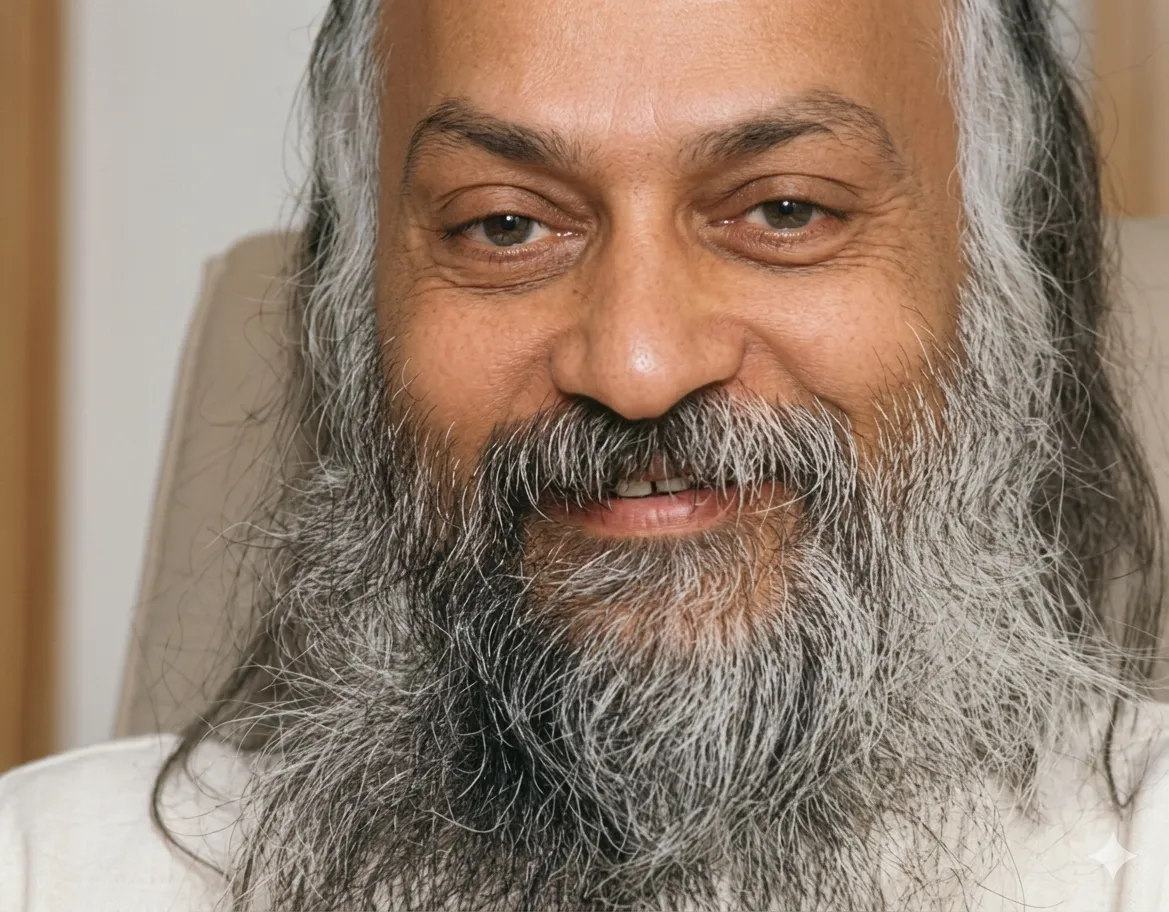
Real love and devotion make you drop your ego and turn inside, and the outer guru simply points you to the guru within.
From the Discourses
Passages where Osho speaks to this question — each links to the complete discourse.
Osho, Sahjobai’s path is love, devotion, surrender, and worship of the guru. Then why does she begin to emphasize inwardness, the inner journey, and dispassion?
The guru is outside. But the outer guru is merely a ladder leading to the inner guru. When you lay yourself completely at the feet of the outer guru, open your eyes and you will find that the outer guru has bid you farewell. It was your outward mode of seeing that made the guru appear outside. Suddenly you find this music is resounding within. This is no one outside—someone within is speaking. I have heard: a fakir came to a mosque. Perhaps he was a little late; people were already dispersing. He said, “Brothers, the congregation is breaking up so quickly. Why such haste? Pray more slowly, more gently.” One man said, “You don’t blame yourself for coming late, and you blame the congregation. The Prophet has completed the prayer.” This is a story from Muhammad’s time. “The Prophet has completed the prayer. Now what is there to do,…
दूसरा प्रश्न: ओशो, सहजोबाई का मार्ग है प्रेम, भक्ति, समर्पण, गुरु-पूजा। फिर भी वह अंतर्मुखता, अंतर्यात्रा और वीतरागता पर जोर क्यों देने लगती है?
गुरु बाहर है। मगर जो बाहर गुरु है, वह भीतर के गुरु तक पहुंचाने की सीढ़ी मात्र है। जब तुम बाहर के गुरु के चरणों में अपने को बिलकुल छोड़ देते हो, आंख खोल कर देखते हो तुम पाते हो बाहर का गुरु तुम्हारे समर्पित होते ही विदा हो गया। वह तो तुम्हारे बाहर के देखने का ढंग ही था, इसलिए गुरु बाहर दिखाई पड़ता था। अचानक तुम पाते हो यह स्वर तो भीतर बज रहा है। यह तो कोई बाहर नहीं है, कोई भीतर बोल रहा है। मैंने सुना है, एक फकीर मस्जिद में पहुंचा। थोड़ी देर हो गई थी शायद उसे, लोग मस्जिद से विदा हो रहे थे। तो उसने कहा: भाइयो, इतनी जल्दी संगत उठ गई। इतनी जल्दी क्या है? प्रार्थना इतनी त्वरा से क्यों की गई? थोड़ी धीरे, आहिस्ता करते। …
Osho, you have titled this series of talks “Sahaj Yoga.” Do “sahaj” and “yoga” not seem mutually opposed?
Anand Maitreya! They don’t just seem opposed, they are opposed. But no ultimate truth of life can manifest without contradiction. Life is made of opposites—darkness and light, day and night, woman and man, negative electricity and positive electricity, birth and death. The very structure of life is woven of opposites. Hence the opposites are not only opposed; they are complementary to each other. If you have labored hard all day, you will be able to sleep deeply. Labor and rest are opposites, yet only the one who has worked can rest deeply—and the one who has not worked cannot. So the opposites are not only opposed, they complete each other. And only the one who has rested deeply at night can rise in the morning and engage in work again. One who has not rested through the night will not be able to work in the morning. Look closely at…
पहला प्रश्न: ओशो, आपने इस प्रवचनमाला का शीर्षक दिया है--सहज-योग। क्या सहज और योग परस्पर-विरोधी नहीं लगते?
आनंद मैत्रेय! विरोधी लगते ही नहीं, विरोधी हैं। लेकिन जीवन का कोई भी परम सत्य बिना विरोधाभास के प्रगट हो ही नहीं सकता। जीवन बना है विरोधों से--अंधेरा और प्रकाश, दिन और रात, स्त्री और पुरुष, ऋण विद्युत-धन विद्युत, जन्म-मृत्यु। जीवन की संरचना विरोधों से है। इसलिए विरोधी विरोधी ही नहीं हैं, एक-दूसरे के परिपूरक भी हैं। दिन भर श्रम किया खूब तो गहरी नींद सो सकोगे। श्रम और विश्राम विरोधी हैं, पर जिसने श्रम किया है वही गहरा विश्राम कर सकेगा। और जिसने श्रम नहीं किया वह गहरा विश्राम भी न कर सकेगा। तो विरोधी विरोधी ही नहीं हैं, एक-दूसरे के परिपूरक भी हैं। और जिसने रात्रि गहरा विश्राम किया है वही सुबह जागकर फिर श्रम में संलग्न हो सकेगा। जो रात-भर विश्राम नहीं कर सका वह सुबह श्रम में भी न लग सकेगा।
Osho, it seems that in bhakti the guru is held supreme. Does love most of all need the support of the other, of one who is higher?
Even in searching, the cure for the heart’s pain is not found, Though spring arrives, the lotus of the heart does not bloom. Then, coming to someone, the lotus of the heart opens—that is the guru. In whose presence the lotus of your heart opens; one who is like the sun for you, at whose touch your petals open at once. All night long the lotus remains closed; at dawn the sun rises, and it opens. In the world you wander and wander—that is the night, the dark night. Even in searching, the cure for the heart’s pain is not found, Though spring arrives, the lotus of the heart does not bloom. Many times small lamps are lit, stars twinkle, yet the lotus will not open. In whose presence the petals suddenly open—in whose presence you suddenly find you are no longer a bud, you are a flower—you have come…
पांचवां प्रश्न: ओशो, ऐसा लगता है कि भक्ति में गुरु की महिमा सर्वाधिक है। क्या प्रेम को दूसरे की, श्रेष्ठ की, सहारे की जरूरत सबसे अधिक है?
फिर कभी किसी के पास आकर दिल का कमल खुल जाता है, वही गुरु। जिसके पास तुम्हारे दिल का कमल खुल जाए, जो तुम्हारे लिए सूरज जैसा हो, कि तत्क्षण तुम्हारी पंखुड़ियां खुल जाएं। रात भर कमल बंद होता है, सुबह सूरज ऊगा और खुल जाता है। संसार में तुम भटकते रहते, भटकते रहते--वह रात। अंधेरी रात।
Osho, to cross the ocean of becoming and dissolve into the Supreme Self, which should one rely on—insensate devotion, foolish devotion, or blind devotion?
So drop this worry—whether insensate devotion, foolish devotion, blind devotion, or deranged devotion. Drop it; devotion is enough. And in devotion all these labels will take care of themselves. Become a devotee once, and “blind” you will automatically be—meaning: the whole world will call you blind. You will not become blind; rather, you will gain eyes. You will begin to see what ordinary eyes cannot see. The invisible will become visible; the imperceptible will come within perception. That which no one has ever touched will be felt as touch. But the world will call you blind. The world will not be able to accept it—because the world is blind, and the blind call you blind. H. G. Wells has a story: somewhere in Mexico there is a valley where children go blind within three months of birth. The story is based on fact. The climate, the food—something there ruins the…
दूसरा प्रश्न: ओशो, भवसागर से पार उतरकर परम आत्मा में लीन होने के लिए जड़भक्ति, मूढ़भक्ति एवं अंधभक्ति में से किसका सहारा लिया जाये?
तो तुम यह फिक्र छोड़ो कि जड़भक्ति कि मूढ़भक्ति कि अंधभक्ति कि विक्षिप्त भक्ति, यह छोड़ो तुम फिक्र; भक्ति काफी है। और उस भक्ति में ये सब चीजें अपने आप आ जायेंगी। तुम एक दफा भक्त तो हो जाओ, अंधे अपने आप हो जाओगे। सारी दुनिया तुमको अंधा कहेगी, तुम नहीं अंधे हो जाओगे। तुम्हें तो आंखें मिल जायेंगी। तुम्हें तो वह दिखाई पड़ने लगेगा जो साधारण आंखों से दिखाई ही नहीं पड़ता। अदृश्य तुम्हारे लिए दृश्य बनने लगेगा। अगोचर गोचर हो जायेगा। जिसे कभी किसी ने नहीं छुआ उसका स्पर्श अनुभव होने लगेगा। लेकिन दुनिया तुम्हें अंधा कहेगी। दुनिया न मान सकेगी। क्योंकि दुनिया अंधी है। और दुनिया तुम्हें अंधा कहेगी।
Osho, you call sannyas, meditation, and love a leap. What do you mean by a leap?
Narendra! Whatever is essential in life—be it meditation, love, or sannyas—does not come the way mathematics does. It has no method, no staircase. There is no sequential movement in it. It is an explosion. Everything happens in a single instant. It is not a conclusion of thought; it is a condition of the heart, a state of feeling. Suddenly! When you light a lamp, darkness doesn’t go away gradually—first a little, then a little more. Here the lamp is lit, and there the darkness is gone—in one moment, at once. I call the lighting of the lamp and the vanishing of the darkness a leap. If it left little by little, in sequence, in measurable increments, then it would be a process. So too with sannyas: it is not a process. In a moment of awakening, the futility of life is seen. It is seen with such intensity that nothing…
पहला प्रश्न: ओशो, संन्यास, ध्यान और प्रेम को आप छलांग कहते हैं। छलांग से आपका क्या आशय है?
नरेंद्र! जीवन में जो भी महत्वपूर्ण है--ध्यान हो, प्रेम हो, या संन्यास हो--उसकी उपलब्धि गणित की भांति नहीं होती; उसकी उपलब्धि की प्रक्रिया नहीं होती, सीढ़ियां नहीं होतीं। उसमें कोई क्रमिक गति नहीं होती। विस्फोट होता है। एक क्षण में सब घट जाता है। सोच-विचार नहीं--एक हार्दिक दशा है, एक भाव की दशा है। अचानक! जैसे दीया जलाओ, तो अंधेरा क्रमशः दूर नहीं होता--कि पहले थोड़ा हटा, फिर और थोड़ा हटा, फिर और थोड़ा हटा। इधर दीया जला, उधर अंधेरा नहीं हुआ--एक क्षण में, युगपत।