
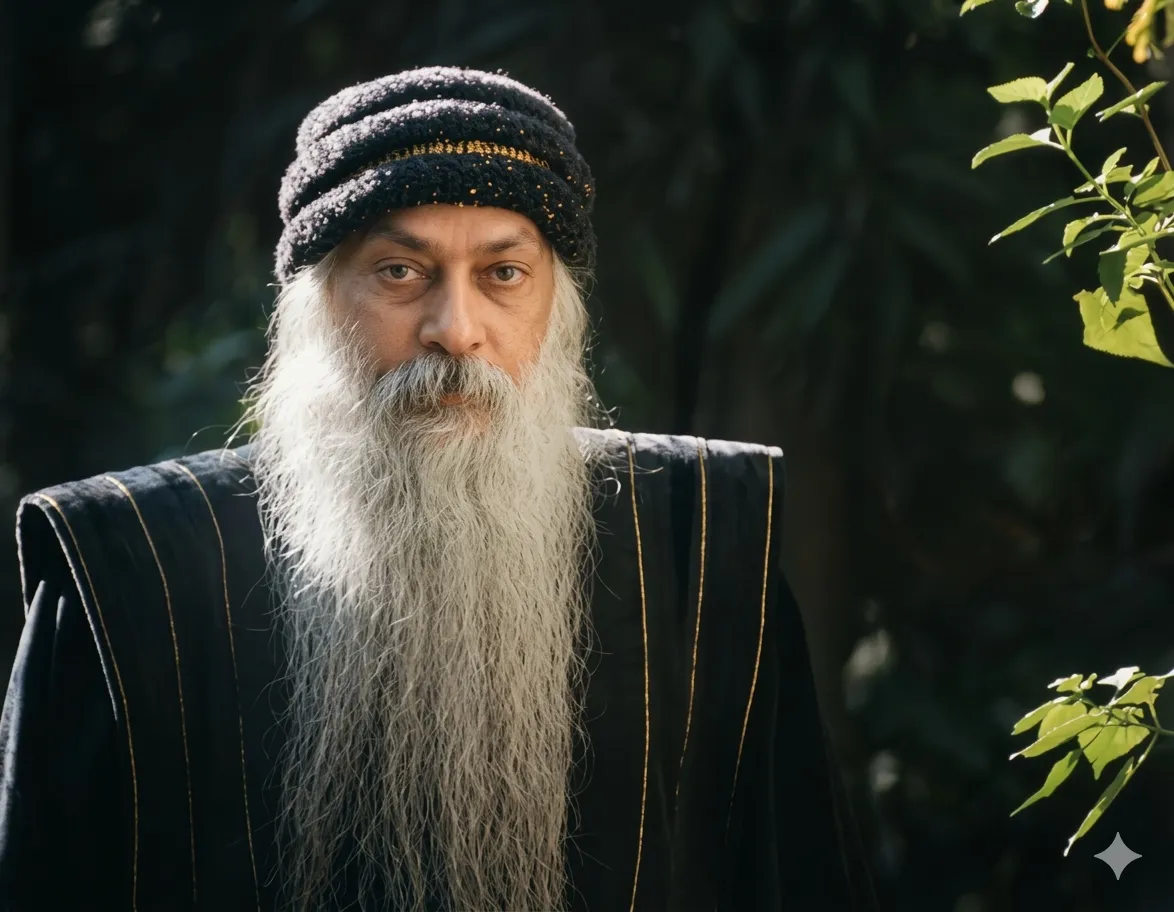
God isn’t a person who comes to fix things—you must light your own inner lamp today instead of waiting for a savior.
From the Discourses
Passages where Osho speaks to this question — each links to the complete discourse.
A friend has asked: Whenever there has been a crisis in religion, whenever darkness has descended upon the country, whenever there has been wrongdoing, God has taken birth as an avatar. Why does God not take an avatar now?
Those enamored of the past, those worshipers of death, also worship old age. The older someone is, the more valuable his words become. But donkeys also grow old; they don’t become wise by it. An old donkey remains a donkey; an old mule remains a mule. And a horse even when young is a horse. The truth is that the genius children have, the old never do. Only a very few fortunate ones preserve the genius of their childhood; otherwise society rusts the edge of everyone’s sword. And when the blade is blunted, we say, “Ah, what an ancient sword!” My words are as new as the morning dew, as fresh as a just-opened flower. Pundits cannot understand such words. They need old stones—and the older the better—and if the script upon them is in Brahmi, then nothing more is needed—their head bows to the ground. Worshipers of the ancient,…
किसी मित्र ने पूछा है कि हमेशा जब भी धर्म पर संकट आया और जब भी देश में अंधेरा घिरा और जब भी देश में अनाचार हुआ, तो भगवान ने अवतार लिया। अब भगवान अवतार क्यों नहीं लेते?
लेकिन अतीत के मोही, मृत्यु के पूजक बुढ़ापे के भी पूजक होते हैं। जितना कोई बूढ़ा हो, उतनी उसकी बात कीमती हो जाती है। हालांकि गधे भी बूढ़े होते हैं, लेकिन गधों के बूढ़े होने से कुछ वे ज्ञानी नहीं हो जाते। गधा बूढ़ा होगा तो गधा ही रहता है, खच्चर बूढ़ा होगा तो खच्चर ही रहता है। और घोड़ा जवान भी होगा तो भी जवान होता है। सच तो यह है कि बच्चों के पास जो प्रतिभा होती है, वह बूढ़ों के पास कभी नहीं होती। बहुत थोड़े से ऐसे सौभाग्यशाली लोग हैं, जो अपने बचपन की प्रतिभा को बचा पाते हैं; नहीं तो यह समाज ऐसा है कि यह सबकी प्रतिभाओं पर जंग लगा देता है। जब जंग लग जाती है, जब तलवारों की धार मर जाती है, तब हम कहते हैं: अहा, कैसी प्राचीन तलवार है! मेरी बातें तो इतनी नई हैं जितनी सुबह की ओस, इतनी नई जैसे अभी-अभी खिले हुए फूल! पंडितों को ये बातें नहीं समझ में आ सकतीं। उनको तो पत्थर चाहिए पुराने और जितने पुराने हों और उन पर लेख अगर ब्राह्मी-लिपि में लिखे हों, तो फिर तो कहने ही क्या? …
Such a one can always be found. This earth is never empty of avatars. Yet you don’t find an avatar—and there is a reason. You are seeking some old avatar who no longer is. Someone seeks Krishna—Krishna is no longer here. Someone seeks Christ—Christ is no longer here. And the jest is: when Christ was here, you were seeking someone else—Moses, who had already gone. When Buddha was here, you sought Rama—Rama had already gone. And when Rama was here, you cared nothing for him; you sought some more ancient figure—Brahma, Vishnu, Mahesh—something else. You always seek the past, therefore you miss. Otherwise, as the sun rises daily, so does the Divine descend daily. But you have fixed an expectation: unless he comes crowned with peacock feathers and with a flute like Krishna, you will not accept him. There is no need for the Divine to fulfill your expectations.
तुम ऐसे व्यक्ति को सदा पा सकते हो। यह पृथ्वी कभी भी अवतार से खाली नहीं है। लेकिन तुम्हें अवतार मिलता नहीं, उसका भी कारण है। तुम किसी पुराने अवतार को खोज रहे हो जो कि अब नहीं है। कोई कृष्ण को खोज रहा है, कृष्ण अब नहीं हैं। कोई क्राइस्ट को खोज रहा है, क्राइस्ट अब नहीं हैं। और मजा यह है कि जब क्राइस्ट थे तब तुम किसी और को खोज रहे थे। तब तुम मूसा को खोज रहे थे। तब मूसा जा चुके थे। जब बुद्ध थे, तब तुम राम को खोज रहे थे। तब राम जा चुके थे। और जब राम थे, तब तुम्हें राम से कुछ लेना-देना नहीं था। तब तुम किसी और को खोज रहे थे, किसी और प्राचीन पुरुष को, ब्रह्मा, विष्णु, महेश, तुम कुछ और खोज रहे थे। तुम सदा अतीत को खोजते हो, इसलिए चूकते हो। अन्यथा पृथ्वी पर जैसे रोज सूरज आता है, ऐसे ही रोज परमात्मा भी आता है। लेकिन तुमने एक धारणा बना रखी है कि जब तक तुम मोरमुकुटधारी, हाथ में बांसुरी लेकर कृष्ण की तरह न आओगे, मैं तुम्हें स्वीकार करने वाला नहीं। …
Osho, perhaps they never even said it?
No—no one says it. It gets attributed afterward. It isn’t necessary that they say it; later it is attributed—heavily attributed. Because we cannot live without God, without an avatar. We pick someone and instantly install him as an avatar. We want security, safety, support—a crutch. So if my words are right, that alone won’t do. For my words to be completely right, it is necessary that I become God! Even if I don’t claim it, four people will get together and claim that I am God. Then my words are right. For when have a man’s words ever been right in this world? Only God’s words are right! So to make the words right, you must declare a God. Very few people in the world have been so honest as to be free even of this “sattvic” ego. In fact, even being a guru gratifies a great ego. To claim…
प्रश्न: ओशो, शायद उन्होंने कहा ही न हो?
नहीं, कोई नहीं कहता। पीछे आरोपित होता है। कोई जरूरी नहीं कि वे कहें। पीछे आरोपित होता है, बहुत आरोपित होता है। क्योंकि हम बिना भगवान के नहीं रह सकते, बिना अवतार के नहीं रह सकते। हम किसी को भी खड़ा करके तत्काल अवतार खड़ा कर लेते हैं। हम सिक्योरिटी चाहते हैं, सुरक्षा चाहते हैं, सहयोग, सहारा चाहते हैं। तो अगर मेरी बात ठीक है, तो इतने से काम थोड़े ही चलेगा। मेरी बात को पूरा ठीक होने के लिए जरूरी है कि मैं भगवान हो जाऊं! अगर मैं दावा न करूं, तो मुझे चार जन मिल कर दावा करेंगे कि वे भगवान हैं। तब तो मेरी बात ठीक होती है। क्योंकि आदमी की कहीं बातें ठीक हुई हैं इस दुनिया में? बातें तो भगवान की ठीक होती हैं! तो बातें ठीक करने के लिए जरूरी होगा कि एक भगवान घोषित कर दो। बहुत कम लोग जगत में इतने ईमानदार हुए हैं, जो कि इस सात्विक अहंकार से बचे हैं। असल में तो गुरु होने में भी बड़े अहंकार की तृप्ति है। यह दावा करना कि मैं किसी का गुरु हूं, अहंकार की तृप्ति है। …
Meher baba has talked about god descending in man (avatar, rasool, christ) and man rising to be god (the perfect master, sadguru, qutub, teerthankara). Would you please talk to us about the same?
God is. He neither ascends nor descends. Where can he ascend to and where can he descend to? God is all. There is nothing in to which God can ascend or descend. There is nobody else other than God. All that is is divine. So the first thing: there is no ascendence, no descendence. But when Meher Baba says it, there must be some meaning in it. The meaning is something quite different. Let me explain it to you. God is, remember. God is a pure isness, pure existence, and there is nowhere for God to go or come. The whole is full of him. He fills his existence, one thing. Second thing: but Meher Baba must be true. Then there must be some other meaning to it -- not God descending and ascending. What can be the meaning? The meaning is there are two ways of man approaching God.…
Beloved Osho, meher baba speaks about two different kinds of enlightened masters. One he calls "man becoming god," the other he calls "god becoming man." gautam buddha belongs to the first -- slowly, through many lives, he has flowered into the state of buddhahood. Meher baba asserts that he belongs to the second, "god becoming man." I have not really understood what he means. Can you say something about this?
I have been to many courts unnecessarily because whenever I would say anything about Rama, somebody's heart would start having attacks; their religious feelings would be hurt. Their religious feelings are not hurt by the act of Rama. Their religious feelings are hurt but in a wrong situation; I am simply saying what is written in their scriptures. I cannot believe that Rama is an incarnation of God. And the same is the case with other incarnations. Their life proves that they have nothing to do with God. Gautam Buddha, or Mahavira, or Bodhidharma, or Nagarjuna -- these are evolving consciousnesses. They don't believe there is a God. Their experience is that you have to create a god within you, you have to become a womb, and you have the potential to become a god. And looking at Gautam Buddha -- just the way he sits, just the way he…