
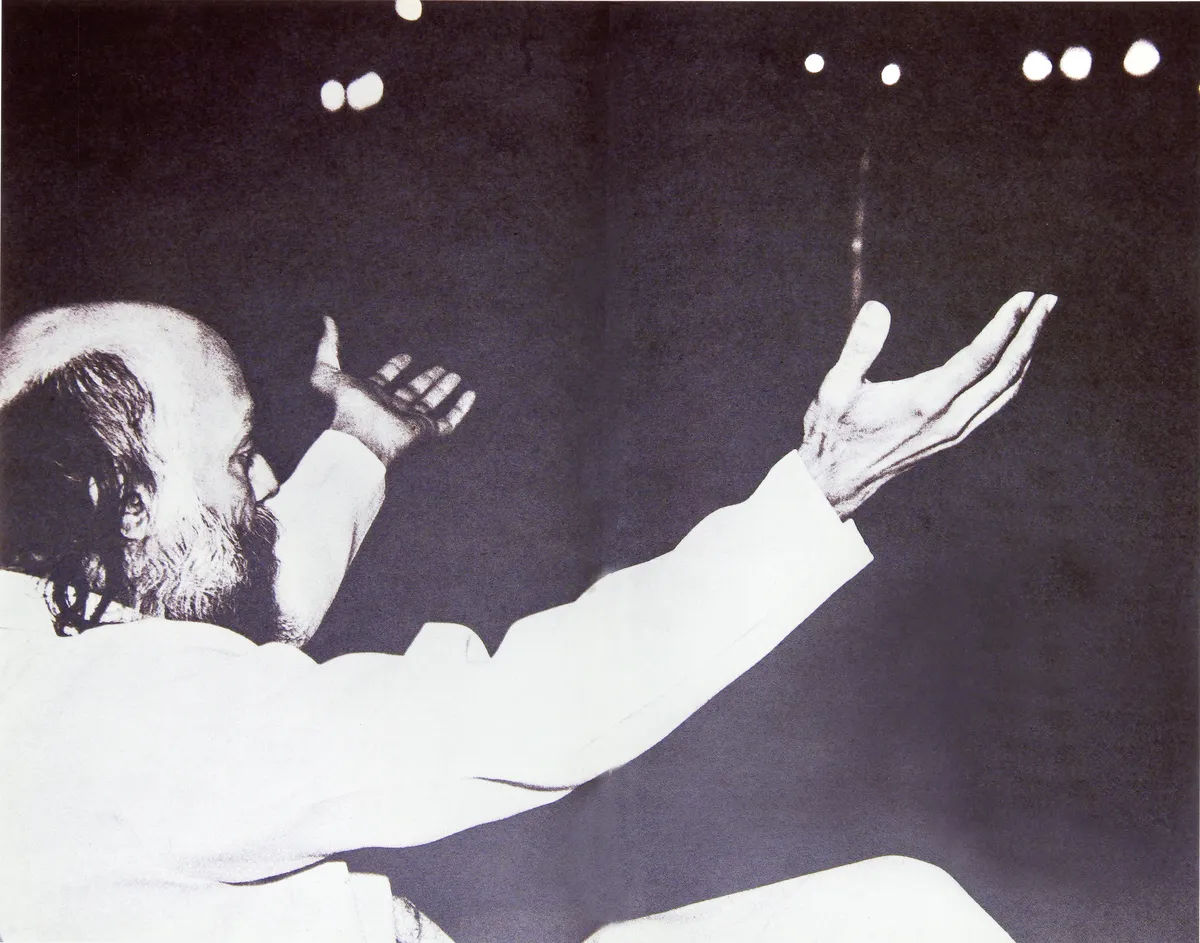
Being called an avatar is just a power label; real spirituality is being a free, questioning human, not a titled hero.
From the Discourses
Passages where Osho speaks to this question — each links to the complete discourse.
Osho, what is an avatar?
All are avatars. Every person is an avatar. We begin to worship special avatars and forget the rest. Every person is an avatar. Either God is in everyone, or He is in no one. There cannot be any exclusive monopoly of Rama or Krishna or anyone—that they are avatars while A, B, C are not. Nor is that their claim; it is we who make that claim.
प्रश्न: ओशो, अवतार क्या है?
सभी अवतार हैं। प्रत्येक व्यक्ति अवतार है। विशेष अवतारों को हम पूजने लगते हैं और शेष अवतारों को भूल जाते हैं। प्रत्येक व्यक्ति अवतार है। या तो ईश्वर सबमें है और या फिर किसी में नहीं है। ऐसी विशिष्ट मोनोपॉली नहीं हो सकती राम की या कृष्ण की या किसी की कि वे तो अवतार हैं और अ ब स अवतार नहीं हैं। न उनके दावे हैं, यह हम दावा करते हैं।
Beloved Osho, yesterday you were speaking to us about various people asking you if you were an avatara, a tirthankara, a paigambara, et cetera. Is there anything more that you wish to say to us?
I cannot do miracles; miracles have never happened. Nature never changes its rules. It is indifferent to you, whether you are Jesus, Moses, Krishna, Buddha. Who you are, it does not matter; nature is impartial, fair, it simply follows its own law. That law I call dharma, tao, logos. And a true religious man falls in harmony with the law of nature. The person who is trying to do the miracle is trying to deceive nature, deceive you. He is not in harmony with nature; he is trying to prove himself above nature, super-natural. There is nothing above nature; nature is all and all. It contains godliness in it. You cannot do anything against it. But you can befool the fools who are waiting to be befooled, who are anxious to be befooled. Because they are so empty, they want to cling to someone who is powerful, so powerful that…
Osho, Buddha says that the religion of the saints never grows decrepit; then how is it that the religions of Krishna, Mahavira, Buddha himself, and Jesus have become so decayed? Kindly shed some light on this.
So Buddha thought: better to say, “Accept whatever falls into your bowl.” A kite will not drop it again; the question will not arise repeatedly; best not to leave a hole in the rule. Buddha said, “Accept it.” And from this small incident all Buddhists became meat-eaters! Man is very dishonest. People then devised a trick: “Buddha did not oppose meat-eating. Had he been opposed, he would have told that monk to discard the meat. Buddha accepted meat!” Thus Buddhists across the world became meat-eaters. That the disciples of the greatest practitioner of nonviolence would become meat-eaters seems inconceivable. But man finds his contrivances. Buddha said: “Let no one kill an animal for food.” He had no idea how clever man is. The line came to mean: if the animal dies by itself, you may eat it! Do not kill for food. So monks began to eat animals that had…
पहला प्रश्न: ओशो, भगवान बुद्ध कहते हैं कि संतों का धर्म कभी जराजीर्ण नहीं होता है; फिर कृष्ण, महावीर, स्वयं बुद्ध और जीसस के धर्म इतने जराजीर्ण कैसे हो चले? इस प्रसंग पर कुछ प्रकाश डालने की अनुकंपा करें।
तो बुद्ध ने सोचा: उचित यही है कि कह दिया जाए कि जो तुम्हारे पात्र में गिर गया, स्वीकार कर लो। अब चील दुबारा तो कोई गिराएगी नहीं; बार-बार यह सवाल उठेगा नहीं; इसलिए नियम में एक छिद्र छोड़ना ठीक नहीं है। तो बुद्ध ने कहा: स्वीकार कर लो। और इस छोटी सी घटना से सारे बौद्ध मांसाहारी हो गए! आदमी बड़ा बेईमान है! फिर तो लोगों ने तरकीबें निकाल लीं--कि बुद्ध ने मांसाहार का विरोध नहीं किया। मांसाहार के अगर विरोधी होते तो उन्होंने उस भिक्षु को कहा होता कि यह मांस छोड़ दो। बुद्ध ने तो मांसाहार स्वीकार कर लिया! तो सारी दुनिया के बौद्ध मांसाहारी हो गए हैं। दुनिया के सबसे बड़े अहिंसक के शिष्य मांसाहारी हो जाएंगे, यह अकल्पनीय मालूम पड़ता है। लेकिन तरकीब आदमी निकाल लेता है। बुद्ध ने कहा है कि कोई किसी पशु को भोजन के लिए न मारे। सोचा भी नहीं होगा कि आदमी कितना होशियार है। बुद्ध का वचन है कि कोई किसी पशु को भोजन के लिए न मारे। …
Only if we see this truth rightly will we understand the activity of Buddha, Mahavira, Krishna or Christ. There is a fundamental difference between their activity and ours. They are active even after attaining; we are active before attaining. It may look the same. We and they, walking on the road, may appear alike—but we are not the same. Such beings we have called avatars. So, keep two things in mind about the word avatar. An avatar is one for whom nothing remains to attain, yet he stands among those who are seeking. An avatar is one for whom nothing remains to know, yet he sits in the school of knowers. An avatar is one for whom there is nothing left to take from life, yet he stands in the density of life.
इस सत्य को अगर हम ठीक से देख पाएं, तभी हम बुद्ध, महावीर, कृष्ण या क्राइस्ट की सक्रियता को समझ पाएंगे। उनकी सक्रियता और हमारी सक्रियता में एक बुनियादी भेद है। वे कुछ पाने के बाद भी सक्रिय हैं और हम कुछ पाने के पहले सक्रिय हैं। एक-सा ही लगेगा। हम और वे रास्ते पर चलते हुए एक-से ही मालूम पड़ेंगे, लेकिन हम एक-से नहीं हैं। इस तरह के व्यक्तियों को ही हमने अवतार कहा है। इसलिए अवतार शब्द के संबंध में दो बातें खयाल में ले लें। अवतार हम उस व्यक्ति को कहते हैं, जिसे पाने को कुछ भी शेष नहीं रहा, फिर भी पाने वालों के बीच में खड़ा है। अवतार हम उस व्यक्ति को कहते हैं, जिसे जानने को कुछ शेष नहीं रहा, फिर भी जानने वालों की पाठशाला में बैठा हुआ है। अवतार हम उसे कहते हैं, जिसके लिए जिंदगी में अब लेने योग्य कुछ भी नहीं है, फिर भी जिंदगी के घनेपन में खड़ा है। अवतार का कुल अर्थ इतना ही है कि जो पहुंच चुका, वह भी रास्ते पर है।
Was he an avatar?
Hindus do not consider him an avatar. But then you can consider anyone an avatar. Gandhi is considered an avatar by Gandhiites, Ramakrishna is considered one by Ramakrishnaites. There are so many avatars -- but that is not the problem. The Hindu religion has twenty-four avatars; twenty-three have happened and one more is still to come. Buddhists and Jainas also have twenty-four buddhas and tirthankaras. All are the sons of kings; none is poor. That is one of the differences between Christianity and Hinduism, Jainism, and Buddhism: Christianity still remains a poor man's religion. Because of that, Christianity could not achieve higher peaks. If you compare the Hindu scriptures, the Upanishads, with The Bible, The Bible seems poor and childish. The words are the same, the experiences are also the same in a way, but Christianity still remains a religion. Religion -- the organized body -- and mystical experiences are…