
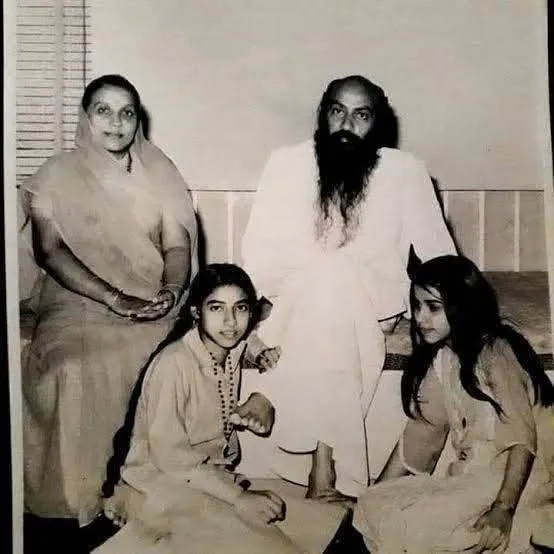
According to Osho, enlightened ones didn’t lack a guru; they outgrew the need for a single human guide because the whole of existence taught them—rivers, mountains, animals, every moment. A personal guru is a compassionate compromise for the timid; begin with one as a window, then, as courage and thirst deepen, let life itself be your master.
Truly wise people learn from everything, and if that feels scary, start with one teacher until you’re brave enough to let all of life teach you.
From the Discourses
Passages where Osho speaks to this question — each links to the complete discourse.
Osho, many enlightened ones—Buddha, Mahavira, Nanak, Ramakrishna Paramhansa, Ramana Maharshi, and you yourself—had no guru. Why? Please explain.
It may not be right to say they had no guru. It is more accurate to say that the whole of existence was their guru. Those who do not yet have the courage to take the entire existence as their guru will have to make at least one person their guru—out of stinginess. If you cannot make everyone your guru, make at least one. Perhaps through that one, a window will open. Then, slowly, courage will grow, a taste will come; as your daring increases, you can take others too as your gurus. On the surface it looks as if Buddha had no guru. But if you look deeply, you will see: Buddha did not make any one person his guru because when the whole existence is your guru, whom will you appoint? Rivers and mountains, moon and stars, plants, animals, and birds—all are gurus. There was a Sufi fakir,…
Osho, why not connect directly with the Divine? Why take a guru in between?
That idea grew vast, and today’s science stands largely on Newton’s discovery; without it, it could hardly stand. The theory of gravitation became a foundation of science. But the theory is incomplete. Nothing in life exists without its polar opposite. In Newton’s time there was another man—a poet, thinker, sage—named Ruskin. In jest he said something against Newton, which no one took seriously. He said, “Sir Newton, it is true that an apple fell from the tree and came down. But I want to ask—how did it go up in the first place? Find out that first: how did it get up there?” You see daily that a tree rises upward. Hidden in the seed was this apple, and one day it appeared above, on the tree. How did it go up first? Find that out; how it came down is secondary. And it isn’t a small event. In Lebanon…
Anyone is ready to be a Guru; whenever the chance comes, man becomes a Guru. To become a shishya is extremely difficult. There was a Sufi— a fakir. He was passing along a road. A small child was carrying a lamp to light in the temple. The fakir asked, “Did you light this lamp?” The child said, “I did.” “Did this flame appear before your eyes?” “Before my eyes.” “Then, where did this flame come from?” The child blew out the lamp and asked the Sufi, “The flame has gone before your very eyes—tell me, where has it gone? If you can tell where it has gone, then I will also try to tell from where it came.” The Sufi fell at the child’s feet and said, “I am in search of Gurus—and I have found one in you as well.
Osho, guidance is indispensable, isn't it!
In fact, the word “guidance” by itself doesn’t say anything. It tells you nothing. Two things. Guidance seems indispensable to us. But guidance can be seed-laden and it can be seedless. There can be guidance that plants thoughts, imaginations, and beliefs in your mind. And there can be guidance that strips you of all your thoughts and beliefs, takes them away from you. So when someone says, “I will guide you,” there is great fear that he will hand you thoughts to hold on to. When someone says, “I am not a guide,” there is a possibility he will take all your thoughts away. One who says, “I am your guru,” is very likely to sit down inside your consciousness. One who says, “I am not a guru. We just happened to meet while walking on the road. You asked, ‘Where does this path go?’ I know, so I tell…
A friend has asked: Krishnamurti says there is no need for a guru.
Begin with the body; if you cannot own the body, you will not be able to own the mind. If you cannot own the mind, you will not be able to own the soul. As I said: conquer the body. Then, the day you feel ownership over the body has been gained, begin the same experiment with the mind. A thought arises in the mind—anger—to act. Say, “No anger; be quiet, mind.” Then stand by your word; however much the mind tries, remain at a distance and do not be angry. Today or tomorrow you will find the mind is prepared to listen. When you say, “No anger,” the mood of anger will dissolve instantly. It happens just as my hand is raised: if I say I do not want to keep it up, it comes down. This is my hand. If I say, “Come down,” and it remains stuck…