
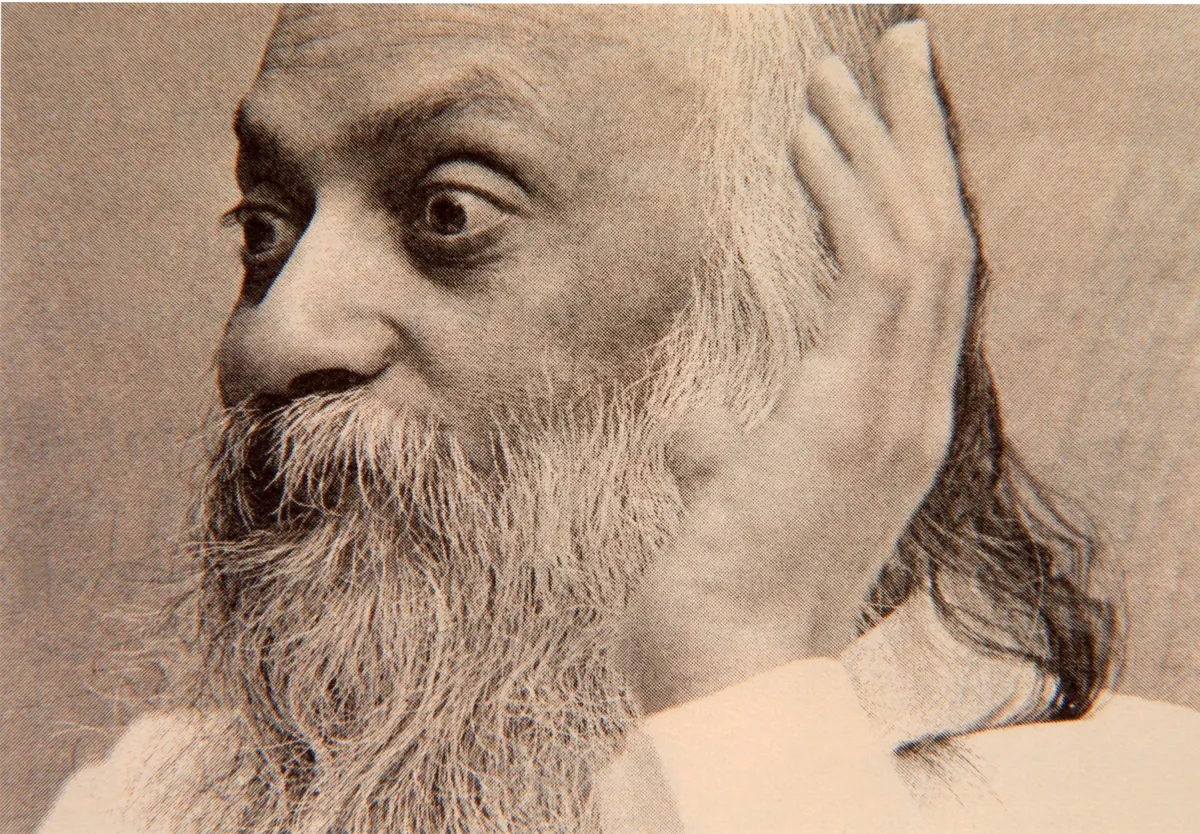
According to Osho, Buddha accepted Ananda’s four absurd conditions out of compassion, meeting the ignorant at their level so they are not lost. The enlightened bends to lift the fallen; otherwise Ananda’s elder-brother ego would have blocked initiation and even turned him against the path. By conceding, Buddha patiently created space for Ananda’s ego to dissolve over time, leading to eventual liberation.
He agreed to Ananda’s silly rules so Ananda would join, calm down, and slowly drop his pride.
From the Discourses
Passages where Osho speaks to this question — each links to the complete discourse.
Osho, may we ask: Bhagwan Buddha was supremely enlightened, and Ananda was ignorant—even if he was his elder brother. Then why did he—the enlightened one—accept the conditions of the ignorant, conditions that were not for his welfare?
Buddha had left Ananda outside. He called Ananda and said, “My begging bowl!” He gave the bowl to Rahul and said, “You too are initiated, for this is my only wealth. Buddhas have nothing else to give. I am not your father, nor are you my son. That relationship once was; that was my dream, not yours. But for those whose dream has not yet broken, I will give support so their dream too may shatter.” The twelve-year-old boy became a monk; the wife, a nun. Yashodhara must have been a woman of exceptional courage. After that we hear nothing of her name. What happened then? She was Buddha’s wife—she could have overshadowed the entire sangha, proclaimed her importance. But we hear nothing more. This is the last story concerning her. After this the Buddhist scriptures are utterly silent—what happened to Yashodhara? To Rahul? Being Buddha’s son, after Buddha’s passing…
Question: AMONG SHAKYAMUNI'S TEN GREATEST DISCIPLES, ANANDA WAS FOREMOST IN LEARNING. BUT HE DIDN'T KNOW THE BUDDHA. ALL HE DID WAS STUDY AND MEMORIZE. ARHATS DON'T KNOW THE BUDDHA. ALL THEY KNOW ARE SO MANY PRACTICES FOR REALIZATION, AND THEY BECOME TRAPPED BY CAUSE AND EFFECT. SUCH IS A MORTAL'S KARMA: NO ESCAPE FROM BIRTH AND DEATH. BY DOING THE OPPOSITE OF WHAT HE INTENDED, SUCH PEOPLE BLASPHEME THE BUDDHA. KILLING THEM WOULD NOT BE WRONG. THE SUTRAS SAY, "SINCE ICCHANTIKAS ARE INCAPABLE OF BELIEF, KILLING THEM WOULD BE BLAMELESS, WHILE PEOPLE WHO BELIEVE REACH THE STATE OF BUDDHAHOOD." ...PEOPLE WHO SEE THAT THEIR MINDS ARE THE BUDDHA DON'T NEED TO SHAVE THEIR HEADS. LAYMEN ARE BUDDHAS TOO. UNLESS THEY SEE THEIR NATURE, PEOPLE WHO SHAVE THEIR HEADS ARE SIMPLY FANATICS. BUT SINCE MARRIED LAYMEN DON'T GIVE UP SEX, HOW CAN THEY BECOME BUDDHAS?
Osho, opposites attract. By that law, foolish people gather around enlightened beings. So are all those wise who keep away from their company?
These are the disputes. Whichever of these is true—what has it to do with Mahavira? If he wore clothes, what difference does it make? If he did not, what difference does it make? It has nothing to do with what he said. Strange people! Yet the quarrels go on for thousands of years—and very scholastic quarrels at that. Great scriptures and arguments and nets of logic are woven, and the combatants imagine they are doing something of great importance—protecting a great religion. Now, whether Mahavira was naked or clothed—how does that concern the defense of religion? Even inside clothes one is naked. Cloth is not that precious. Whether Mahavira married or not—what has that to do with anything? What substance is there in such futile matters? But no, it seems substantial to them, because the ego of the foolish gets tied up with such things—their view must be right. The…
Question: The last question: Osho, do enlightened ones also shed tears? It is not appropriate to fix anything about the enlightened. They are vast—like the sky. No boundary line can be drawn around an enlightened one. Only one thing can be said: to be enlightened means to be complete. In the complete, everything is included—tears too. Just as smiles are included, so are tears. A Zen monk died in Japan. His disciple Rinzai was very famous—so famous that he was more renowned than his master. In truth, it was because of Rinzai that the master was known at all. Hundreds of thousands gathered, and Rinzai began to weep. The people around him said, “What are you doing? If people see you cry, what will they think? Do enlightened ones ever cry?” Rinzai said, “Then take it that I am not enlightened. But crying is happening now—what am I to do?
Question: OSHO, IS IT WRONG TO TRY TO SAVE SOMEBODY? IS IT NOT PART OF COMPASSION? And the third was: "If I ask a question, you cannot tell me, as you tell others,'Be silent for two years, three years, meditate, and then I will answer.' No, you will have to answer immediately." As his younger brother, Buddha promised Ananda that these three things would be granted to him. But Ananda was a rare man; otherwise, Buddha would have hesitated to accept these conditions, because initiation cannot be given in a conditional way. He could have simply said, "If you put conditions on me then initiation is not possible" -- because many other times a few other people had come with conditions and he had refused them; but to Ananda he gave the promise. That is unprecedented in the whole history of initiation.