
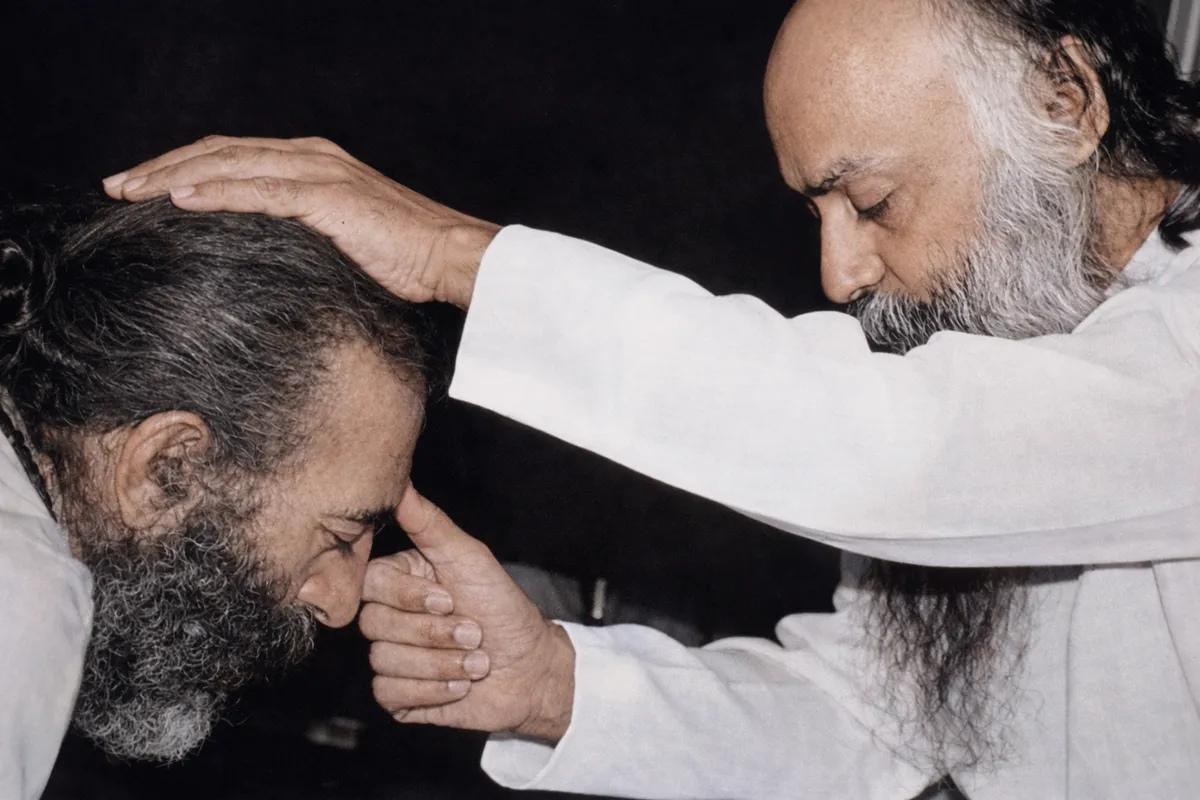
You hear my words, but your busy mind blocks the quiet feeling behind them; calm inside and you’ll really get it.
From the Discourses
Passages where Osho speaks to this question — each links to the complete discourse.
Question: BELOVED OSHO, WHY CAN'T I HEAR YOU? AM I DEAF? You are not deaf. And you also hear me, but you are not listening. And you don't know the distinction between hearing and listening. Anybody who has ears can hear, but it is not necessary that he will be able to listen. For listening, something more is necessary than just having ears: a certain kind of silence, a serenity, a peace -- the heart standing behind the ears, not the mind. It is the mind which makes you almost deaf, although you are not deaf -- because the mind is constantly chattering, it is a chatterbox. Just sometimes sit in your room, close your doors, and write down whatsoever comes into your mind just to see what goes on in it.
Osho, this Zen master is echoing the words of Master Jesus. When Jesus spoke, the first thing he would say to his disciples was: “If you have ears, then hear; if you have eyes, then see; if you have understanding, then understand.” Or he would say, “Let those who have eyes, see; and those who have ears, hear.” Everyone who came to listen had ears. Everyone sitting before him had eyes. What could Jesus have meant?
Magidh said, “All that is in the scriptures is no more than the alphabet; everything is contained in it. And when I had recited it fully, I said to God, ‘Now You put it in order. You know my prayer. Here is the alphabet; You arrange it.’ And He arranged it—the prayer was complete.” If the heart is present, the alphabet becomes the Vedas. Without heart, even the Vedas are no more than the alphabet. If the mind is without thought, there is no need of mantras. In a thoughtless mind, even A, B, C becomes mantra. In a mind full of thought, no mantra is of use. Chant Om as much as you like—on the surface you repeat Om, but inside your desires are racing. Your desires warp your Om. Their smoke is so dense that the lamp of Om cannot burn there. This master rightly tells his disciples:…
ओशो, यह झेन सदगुरु जीसस के वचन को दोहरा रहा है। जीसस बोलते थे, तो पहली बात अपने शिष्यों को कहते थे; ‘अगर कान हों तो सुनो; आंखें हों तो देखो; समझ हो तो समझ लो।’ या कभी कहते कि ‘जिनके पास आंखें हों, वे देख लें। और जिनके पास कान हों, वे सुन लें।’ जो भी सुनने वाले थे, सभी के पास कान थे। जो भी सामने बैठे थे, सभी के पास आंखें थीं। जीसस का क्या प्रयोजन होगा?
मगीध ने कहा, ‘सभी शास्त्रों में जो है, वह वर्णमाला से ज्यादा नहीं। वर्णमाला में सभी कुछ आ जाता है, कुछ बचता नहीं। और फिर मैंने जब पूरी वर्णमाला दोहरा दी, तो मैंने परमात्मा से कहा कि अब तू ठीक से जमा ले। प्रार्थना तो मेरी तुझे पता ही है। यह वर्णमाला यह रही, तू जमा ले। और उसने जमा दिया। और प्रार्थना पूरी हो गई।’ अगर भाव हो तो वर्णमाला वेद हो जाती है। अगर भाव न हो तो वेद भी वर्णमाला से ज्यादा नहीं है। अगर निर्विचार चित्त हो तो मंत्रों की जरूरत नहीं। निर्विचार चित्त में अ, ब, स का पाठ भी कर लिया जाए, तो मंत्र हो जाते हैं। और विचार से भरे चित्त में तुम कितने ही मंत्र दोहराओगे, सब व्यर्थ हो जाते हैं। तुम कितना ही ओंकार का पाठ करो, ओम-ओम दोहराओ, यह सब ऊपर-ऊपर है, भीतर तुम्हारी वासनाएं दौड़ रही हैं। …
Question: Second question: Osho, I don’t understand what you say. What should I do? ... It isn’t even as it was in the Mahabharata, where some of Arjuna’s kin were on one side and some on the other. Things had gone so far that Krishna was on one side and Krishna’s army on the other. That is not only in the epic—it is even more so inside you. At least Krishna was wholly on one side there; it wasn’t as if half of him was here and half there—one hand with the Kauravas and one with the Pandavas. But that is exactly the state within you. A man was run over by a steamroller and died. His wife rushed to the hospital on hearing he had been admitted to Sassoon Hospital. She asked the nurse, “Which ward is my husband in? ... “Name? ... “The one crushed under the steamroller.
ऐसा ही नहीं है जैसा कि महाभारत के युद्ध में था, कि अर्जुन के कुछ सगे-संबंधी इस तरफ थे, कुछ सगे-संबंधी उस तरफ थे। बात यहां तक पहुंच गई थी कि कृष्ण इस तरफ थे और कृष्ण की सेना उस तरफ थी। ऐसा महाभारत में ही नहीं है, ऐसा तुम्हारे भीतर इससे भी ज्यादा है। कम से कम कृष्ण पूरे तो इस तरफ थे; ऐसा तो नहीं था कि आधे उस तरफ, आधे इस तरफ; कि एक हाथ कौरवों के साथ, एक हाथ पांडवों के साथ। मगर तुम्हारे भीतर हालत ऐसी ही है। एक आदमी स्टीम-रोलर के नीचे दब कर मर गया। उसकी पत्नी भागी हुई अस्पताल पहुंची। खबर मिली कि ससून अस्पताल में भरती है। जाकर उसने पूछा कि किस वार्ड में मेरे पति भरती हैं? जिस नर्स से पूछा, उसने कहा, क्या नाम-धाम? तो उसने कहा कि वही जो स्टीम-रोलर के नीचे दब कर मर गए हैं। तो उसने कहा कि हां, वे भरती हैं--चार नंबर, पांच नंबर और छह नंबर के वार्ड में।
Osho, when you sit silently, that silence doesn’t come within our grasp. But when you begin to speak, a glimpse of silence appears between two sentences, between two words. Yet in becoming so absorbed in understanding the meaning of your speech, that silence keeps slipping away. So please explain: when we listen, how should we listen to you?
It will be so—naturally. When I sit utterly silent, you are not able to sit silent; inside you the stream of thoughts flows, an undercurrent keeps moving—you start talking to yourself. The habit of inner talking has become so deep, so carved in stone, that not even for a moment do you find rest within. If I sit completely silent, you will simply forget me. Your inner stream becomes active, your old habit seizes you, you get absorbed in inner conversation. It’s a monologue—you speak alone, yet you do speak. Then even my silence is hard for you to see, because we can only see that which has its opposite as a background. A psychologist once did an experiment at a university. On a large black blackboard he drew a tiny white dot and asked the students, “What do you see?” Not one of them saw the big blackboard; all…
प्रश्न: ओशो, जब आप चुप बैठते हैं, तो वह मौन पकड़ में नहीं आता। लेकिन जब आप बोलने लगते हैं, तो दो वाक्यों के, दो शब्दों के बीच कुछ मौन की झलक मिलती है। लेकिन आपकी वाणी का अर्थ समझने में इतना मोह होता है कि वह मौन छूटता-छूटता जाता है। तो कृपया समझाएं कि जब हम सुनते हैं, तो आपको कैसे सुनें?
ऐसा होगा, स्वाभाविक है। जब मैं बिलकुल चुप बैठा हूं, तब तुम चुप नहीं बैठ पाते, तब तुम्हारे भीतर विचारों की धारा चलती है, अंतर-धारा बहती है, तब तुम अपने से बात करते हो। बात करने की आदत इतनी गहन हो गई है, इतनी पत्थर की लकीर की तरह हो गई है कि एक क्षण को भी भीतर तुम विश्राम को उपलब्ध नहीं होते। अगर मैं बिलकुल चुप बैठा हूं, तो तुम मुझे भूल ही जाओगे। तुम्हारे भीतर की धारा सक्रिय हो जाएगी, तुम्हारी पुरानी आदत तुम्हें पकड़ लेगी, तुम अंतर-वार्ता में लीन हो जाओगे। मोनोलॉग है, अकेले ही बोलते हो, लेकिन बोलते हो। फिर मेरा मौन भी तुम्हें दिखाई पड़ना मुश्किल है, क्योंकि वही हमें दिखाई पड़ता है, जिसकी पृष्ठभूमि में विपरीत मौजूद हो।
Beloved Osho, I feel I can relax more and more deeply into myself. Yet, at the periphery, there is an unassertiveness, a trembling that can cloud the blissfulness of life. Beloved master, does my ego need nourishment?
My God! Prem Rajya, I wonder whether you have been listening to me. Every day, morning and evening, I'm telling you to drop the ego and you are asking me a great question: "Beloved master, does my ego need nourishment?" And you are also saying, "I feel I can relax more and more deeply into myself. Yet, at the periphery, there is an unassertiveness, a trembling that can cloud the blissfulness of life. Does my ego need nourishment?" That will destroy whatever relaxation you have, and that will stop your growth going inwards. It will make your trembling more strong and the cloud that is covering the blissfulness of your life will become darker. Nourishment of the ego is against your authentic being; it cannot help you in any way. It can only destroy you -- destroy you as you are destined to be by your nature. Ego is a…