
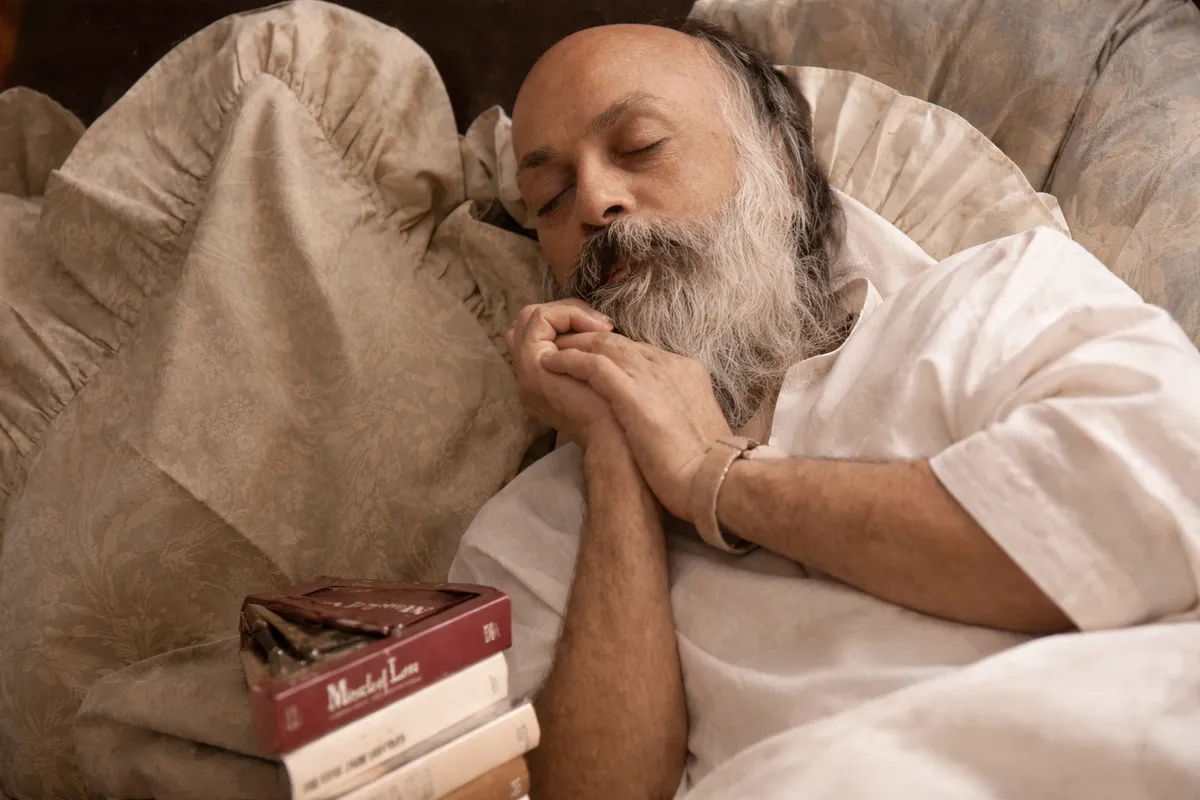
Believing is like deciding what a movie is about before watching it; fear makes you accept stories, while only open, loving attention lets you truly see for yourself.
From the Discourses
Passages where Osho speaks to this question — each links to the complete discourse.
I do not believe in anything, but I do believe in god. Why are you so much against beliefs?
Because a belief is a belief, and is not an experience. Belief is a barrier. If you believe in God you will never know God -- that's why I am against belief, because I am for God. Your very belief will never allow you to know that which is, because the belief means that before knowing it you have decided already what it is. Your decisive mind will not relax. Your mind with a conclusion is a prejudiced mind, and to know God an empty mind is needed -- unprejudiced, pure, uncontaminated by any belief, by any ideology. Because I am for God, that's why I am against all beliefs. And you say: I DO NOT BELIEVE IN ANYTHING ELSE... But if you believe in God, then what more is needed? That is enough. You have made the greatest mistake! Now every other mistake is very small. And if the…
Osho, why is it that the moment we cling to some belief—whether theism or atheism—the mind feels so reassured? Why does it seem almost impossible for it to stand in the middle, dropping both?
There is no greater courage than to stand in existence without conclusions. By “without conclusions” I mean: no belief, no superstition. It means: we will see existence as it is, without bringing our notions in between. We will neither say “God is” nor “God is not.” We will neither say “the soul is” nor “the soul is not.” We will inquire. But inquiry is hard. Inquiry means you must pay a price. Who wants that bother? So we borrow beliefs on credit. We say, Mahavira knew, Buddha knew, Krishna knew—why should we get into the mess? We’ll cling to them, hold their feet, and pass through. That is not faith; it is only weakness. And the weak do not move. It is not trust to think we can walk to freedom by holding Buddha’s feet. If you have no trust in yourself, how will you trust Buddha? No real trust…
दूसरा प्रश्न: ओशो, क्या बात है कि कोई न कोई विश्वास पकड़ लेने से--चाहे वह आस्तिकता हो या नास्तिकता, मन बहुत आश्वस्त अनुभव करता है? दोनों को छोड़कर बीच में खड़ा होना उसके लिए असंभव जैसा क्यों है?
… अपनी कोई धारणा बीच में न लाएंगे। न हम कहेंगे, ईश्वर है; न हम कहेंगे कि ईश्वर नहीं है। न हम कहेंगे कि आत्मा है, न हम कहेंगे कि आत्मा नहीं है। हम खोजेंगे। पर खोज कठिन है। खोज का अर्थ है: मूल्य चुकाना पड़े। कौन इस झंझट में पड़े? तो हम उधार विश्वास ले लेते हैं। हम कहते हैं, महावीर ने जान लिया, बुद्ध ने जान लिया, कृष्ण ने जान लिया, अब हम क्यों पंचायत में पड़ें? हम इन्हीं को पकड़ लेंगे, इन्हीं के चरणों के सहारे निकल जाएंगे। यह आस्था नहीं है, यह केवल कमजोरी है। और कमजोर की कोई गति नहीं है। यह भरोसा नहीं है कि हम बुद्ध के चरणों पर चलकर निकल जाएंगे। जिसका अपने पर ही भरोसा नहीं है, उसका बुद्ध पर कैसे भरोसा होगा? …
Osho, that is what is being taught. Yes, that is being taught. That very thing is being taught, and it is precisely because of that teaching that such a corrupted world has come into being, and such corrupted human beings have been produced—because of that teaching.
What is the fruit of these five thousand years of such teaching? The people we see all around us—this very world of ours. This world has been born of that “education,” hasn’t it? So where has five thousand years of all this teaching brought you? Day by day you fall lower, and you will go on falling. The mistake is at the very foundation. The mistake is at the very foundation. There is no need for reverence, no need for belief. What is needed is inquiry, what is needed is courage. One must search, one must dare. All that—reverence, belief—are symptoms of weakness. That is why the more a community leans on faith, the more it falls behind. Look. Any community that has relied on belief has lagged. Because the very question of taking the next step does not arise. If you are sitting in a bullock cart and you…
प्रश्न: ओशो, वह सिखाया जा रहा है। हां, वह सिखाया जा रहा है। वही सिखाया जा रहा है और उस सिखाने की वजह से ही इतनी करप्टेड दुनिया पैदा हुई है, और इतने करप्टेड आदमी पैदा हुए हैं--उस सिखाने की वजह से।
… यही दुनिया पैदा हुई न इस शिक्षा से? तो पांच हजार साल की यह सारी टीचिंग कहां ले गई है आपको? रोज नीचे गिरते जाते हैं और रोज गिरते जाएंगे। वह बुनियाद में ही बात गलत है। बुनियाद में ही बात गलत है। न तो श्रद्धा की जरूरत है, न विश्वास की जरूरत है। खोज की जरूरत है, साहस की जरूरत है। खोजने की जरूरत है, साहस करने की जरूरत है। ये सब कमजोरी के लक्षण हैं। इसलिए जिन कौमों ने जितनी ज्यादा श्रद्धा पर विश्वास किया, वे कौमें उतनी ही नीचे पिछड़ गईं। देखें। जिन कौमों ने भी इस पर विश्वास किया, वे उतनी पीछे पिछड़ गईं। क्योंकि कदम आगे बढ़ने का सवाल ही नहीं रहा। अगर बैलगाड़ी में बैठे थे, तो बैलगाड़ी में बैठे हुए हैं श्रद्धा और विश्वास से, तो फिर और आगे उठने का सवाल कहां उठता है।
Drop all beliefs, all disbeliefs. Let the mind become less cluttered. Remove all unnecessary luggage, become more unburdened. The more unburdened you are, the closer to truth. When you are absolutely unburdened, empty, when you are just there, with no idea surrounding you, truth happens. That is what Zen people call satori. It happens in a state of no-mind. And the beginning of no-mind is the dropping, slowly slowly, of all kinds of prejudices -- Christian, Hindu, Mohammedan; these are all prejudices. Communist, Catholic... these are all prejudices. And to cling to these prejudices is a very very irreverent act, very egoistic, because these beliefs are claims, and claims without any validity. You don't have any existential validity for them -- you simply believe because you have been told to believe.
Osho, there is a saying, “If you believe, it is a god; otherwise, it’s a stone.” Is it all just a matter of believing?
I tell you: do not believe in God. There is no need to believe. If you believe in God, then what will you know? To believe in God means you have declared defeat in knowing—you are tired, you have thrown down your arms. You have said, “The search is over; there is nothing to know, so let us believe.” You don’t believe in the sun or the moon; you know them. You don’t believe in this world; you know it. And you believe in God? If your believed God is repeatedly defeated before your known world, it is no surprise. God should also be known. The day God is known, this world becomes insipid—maya, a dream. Experience is wealth; empty beliefs are not. So I make a small change in the saying: “Know, and it is God; otherwise, it’s a stone.” But to know, a great journey is required. To…
पहला प्रश्न: ओशो, कहावत है, ‘मानिए तो देव, नहीं तो पत्थर।’ क्या सब मानने की ही बात है?
मैं तुमसे कहता हूं: परमात्मा को मानना मत। मानने की जरूरत नहीं है। परमात्मा को मानोगे तो फिर जानोगे किसको? परमात्मा को मानने का मतलब तो यह हुआ कि तुमने जानने में हताशा प्रकट कर दी, तुम हार गए, तुमने अस्त्र-शस्त्र डाल दिए। तुमने कहा, खोज समाप्त हो गई; जानने को तो है नहीं, माने लेते हैं। सूरज को तो नहीं मानते हो, चांद को नहीं मानते हो; जानते हो। इस संसार को मानते तो नहीं, जानते हो। और परमात्मा को मानते हो? यह माना हुआ परमात्मा अगर तुम्हारे जाने हुए संसार के सामने बार-बार हार जाता है तो कोई आश्चर्य तो नहीं है। परमात्मा भी जाना हुआ होना चाहिए। जिस दिन परमात्मा जाना हुआ होता है उस दिन यह संसार फीका पड़ जाता है, माया हो जाता है, सपना हो जाता है।