
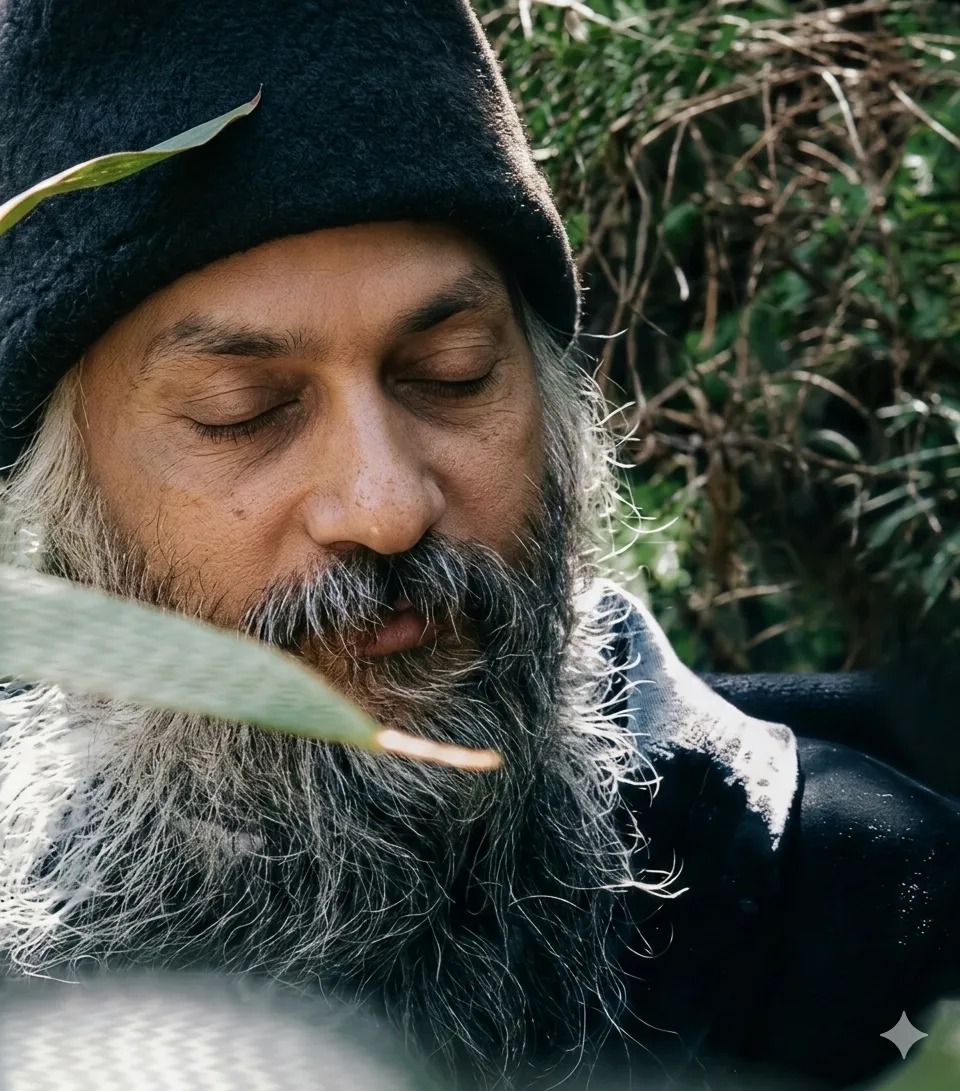
A saint simply lives and tells the plain truth without changing it, so your ego burns away and real freedom can shine.
From the Discourses
Passages where Osho speaks to this question — each links to the complete discourse.
Par-svarath ke kaarane, santan dharai sareer. Paltu is giving the right definition. He says: A saint does not live for himself. As far as he is concerned, his work is done. His dreams have vanished, his thoughts have gone. He is free of mind. As far as his private affair goes, he has arrived. But one who has arrived—Paramatma begins to take work from him. A calling begins within him—for those who are still wandering on roads, still groping in darkness. Paramatma begins to work through that person—for those whose eyes have not yet opened. Just as fruits appear on trees—not for themselves, but for others. And the river does not drink itself; it gives to others. This is the definition of a saint: one who spends lavishly—who spends Paramatma! One who distributes the divine! Everything else you can distribute is trash.
परस्वारथ के कारने, संतन धरै सरीर। पलटू ठीक परिभाषा कह रहे हैं। वे यह कह रहे हैं कि संत अपने लिए नहीं जीता। अपना तो उसका काम पूरा हो चुका। जहां तक उसका संबंध है, उसके सपने तो मिट चुके, उसके विचार तो जा चुके। उसकी तो मन से मुक्ति हो गई। जहां तक उसका निजी संबंध है, उसने मंजिल पा ली। लेकिन जिसने मंजिल पा ली है, परमात्मा उससे कुछ काम लेना शुरू करता है। उससे पुकार देना शुरू करता है--उनके लिए जो अभी रास्तों पर भटक रहे हैं, जो अभी अंधेरे में भटक रहे हैं। परमात्मा उस व्यक्ति से काम लेना शुरू करता है--उनके लिए, जिनकी आंखें अभी नहीं खुली हैं।
the so-called saints i don't count as sages the so-called saints live a structured life according to certain prescriptions of others they are basically slaves they are performing certain rituals but doing it efficiently hence the people who believe in those rituals will call them saints so a christian saint may not be thought of as a saint by the hindus because their rituals differ their definitions differ for example, no hindu has ever thought that saints should go and serve the poor -- that has not been part of their definition a saint has to be served he is not to be a servant a saint being a servant is sacrilege to the hindu but to the christian the saint is one who serves the poor, the down-trodden there are three hundred religions in the world and three hundred definitions of saints all those definitions are manufactured according to…
Osho, just seeing sadhus and saints makes me bristle, even angry. I see nothing in them but hypocrisy. But with you—God knows what you’ve done—reverence wells up! What is the secret of your influence?
Buddha asked, “What are you doing?” They said, “This is not killing; not violence. The souls of these animals will go to heaven.” Buddha joked, “Then why not kill your parents? Send them to heaven. The door is open—why send animals? Send your parents, your wife, your children. Send everyone—and then go yourself! But don’t send these animals. They don’t want to go—they’re writhing, they want to run. They are pleading for mercy. They cannot speak—look into their eyes, they are beseeching. They are bleating: ‘Let us go.’ They don’t want heaven—and you are sending them. The yajman who is funding this sacrifice wants heaven—send him!” Clever folks have always been around. Tricks kept running; we kept bearing them. Sin and merit are difficult to determine. On one side are people along the Amazon who eat humans—and it is no sin to them. On the other side are the Quakers…
दूसरा प्रश्न: ओशो, साधु-संतों को देख कर ही मुझे चिढ़ होती है और क्रोध भी आता है। मैं तो उनमें सिवाय पाखंड के और कुछ भी नहीं देखता हूं। पर आपने न मालूम क्या कर दिया है कि श्रद्धा उमड़ती है! आपके प्रभाव का रहस्य क्या है?
… तो उन्होंने कहा कि यह कोई हत्या नहीं है, हिंसा नहीं है। ये जो पशु-पक्षी काटे जाएंगे, इन सबकी आत्माएं स्वर्ग चली जाएंगी। तो बुद्ध ने बड़ा मजाक किया है! और बुद्ध ने कहा: तो फिर अपने माता-पिता को क्यों नहीं काटते? स्वर्ग ही भेज दो। यह अवसर मिला, स्वर्ग भेजने का द्वार खुला और तुम इन पशु-पक्षियों को भेज रहे हो? माता-पिता को भेज दो! पत्नी-बच्चों को भेज दो! फिर सबको भेज कर खुद भी चले जाना! मगर इन पशु-पक्षियों को तो न भेजो। ये तो जाना भी नहीं चाहते। ये तो तड़प रहे हैं। ये तो भागना चाहते हैं। ये तो कहते हैं कि क्षमा करो! बोल नहीं सकते। जरा इनकी आंखें तो देखो, गिड़गिड़ा रही हैं। …
Remember, the saint is the one who has recognized his inner ocean; who is freed from the drop and has become the sea. A saint is one only by becoming one with the Vast. And can the Vast be small? The Vast is infinite, boundless! And whoever has recognized his identity with the Vast — he is no more. As long as you are, you will remain small; you cannot be great. However much the ego may try, it remains small. At the very center of the ego is inferiority — a complex of inferiority, psychology says. Because of that inferiority complex we set out on the journey of ego; it seems to us we are small, so we strive to become big. Let there be wealth — we will seem big. Let there be much knowledge — we will seem big.
Osho, can society get by with an imposed, showy morality? Then does it no longer need morality arising from religion, nor the presence of saints?
Hence society says: become moral; we have no use for religion. Be religious if you wish—that’s your business; we won’t get into that mess. Be atheist if you like; don’t believe in God if you don’t want to—only be well-behaved. So society has no need of religion. Religion is a personal necessity—an inner need—an individual’s need. Society can run without religion. The individual will not be able to. He will stagger, perish, break. For society, makeshift, behavioral morality is enough; nothing more is needed. But if you too are satisfied with that, your inner world will remain a desert. No trees will ever turn green within you, no flowers will bloom. The possibility of an oasis will vanish. However skillful you become in dealing with others, with yourself you will remain foolish. Your self-ignorance will remain deep. Therefore I say: morality is social skill; religion is the hunger of your…
दूसरा प्रश्न: ओशो, आरोपित दिखाऊ नीति से क्या समाज का काम चल जाता है? क्या उसे धर्म से उदभूत नीति की और संतों की आवश्यकता नहीं रहती है?
समाज के लिए नीति का अर्थ तुम्हारी आत्मा से नहीं है, तुम्हारे व्यवहार से है। तुम भीतर गाली देते हो, देते रहो। तुम भीतर छुरा चला रहे हो, चलाते रहो। ऊपर तुम कुशलता से बात करो, मुस्कुराओ, व्यवहार ढंग का करो, बात खतम हो गई। समाज को तुम्हारे ऊपर से लेना-देना है। इसलिए समाज कहता है, तुम सज्जन हो जाओ; धार्मिक होने से हमें कुछ प्रयोजन नहीं है। धार्मिक होना तुम जानो। इस झंझट में हम नहीं पड़ते। तुम नास्तिक हो, भले रहो। ईश्वर को नहीं मानते, मत मानो। सिर्फ व्यवहार-कुशलता चाहिए। तो धर्म की कोई जरूरत समाज को नहीं है। धर्म वैयक्तिक आवश्यकता है; भीतर की जरूरत है; व्यक्ति की जरूरत है। समाज तो बिना धर्म के चल सकता है। व्यक्ति नहीं चल पाएगा। व्यक्ति लड़खड़ा जाएगा, मर जाएगा, टूट जाएगा। तो कामचलाऊ नीति, आचरणगत नीति समाज के लिए काफी है। उससे ज्यादा की जरूरत नहीं है। लेकिन अगर तुम भी उसी पर राजी हो गए तो तुम्हारे भीतर रेगिस्तान रह जाएगा। तुम्हारे भीतर कभी वृक्ष हरे न होंगे। तुम्हारे भीतर कभी फूल न खिलेंगे। …