
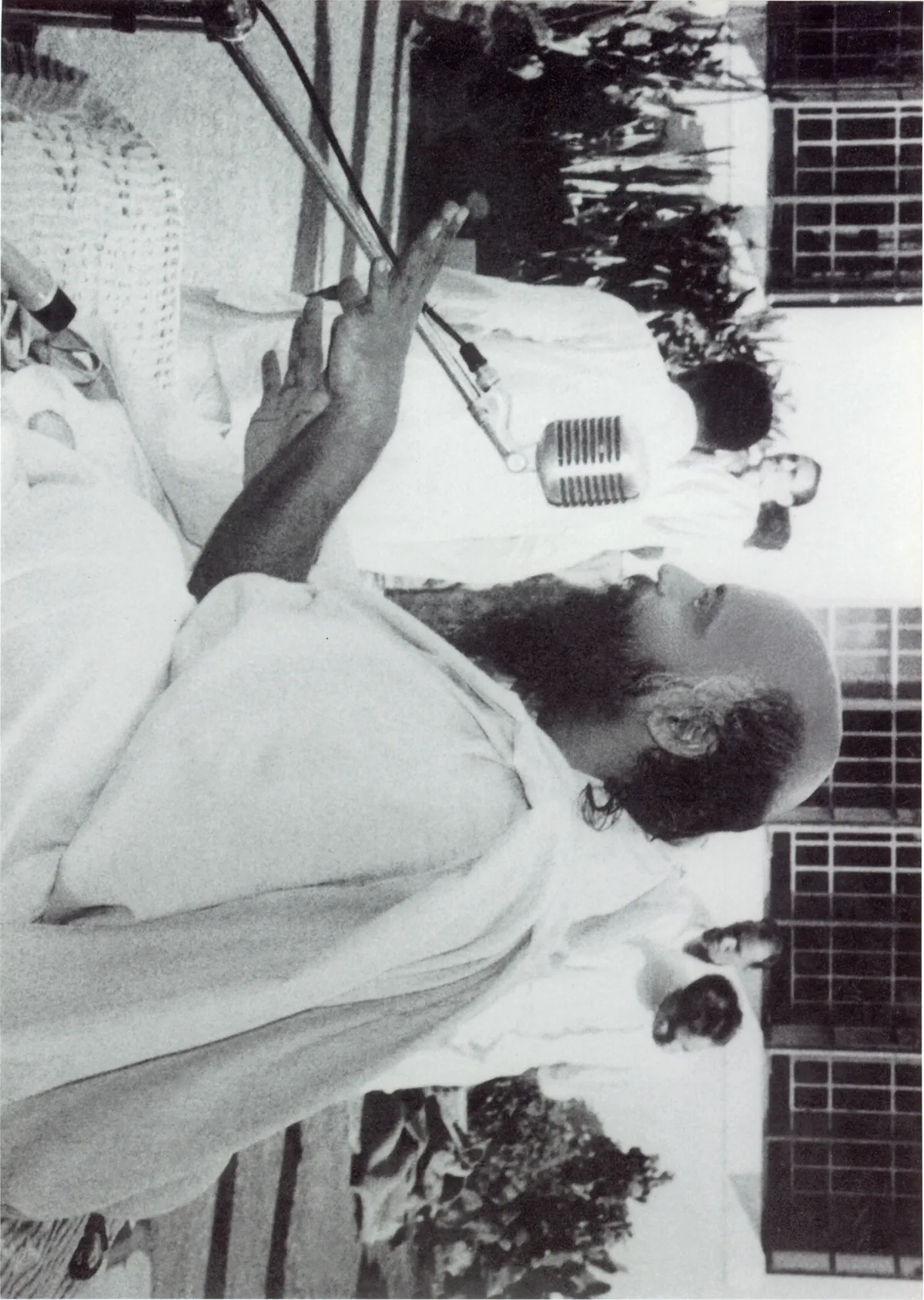
Don’t force rules; be quietly aware, and good actions appear by themselves, like a flower giving fragrance.
From the Discourses
Passages where Osho speaks to this question — each links to the complete discourse.
When does discipline become meditation?
Never. Discipline never becomes meditation; meditation certainly becomes-a discipline. Don't start with discipline otherwise you will never arrive at meditation. Start with meditation and you will arrive at a discipline, and the discipline will not be imposed from the outside. It will be an inner overflow; you will become luminous from within. In fact, to call it 'discipline' is not good because it is so utterly free -- but still you can call it discipline. Your life will be disciplined, not by any effort, but by your inner understanding. You will behave responsibly, not that you have to behave that way, you will behave responsibly because a conscious man can behave only in that way -- there is no other way. You will not behave for any profit, for any motive; you will behave out of your spontaneity; there will be no greed in it. If somebody is a Christian…
Question: BELOVED OSHO, CAN YOU PLEASE SPEAK ON DISCIPLINE AND MEDITATION? Don't do anything -- no repetition of mantra, no repetition of the name of God -- just watch whatever the mind is doing. Don't disturb it, don't prevent it, don't repress it; don't do anything at all on your part. You just be a watcher, and the miracle of watching is meditation. As you watch, slowly, slowly mind becomes empty of thoughts; but you are not falling asleep, you are becoming more alert, more aware. As the mind becomes completely empty, your whole energy becomes a flame of awakening. This flame is the result of meditation. So you can say meditation is another name of watching, witnessing, observing -- without any judgment, without any evaluation. Just by watching, you immediately get out of the mind.
Do you recommend any particular discipline besides dynamic meditation?
Even to move into an undisciplined life you have to follow some discipline. But you must remain the master; it must not become a slavery. The real thing, the end, is always to be spontaneous As we are, we are really conditioned not to be free. Our whole upbringing, our culture, our civilization, our religion, our parents -- they have all conditioned our minds not to be flee, because a free mind is a dangerous mind. Your freedom is really a deception. You are tethered to a pole It allows you a little freedom -- you can move and say that you are free -- but you are still tethered to the pole, so you can only move in a circle. This is man's state of mind. To jump from this state directly into the spontaneous is very difficult. Sometimes it happens, but you need much courage. You require the…
Sometimes in the second stage of dynamic meditation I start doing asanas. I can't tell whether I'm doing them because I want to practice them or whether they are coming of their own accord. How is one to know the difference?
If you discipline yourself from without, there is every possibility that you will never come to know the unconscious. And the conscious mind is no mind at all, it is not life at all. It is just a utilitarian instrument developed because of society; it is not you. But because we have to live with others, we need certain things that can be known about us and can be relied upon: discipline, a particular character. The conscious mind exists because of the relationship between you and others. It is just a link between you and all those with whom you are related, but it does not help you in relating to yourself, in knowing yourself. I remember a story. King Ashoka sent his son to Ceylon to take them the message of Buddha. He met the king of Ceylon and asked him a question: "There are people in the world…
Osho, for us who are asleep, perhaps the enlightened have only one proclamation: You’ve slept enough—wake up. But not everyone can wake up at once; at best, one among millions awakens. So the buddhas of the past also gave disciplines for the asleep, which have now become outdated. What discipline will you give them?
And don’t imagine that if Mahavira had forbidden raising the finger too, nothing could be done. The eyes can gesture as well—no need to lift a finger. Fix your gaze on the gulab jamun—matter settled! Buddha told his monks, “Do not ask for anything, because who knows whether the person has the means to give or not? If you ask and he is compelled to give, the whole thing becomes tasteless, ugly. So accept whatever comes.” One day a monk was returning with alms in his bowl when a kite flying overhead dropped a piece of meat, which fell into his bowl. Buddha had said, “Whatever falls into your bowl, accept it.” The monk wondered, “This meat has fallen into my bowl; I didn’t ask. Should I accept it?” But Buddha had said nothing about such a situation, so the monk thought it proper to ask. In the sangha he…