
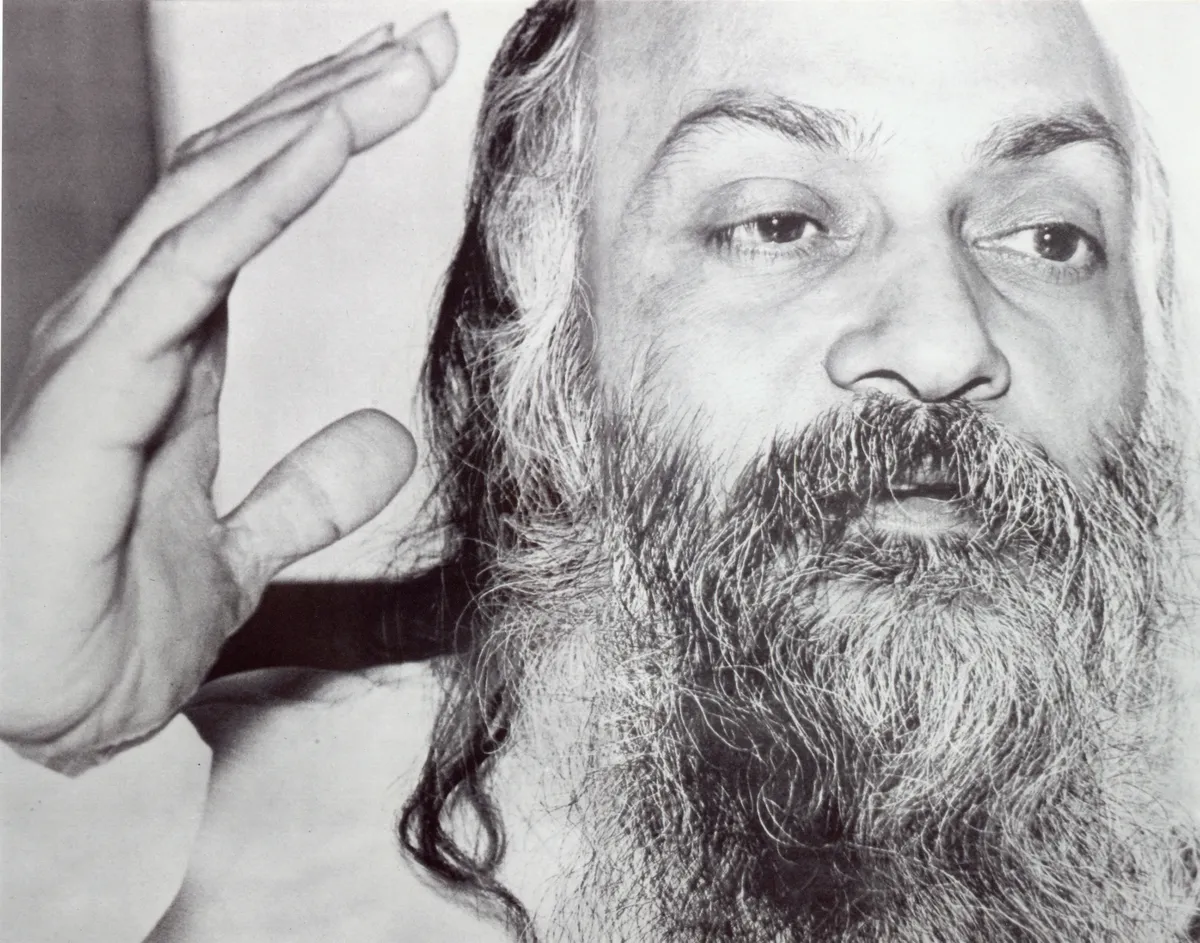
According to Osho, the highest future is a here-now paradise: humanity free of religion, nation, race and political exploitation; equal opportunity for each to flower; no marriage—love as the only law—children cared for by the community; relationships ending gratefully when love wanes; misery seen as unnatural, bliss as natural; a joyous culture of song and dance; and universal awakening to our deathless, eternal being like Buddha, Lao Tzu, Zarathustra.
He envisions a world where we drop divisive labels, let love guide relationships, care for kids together, celebrate life now, and awaken to our timeless inner self.
From the Discourses
Passages where Osho speaks to this question — each links to the complete discourse.
What kind of future do you wish for the most?
A future where every individual is absolutely free from religion, from nation, from race, from color, where every individual is given equal opportunity to grow into whatsoever he wants. A future where no marriage exists, where love is the only law, children are taken care of by the community, and people can be together as long as they love. The moment they feel the breeze of love has passed, they can depart in friendship, in gratitude. A future where people will not be exploited by religion, by politics, where people will be allowed to be happy and rejoicing. Misery should be thought to be unnatural, and blissfulness should be thought natural -- where people will be singing and laughing and dancing. I don't want anybody to hope for a paradise beyond death. I want us to create paradise herenow, on this beautiful earth. This is the only place in this…
Osho, you are quoted as being here to proclaim a new tradition, not to perpetuate the old. Why is this, and how do you see the future?
First: the creation of a new tradition is the only way to perpetuate the old, the only way. The old has to become new again and again. Only then can it be perpetuated. It is like Buddha attaining enlightenment sitting under a Bodhi tree near Bodhgaya.... That tree has existed, not exactly the same tree, but again and again branches of the tree were planted -- three times it has happened. The old tree died and when the tree was dying a branch was planted. Then that tree also died, but before it died another branch was planted. It comes in the same conti-nuum. It is not the same tree in a sense, just as your son is not you in a sense, but it is the same tree in another sense -- just as your son is another you in a sense, your continuity. Each time the world consciousness…
Question: BELOVED OSHO, WHAT IS THE FUTURE OF THE COMMUNES? I don't think much about the future because the future is born of the present. If we can take care of the present, we have taken care of the future. It is not going to come from nowhere, it is going to grow from this moment. The next moment will be growing out of this moment. If this moment is beautiful, silent, blissful, the next moment is bound to be more silent, more blissful. Now there are communes all over the world, and they are rejoicing in the present. Naturally, whatever comes in the future will be better.
Beloved Osho, jews, christians, hindus, jainas, mohammedans, put their hope in a future life, but I don't see the same hope among people around you. Why is it so?
In Mahabharata, the great Indian war -- that is the meaning of MAHABHARATA.... It must have happened somewhere around five to seven thousand years ago, or perhaps ten thousand years. It certainly happened -- there is evidence -- and it destroyed the whole backbone of the country forever. It was certainly a great world war: almost all the known nations participated in it. It was a family war in a way: cousin-brothers were quarreling over the kingdom. They were brothers, and all their relatives had to divide up: some relatives with one party, some relatives with another party -- and they were all related. And they were so important that all other, smaller nations participated in the war, either from this side or from that side. And it killed millions of people. It seems, by the description in the mahabharata, that perhaps they had come to know something similar to…
Question: First question: Osho, what message do you want to give to the world? All past religions taught man conflict: drop this, cling to that. Wherever conflict is taught, man is split. To split man is to prepare him for madness. Ask the psychologists: humanity is insane. We have turned the earth into a vast madhouse. Some are a little mad, some very mad. The more mad are in the asylum; the less mad are outside it. But there is no fundamental difference—no qualitative difference. Go to the asylum or go to parliament—what difference will you find? The same type of people, the same type of derangement. Derangement has become the norm. Here, health itself is an offense. Here, the healthy man is not liked. So Mansoor is hanged, Socrates is given poison, stones rain upon Buddha.