
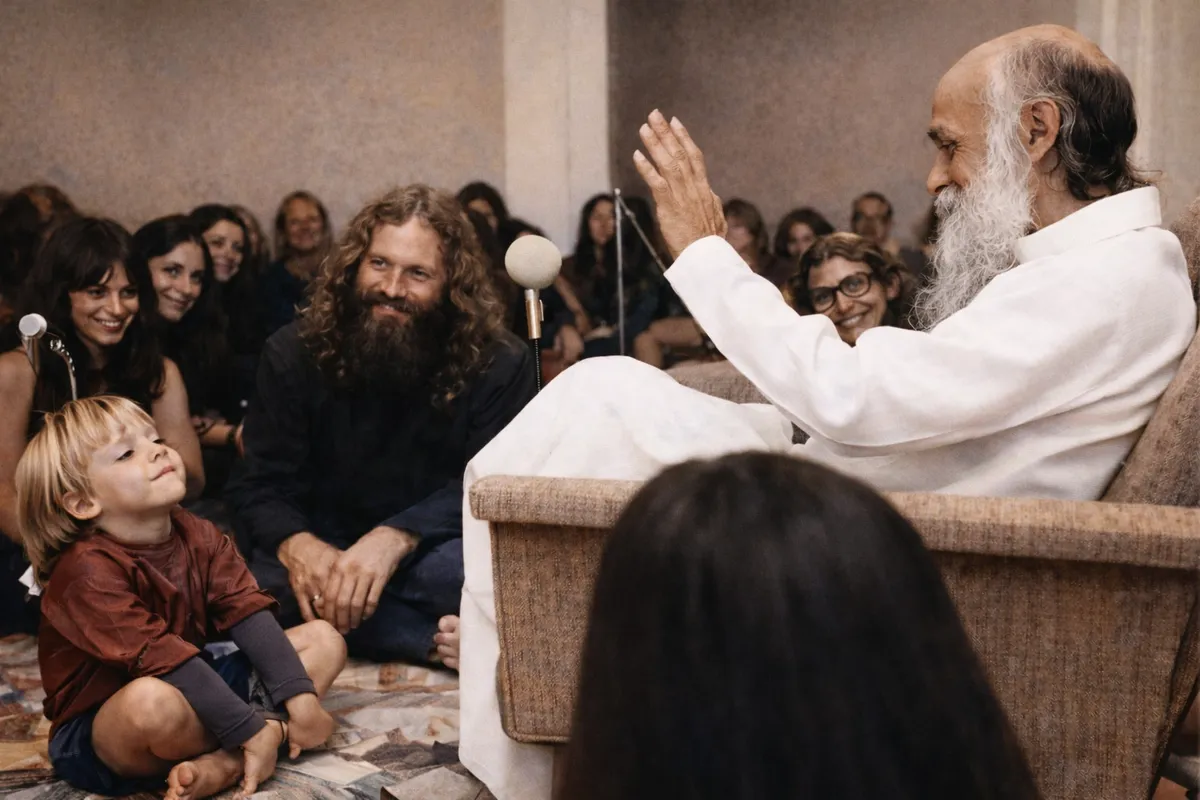
There isn’t a final prize to chase; just act from love now without trying to get something back.
From the Discourses
Passages where Osho speaks to this question — each links to the complete discourse.
Another friend has asked: Osho, what is the relationship between the method of meditation and jati-smaran (recollection of past lives)?
But the one who becomes skilled in this—who can fully awaken any day’s memory up to the age of five—will find that the memories begin to awaken completely. And you should test it. As today passes, note down some events and lock them up. After two years, try to recall today. Most of it will have been forgotten. Then remember—and after remembering, break the lock and compare whether what you recalled matches what you had written. You will be amazed—astonished—that besides what you wrote, many more details have come back which you did not even note at the time. They will all be there in memory. Buddha called this alaya-vijnana. There is a corner of the human mind he called the storehouse of consciousness. Like a junk room in the house where we keep all the odds and ends, there is a storehouse that collects memories—where everything from birth after…
एक और मित्र ने पूछा है कि ओशो, ध्यान की विधि और जाति-स्मरण में क्या संबंध है?
लेकिन जो व्यक्ति इसमें समर्थ हो जाएगा, पांच वर्ष की उम्र तक की किसी भी दिन की स्मृति को पूरा जगाने लगेगा...और वह पूरी जगने लगती है। और फिर उसको इस तरह जांच कर लेनी चाहिए। जैसे आज का दिन गुजर रहा है, तो आज के दिन की कुछ बातें नोट करके ताले में बंद कर दें। दो साल बाद आज के दिन को याद करें। वह सब खो जाएगा आज का दिन। और तब स्मरण करें, और स्मरण करके फिर ताला तोड़ें, और फिर मेल करें कि वह बात मेल खा गई कि नहीं। और आप हैरान होंगे--आप हैरान होंगे कि जितनी आपने लिखी थीं, उससे बहुत ज्यादा बातें और भी याद आई हैं जो कि आप उस दिन भी नोट नहीं कर पाए थे। वे तो सब बातें याद आ ही जाएंगी। इसको बुद्ध ने नाम दिया है, आलय-विज्ञान। मनुष्य के मन का एक कोना है, जिसको उन्होंने आलय-विज्ञान कहा है। आलय-विज्ञान का मतलब होता है, स्टोर हाउस आफ कांशसनेस। जैसे घर में एक कबाड़खाना होता है, जहां हम सब बेकार हो गई चीजों को डालते चले जाते हैं। …
It has been asked: Osho, why do we assume that the attainment of God is the goal of human life? Could it not be that human life has no goal—no purpose at all? Between these two points, the questioner must be seeing a contradiction. He has asked: Is the aim of human life to attain God? Or does human life have no aim at all?
And sit with a very light heart—no seriousness; you are not going to do some big task. We are going to spend a few moments, two or ten, in a playful mood, silently, in stillness. Keep no expectation that some great peace will come, some great bliss will be had. Keep no expectation. Drop all expectation. Become absolutely light; set aside the whole burden from the mind. And keep in mind, after closing the eyes, that there is no tension on the brain, the face is not drawn—leave it utterly loose. Let no furrow remain on the forehead—leave it utterly loose. Remember: as you were when you were a small child, sit just that light and buoyant. All right! Let the body be loose; let the eyes close. Become completely light, erase yourself—you are not. Now listen. There will be sounds all around: crickets are calling; the hush of the…
पूछा है: ओशो, हम ऐसा क्यों मानते हैं कि परमात्मा की प्राप्ति ही मानव-जीवन का ध्येय है? क्या यह नहीं हो सकता कि मानव-जीवन का कोई ध्येय न हो? प्रयोजन ही न हो? इन दोनों बातों में, जिसने पूछा है, उसे विरोध दिखाई पड़ता होगा। उसने पूछा है कि क्या मानव-जीवन का ध्येय परमात्मा को पाना है? या कि मानव-जीवन का कोई ध्येय ही नहीं है?
और बड़े हलके मन से बैठें, कोई गंभीरता नहीं, कोई बड़ा काम नहीं करने जा रहे हैं। एक मौज में दो, दस क्षण बिताने जा रहे हैं, चुपचाप मौन में। कोई अपेक्षा न रखें कि कोई बड़ी शांति मिल जाएगी, कोई बहुत आनंद मिल जाए। कोई अपेक्षा न रखें। सब अपेक्षा छोड़ दें। बिलकुल हलके हो जाएं, मन से सारा भार अलग कर लें। और खयाल कर लें, आंख बंद करने के बाद मस्तिष्क पर कोई तनाव न हो, चेहरा खिंचा न हो, बिलकुल ढीला छोड़ दें। माथे पर कोई बल न रह जाए, बिलकुल ढीला छोड़ दें। खयाल करें, जब आप छोटे-छोटे बच्चे रहे होंगे, वैसे ही हलके-फुलके होकर बैठ जाएं।
Question: BELOVED OSHO, WHAT IS THE GOAL OF LIFE AND HOW CAN IT BE ACHIEVED? The camels are very difficult people! Whatever you do to them, somehow or other they will express their camelhood. My whole life I have been telling you there is no goal! Life is its own goal. There is nothing outside life that you have to achieve. All achievement is the projection of the ego. The very idea of achievement is ambition. What you achieve does not matter -- money, power, knowledge; these are not in any way going to give you life. In fact, in achieving power, in achieving money, in achieving prestige, in achieving any other ambition, you are losing your life, you are sacrificing your life. You are involved in stupid things, and by the side life goes on slipping out of your hands.
Osho, what is the goal of meditation?
Even Ananda, Buddha's closest disciple, asked one day when they were walking through a forest. It was autumn and leaves were falling from the trees and the whole forest was full of dry leaves and the wind was blowing those dry leaves about and there was a great sound of dry leaves moving here and there. They were passing through the forest and Ananda asked Buddha, "Bhagwan, one question persists. I have been repressing it, but I cannot repress it anymore. And today we are alone; the other followers have been left behind so nobody will know that I have asked you. I don't want to ask it before others. My question is: Are you telling us all that you have discovered or are you still hiding something? -- because what you are telling us does not clarify your bliss, your peace. It seems you are hiding something. " And…
Question: Osho, since life and death follow each other, there must surely be some gap in their timing. People say the life that follows death is just a change of dress—the clothing changes, the soul remains the same. The “dress” we receive—do we get it by our own choice, with our consent, or is it forced upon us? Birth seems to be given to us without our consent. If so, does it mean that at that time we had some intention about what we would do with this dress? And have we now forgotten what that intention was—what our goal is? And if it is given to us, surely it must be given with some thought—“Go, and do this.” So what is our goal now? If all of us share the same goal, why then are our environments and “dresses” not the same?