
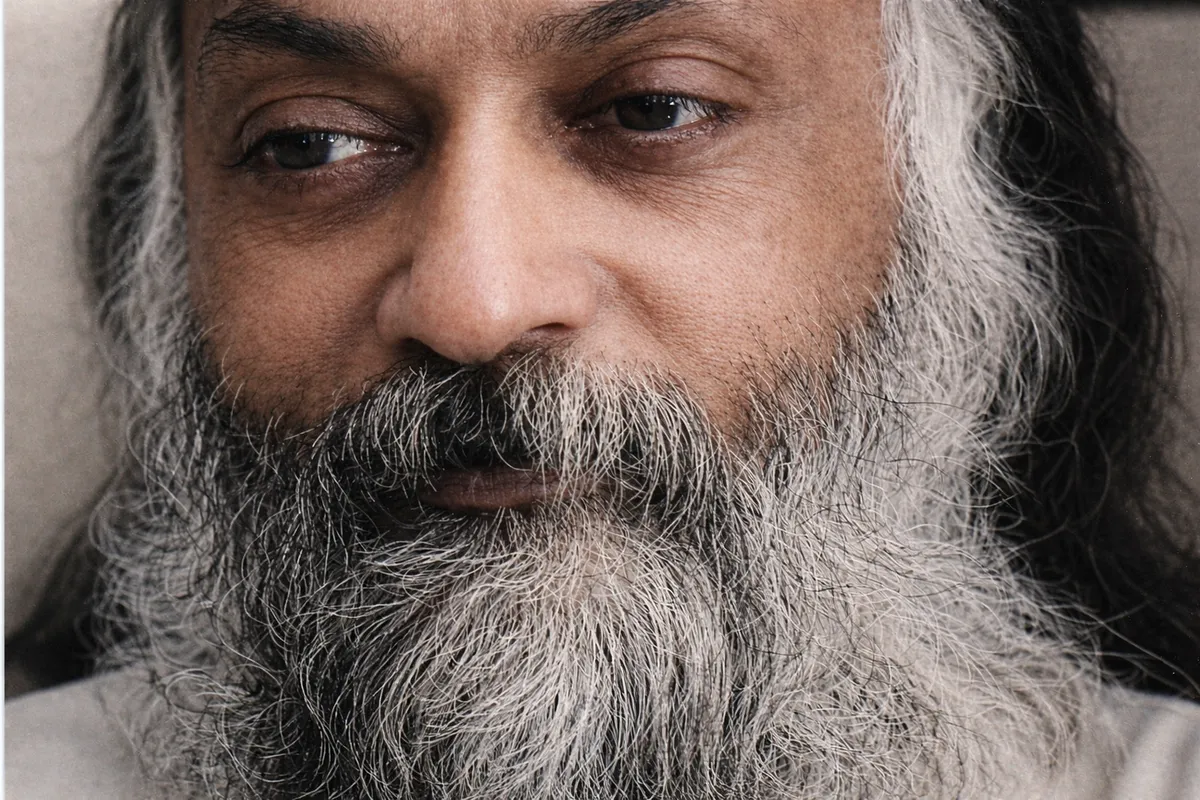
Osho says Gandhi meant well but pushed old methods that cannot feed today's world, and he did not live by them himself.
From the Discourses
Passages where Osho speaks to this question — each links to the complete discourse.
Osho, you seem opposed to Gandhian ideology and supportive of modern technology and machines. But you know that because of technology and machines the life of the West has become disturbed, tense, and agitated. It stands on the brink of collective madness. Then why do you blindly support it?
Man has almost arranged heaven on earth. Only one lack remains: within there is a sense of meaninglessness, a hollowness. Meditation will fill it. Add meditation to science, and what has never happened on earth will happen. Then heaven needn’t be kept in the sky; we can build it here. We put it in the sky only because we failed to create it here. The West is capable of building heaven; the East has the science of meditation. A trade is possible; neither will lose—both will gain. You ask, “Then why do you blindly support it?” Is it my blind support—or your blind opposition? I support what I see. But you do not see. How much do you know of the West? I have so many Western people around me, and I see in them a quality the Eastern man lacks: whatever they do, they do with total dedication—complete craftsmanship,…
पहला प्रश्न: ओशो, आप गांधीवादी विचारधारा के विरोधी और आधुनिक प्रविधि और यंत्र के समर्थक मालूम पड़ते हैं। लेकिन आपको मालूम है कि प्रविधि और यंत्र के कारण पश्र्चिम का जीवन कितना अशांत और तनावग्रस्त एवं क्षुब्ध हो चला है। वह सामूहिक विक्षिप्तता के कगार पर खड़ा है। तब क्यों आप उसका अंध-समर्थन करते हैं?
आदमी ने स्वर्ग को बनाने का करीब-करीब पूरा इंतजाम कर लिया है। बस कमी रह गई है तो एक, कि बाहर तो स्वर्ग बनाने का पूरा इंतजाम हो गया है पश्र्चिम में, लेकिन भीतर एक अर्थहीनता का बोध है, एक रिक्तता है। वह रिक्तता ध्यान से भर जाएगी। बस ध्यान की जरूरत है विज्ञान के साथ जोड़ देने की। और जो कभी नहीं घटा पृथ्वी पर, वह घट जाएगा। फिर स्वर्ग को आकाश में रखने की जरूरत नहीं, फिर पृथ्वी पर हम स्वर्ग बसा सकते हैं। असल में आकाश पर रखते ही उसको इसलिए थे कि पृथ्वी पर बसाने में असमर्थ थे। पश्र्चिम समर्थ है स्वर्ग को बसाने में। और पूरब के पास ध्यान का विज्ञान है। दोनों का लेन-देन हो सकता है। इस सौदे में किसी का नुकसान नहीं होगा, दोनों लाभ ही लाभ में रहेंगे।
Yesterday you talked about gandhi and criticized him. But gandhi always wanted the country to be prosperous, happy and its people to be good. What do you say?
Now everyone thinks that whatever Gandhi said is bound to benefit the country, because he was a mahatma, a saint. But it is not necessary that, being a saint, one only does good to the community. I visited Rajkot recently. In the open area where I was going to address a meeting, I saw a number of bulls and cows. They were all very sick and skinny, almost dying. Inquiring, I learned that there was a scarcity of water as a result of a drought in the villages around Rajkot, and these animals had been collected from there so they might be saved from dying. I then asked what efforts were being made to save them. The man who was explaining things told me a strange story. A saint came to Rajkot and fed the emaciated cows with quality sweets that people usually have for feasts, and the same day…
As you say that only the capitalists know how to produce wealth, the brahmins in the past claimed that they alone could produce knowledge. Where are those brahmins and their monopoly of knowledge? Now anyone is creating knowledge. In the same way when the capitalists will have disappeared, everybody will create wealth.
Whether you threaten to kill yourself or kill others, it is all the same and it is violence. Both kinds of threats are violent. But we fail to observe it, and we think that the threat to kill oneself is non-violent. Truth is otherwise; it is subtle violence. It is not non-violence. Non-violence is very different. Non-violence means that there should be no threat, no coercion whatsoever, to kill oneself or others. Ask the people who were associated with Gandhi. Ask his own sons. Ask Haridas Gandhi if his father was non-violent. If so, then why did he become a Mohammedan? If Gandhi was non-violent, why did his son take to drinking and meat-eating? If Gandhi was non-violent, why did he have to fight his father all his life? It was because Gandhi's non-violence was so sadistic, so torturous that he tortured his own sons. Haridas left home and ran…
Osho, what is the first experience of samadhi like?
You will know only when it happens. It cannot be said; at most a few hints can be given. It is as if, in the dark, a lamp is suddenly lit. Or as if a dying patient, right at the edge of death, suddenly finds a medicine that works; life’s wave, life’s thrill spreads again—so it is. As if a corpse becomes alive—such is the first experience of samadhi. It is the taste of nectar. The experience of the ultimate music. But it will be only when it happens; and only then will you understand. You will not understand by my saying it. It is as with love. How can anyone explain it? To someone who has never loved, never known love, no matter how many explanations you offer—he will hear it all and still ask, “I haven’t understood; please explain a little more.” It is like explaining light to…
तीसरा प्रश्न: ओशो, समाधि का पहला अनुभव कैसा होता है?
होगा तो ही जानोगे। कहा जा सके, ऐसा नहीं है। कुछ-कुछ इशारे किये जा सकते हैं। जैसे अंधेरे में अचानक दीया जल जाये, ऐसा होता है। या जैसे बीमार मरता हो और अचानक कोई दवा लग जाये...मरते-मरते कोई दवा लग जाये; और जीवन की लहर, जीवन की पुलक फिर फैल जाये--ऐसा होता है। जैसे कोई मुर्दा जिंदा हो जाये--ऐसा होता है समाधि का पहला अनुभव। अमृत का अनुभव है। परम संगीत का अनुभव है। पर होगा तो ही होगा। और होगा तो ही तुम समझ पाओगे; मेरे कहने से समझ में न आ सकेगा। प्रेम में जैसा होता है। अब कोई किसी को कैसे समझाये? …
Beloved Osho, the president of india said in a speech recently, "there is so much evil around here, and rajneesh went to america. Why?" I find it disappointing that the president of india should miss your presence in that country now, but would not listen to your advice when you were sharing your vision for thirty years before coming to america. And even now it is not too late. Please comment.
In fact, I told him that if he had any sense of dignity, now was the time he should commit suicide -- "Because what is the need? And what are you doing? Unnecessarily, a ninety-year-old man...." All his colleagues were dead, all his contemporaries were dead, his children were old -- the eldest was seventy. "So what are you doing here except becoming an unnecessary burden, continuously sick, continuously in bed? And still you won't leave, you won't create some space for a new person to take over." That was even more shocking to these presidents and prime ministers of India. I was saying two things: birth control -- but that is only half the story. The second is death control -- which nobody in the whole world has been talking about -- because that is the logical end. If you stop people from being born, that is one part…