
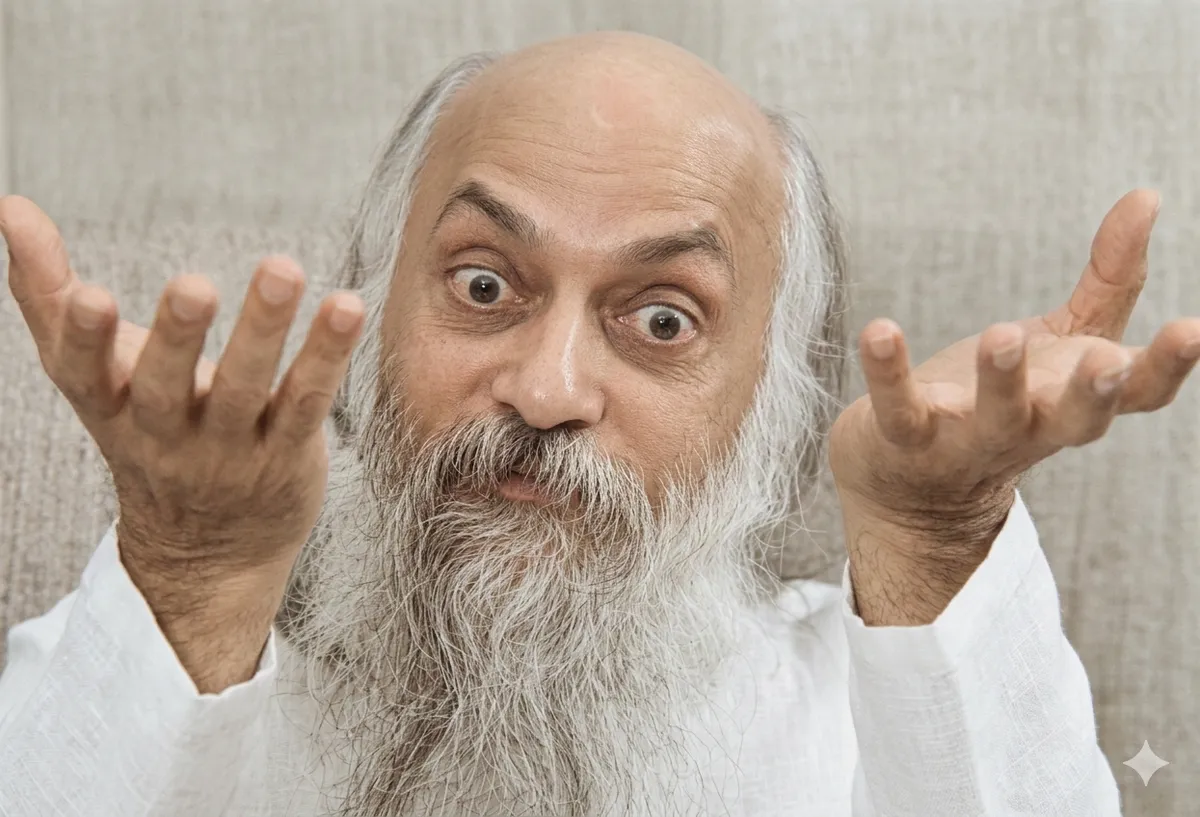
Art can give a sweet, timeless taste, but it isn’t the same as waking up forever inside.
From the Discourses
Passages where Osho speaks to this question — each links to the complete discourse.
Beloved master, I've read a translation of the indian aesthetician, abhinava gupta, in which he says the taste of rasa is the same as the taste of brahma. His meaning, if I understand correctly, is that the aesthetic experience is of the same order as the experience of god. Sometimes, especially with art and music, I find a spontaneous joy arising. Is this a small taste of what it's like to be egoless?
The great philosopher, Abhinava Gupta, knows exactly what rasa is. There is no exact word in English to translate the Sanskrit word `rasa'. In Western aesthetics, the concept has not been evolved at all. The only word that can give you a little hint is `juice'. Literally, rasa means juice. There are moments of aesthetic experience when you are drowned in a juice: you have a certain taste of spontaneous joy, a feeling of timelessness, a moment when your thoughts have stopped. It can happen seeing a painting, or a beautiful piece of sculpture, or listening to music, or seeing a great dancer, or dancing yourself. All these are aesthetic activities. You can be drowned into some juice which is not of this world. It happens spontaneously; you cannot manage it to happen. If you make an effort to make it happen then there is no possibility of its happening;…
Osho, on the journey of awakening, are rasa, virasa, and sva-rasa merely waystations? Kindly explain.
Such a moment comes now and then in your life—at moments of love, or of prayer, or of meditation. If you have a deep love with someone, sometimes such an exalted peak arises within that neither the lover remains nor the beloved remains. Then Rasa ripens. Then Rasa showers. That Rasa is the Rasa of the Divine. Hence in love the first ray of the experience of God descends; or in some deep absorption of meditation, where the distinction of self and other dissolves and the sky of nonduality opens—there too, God showers. The questioner has asked rightly, but about rasa… He asks: Are rasa, virasa, and sva-rasa merely stages? Rasa is not a stage. Rasa is the source—and the final destination as well. For the ultimate destination can only be that which has also been the source. In the end we return to the source. The circle of life…
पहला प्रश्न: ओशो, बोध की यात्रा में रस, विरस एवं स्व-रस क्या मात्र पड़ाव हैं? कृपा करके समझायें।
ऐसी कभी-कभी घड़ी तुम्हारे जीवन में आती है--प्रेम के क्षणों में या प्रार्थना के क्षणों में या ध्यान के क्षणों में। किसी से अगर तुम्हारा गहरा प्रेम है तो कभी-कभी ऐसा उत्तुंग शिखर भीतर पैदा होता है जब न तो प्रेमी रह जाता न प्रेयसी रह जाती है। तब रस फलता है। तब रस झरता है। वह रस परमात्मा का रस है। इसलिए प्रेम में परमात्मा के अनुभव की पहली किरण उतरती है; या ध्यान की किसी गहरी तल्लीनता में जहां स्व-पर का भेद मिट जाता है, अभेद का आकाश खुलता है, वहां भी परमात्मा झरता है। तो पूछने वाले ने प्रश्न तो ठीक पूछा है, लेकिन रस...पूछा रस, विरस, स्व-रस क्या मात्र पड़ाव हैं? रस पड़ाव नहीं है। रस तो स्रोत है और अंतिम मंजिल भी। क्योंकि अंतिम मंजिल वही हो सकता है, जो स्रोत भी रहा हो। हम अंततः स्रोत पर ही वापिस पहुंच जाते हैं। जीवन का वर्तुल पूरा हो जाता है। जहां से चले थे, वहीं आ जाते हैं। या अगर तुम समझ सको तो जहां से कभी नहीं चले, वहीं आ जाते हैं। जहां से कभी नहीं हटे, वहीं पहुंच जाते हैं। …
Osho, you say that whatever has rasa, one should relish it completely. But rasa makes one blind.
How can rasa make you blind? The Upanishads say, the divine’s very form is rasa: “Raso vai sah.” He is the embodiment of rasa. How can rasa make you blind? No, it must be something else. You are blind. You go on hunting for excuses about who made you blind. No one is making you blind. You are sitting there with your eyes closed. Neither rasa is making you blind, nor money is making you blind, nor the world is making you blind. No one is making you blind. How could anyone? You are blind—eyes shut tight. But even to admit this you don’t have the courage: “I am sitting with my eyes closed.” So you search for excuses. You say, What to do—lust has blinded me. What to do—greed for wealth has blinded me. What to do—we are entangled in the world; this is making us blind. The truth…
तीसरा प्रश्न: ओशो, आप कहते हैं कि जिस चीज में भी रस हो उसे पूरा भोग लेना चाहिए। लेकिन रस तो अंधा बनाता है।
रस कैसे अंधा बनायेगा? उपनिषद कहते हैं, परमात्मा का रूप रस: ‘रसो वै सः।’ वह तो रसरूप है। रस कैसे अंधा बनायेगा? नहीं, कुछ और बात होगी। तुम अंधे हो। तुम कहीं भी बहाना खोजते हो, किसने अंधा बना दिया। कोई अंधा नहीं बना रहा तुम्हें। तुम आंख बंद किये बैठे हो। न रस अंधा बना रहा है, न धन अंधा बना रहा है, न संसार अंधा बना रहा है। कोई अंधा नहीं बना रहा। कोई कैसे अंधा बनायेगा? अंधे तुम हो, आंख बंद किये बैठे हो। लेकिन यह मानने की हिम्मत भी तुममें नहीं है कि मैं आंख बंद किये बैठा हूं। तो तुम बहाने खोज रहे हो। तुम कहते हो क्या करें, कामवासना ने अंधा कर दिया है। क्या करें, धन की वासना ने अंधा कर दिया। क्या करें, यह संसार में उलझे हैं, इससे अंधे हुए जा रहे हैं। बात उल्टी है, तुम अंधे हो इसलिए संसार में उलझे हो। धन अंधा नहीं कर रहा है, तुम अंधे हो इसलिए धन को पकड़े बैठे हो। रस अंधा नहीं कर रहा है, रस तो तुम्हें अभी मिला ही कहां? जरा पूछो फिर से अपने से, रस पाया है? हां ऐसा दूर-दूर झलक दिखाई पड़ी है। …
Osho, with reference to “Raso Vai Sah,” can taste too be made a means to the experience of the Divine?
Brahman means “the expanding one”—that which keeps spreading, which is ever extending. That which does not stand still anywhere, which never makes any boundary into a boundary, which always flows beyond. If you would know the Divine, then—even on a small scale—do not make boundaries. Expand, keep expanding! If you have fragrance, share it with the winds! If you have light, give it to the paths! If you have awareness, give it to others! Whatever you have! And who is there who has nothing? There is no such human being. The Divine is within everyone; therefore something or other will surely be there. Search. You cannot be without purpose. Through you he wishes to sing some song. Through you he wishes to dance some dance. Through you he wishes to bloom some flower. You cannot be in vain. You have a destiny. There is a secret hidden within you. Open…
तीसरा प्रश्न: ओशो, ‘रसो वै सः’ के संदर्भ में बताएं कि क्या स्वाद को भी परमात्म-अनुभूति का साधन बनाया जा सकता है?
ब्रह्म शब्द का अर्थ होता है: ‘दि एक्सपैंडिंग वन।’ वह जो फैलता ही जा रहा है। ब्रह्म का अर्थ है: विस्तीर्ण होता जा रहा है। जो ठहरा नहीं है। जो कहीं ठहरता नहीं। जो किसी सीमा को सीमा नहीं बनाता, जो हमेशा सीमा के ऊपर से बह जाता है। अगर तुम्हें परमात्मा को जानना हो, तो छोटे पैमाने पर ही सही, लेकिन तुम भी सीमा मत बनाना। फैलना, फैलते जाना! सुगंध हो तुम्हारे पास, बांटना हवाओं को! प्रकाश हो, बांट देना रास्तों पर! बोध हो, दे देना दूसरों को! जो कुछ भी तुम्हारे पास हो.! और ऐसा तो कौन है मनुष्य जिसके पास कुछ भी न हो! ऐसा तो मनुष्य है ही नहीं कोई कि जिसके पास कुछ भी न हो। परमात्मा तो सभी के भीतर है, इसलिए कुछ न कुछ तो होगा। खोजना। तुम अकारण नहीं हो सकते। तुम्हारे द्वारा उसने कोई गीत गाना ही चाहा है। तुम्हारे द्वारा उसने कोई नाच नाचना ही चाहा है। तुम्हारे द्वारा उसने कोई फूल खिलाना ही चाहा है। व्यर्थ तुम नहीं हो सकते। तुम्हारी कोई नियति है। तुम्हारे भीतर छिपा हुआ कोई राज है। खोलो, खोजो! …
Osho, just a small question. If truth is non-dual, then what is the point of calling apara and para different? And are apara and para interchangeable?
In the Vigyan Bhairava, Shiva tells Parvati: “Ask no more. The more will hinder. Let me tell you in little. In this Om—A-U-M—forget A, forget M; what remains in the middle—U—dive into that. Then I will be attained.” This is technique. If you can dive into U… If you utter U with force, you will feel the navel contract within. The more forcefully you intone U, the more pressure on the navel. And the navel is the root source of life-energy. One who can tap it rightly—Om is the hammer, the device to strike there. If one strikes rightly, the life-energy begins to rise; kundalini awakens; the journey upward begins. I have heard: In a small town a huge factory installed a new machine. For a month it ran well; then suddenly it stopped. No fault was found. The factory engineers tried and failed. A specialist was called from the…
प्रश्न: ओशो, एक छोटा-सा प्रश्न है। यदि सत्य अद्वैत है, तो अपरा और परा को भिन्न कहने का क्या अर्थ है? और क्या अपरा और परा आपस में परिवर्तनशील हैं?
विज्ञान भैरव में शिव ने पार्वती को कहा है कि तू ज्यादा न पूछ। ज्यादा में तुझे अड़चन होगी। थोड़े में तुझे कह दूं। अ उ म--यह जो ओम है, इसमें तू अ को भी भूल जा; इसमें तू म को भी भूल जा; वह जो बीच में बचता है, ओम के बीच में; अ भी छूट जाए, म भी छूट जाए, वह जो बीच में बचता है उ, उस उ में तू डूब जा। तो मैं तुझे उपलब्ध हो जाऊंगा। यह तो टेक्नीक की बात है। अगर आप उ में डूब सकें.। आप कभी जोर से कहें उ, तो आपको पता चलेगा कि पूरी नाभि भीतर सिकुड़ गई। जितने जोर से उ कहेंगे, उतने ही जोर से नाभि पर जोर पड़ेगा। और नाभि जीवन का मूल ऊर्जा-स्रोत है। उसको ठीक टैप करना जिसको आ जाए.। ओम, उसको ही हैमर, उसको ही चोट पहुंचाने की तरकीब है। और उस पर जो विधिवत चोट पहुंचा दे, वह जीवन की ऊर्जा उठनी शुरू हो जाती है। कुंडलिनी जागने लगती है। ऊपर की यात्रा पर आदमी निकल जाता है। सुना है मैंने कि एक छोटे-से गांव में एक बहुत बड़े कारखाने में एक नई मशीन लगाई गई। महीनेभर ठीक चली और फिर अचानक बंद हो गई। कोई खराबी भी न थी। …