
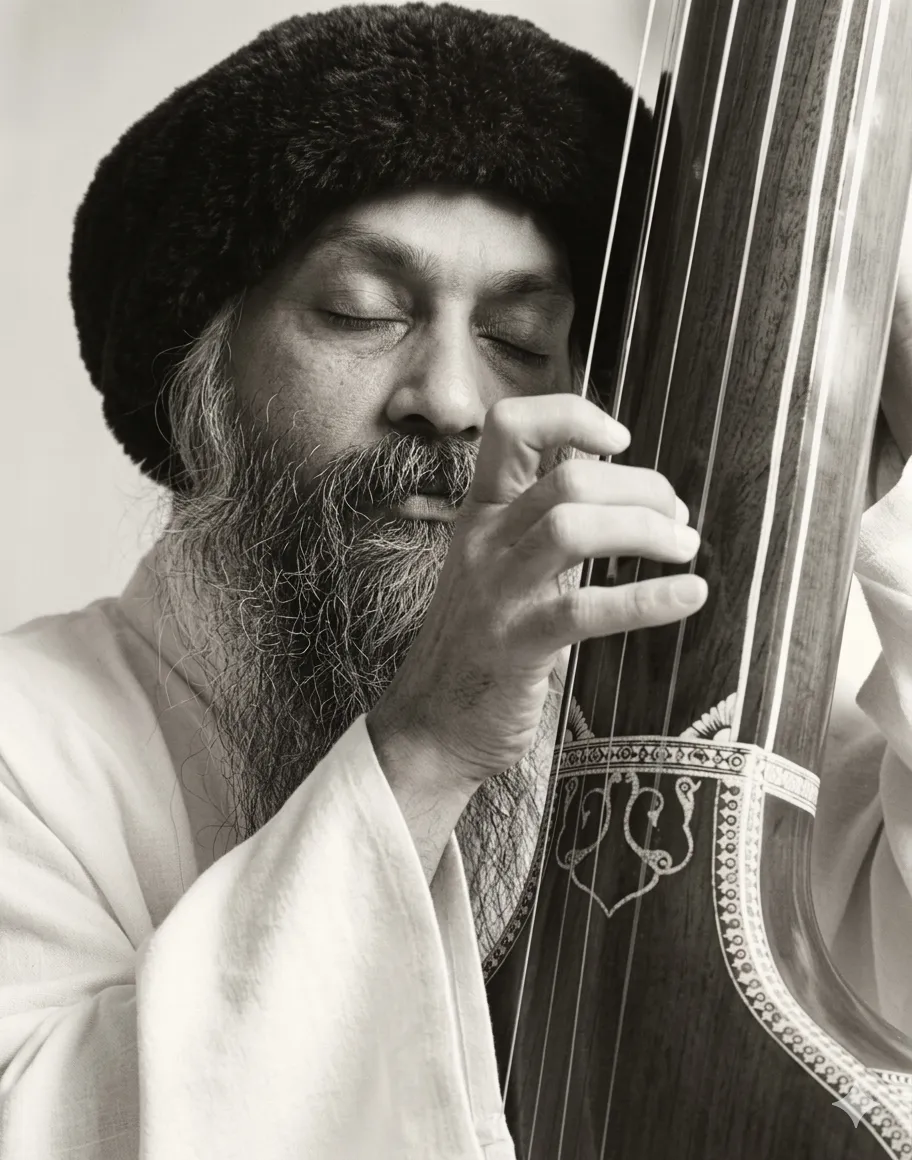
Enjoy things without clinging to them; wanting more and more keeps you unhappy, letting go brings peace.
From the Discourses
Passages where Osho speaks to this question — each links to the complete discourse.
Osho, you often say that material prosperity is the foundation of spiritual growth; but in your last discourse on non-possession you said that the fewer things one has, the less enslaved one is, and the more things one has, the more enslaved one becomes. Please clarify this fundamental paradox between prosperity and non-possession, and also explain how more things make a person more enslaved. And how does the possessor become possessed?
Material prosperity is the foundation of spiritual life, but a building is not raised by the foundation alone. It can happen that the foundation is there and the house is never built. A house never exists without a foundation, but a foundation can exist without a house. One may lay the footings and leave them filled in—then there will be a foundation, not a building. But wherever there is a building, it cannot be without a foundation. Prosperity is the base of detachment. Without becoming prosperous, no one ever really discovers that prosperity is futile. Without having wealth, no one ever realizes that nothing essential is gained by wealth. The greatest gift of wealth is not wealth—it is the breaking of the illusion about wealth; it is disillusionment. If wealth is never attained, its futility is never known. The poor, the needy, the destitute find it very hard to be…
ओशो, आप बहुत बार कहते हैं कि भौतिक संपन्नता आध्यात्मिक विकास का आधार है; लेकिन अपरिग्रह पर हुए पिछले प्रवचन में आपने कहा कि कम चीजें हों तो व्यक्ति कम गुलाम होता है, और चीजें अधिक हों तो व्यक्ति अधिक गुलाम हो जाता है। कृपया संपन्नता व अपरिग्रह के इस मौलिक विरोधाभास को स्पष्ट करें, और साथ ही समझाएं कि अधिक चीजें व्यक्ति को अधिक गुलाम कैसे बनाती हैं? और पजेसर कैसे पजेस्ड हो जाता है?
भौतिक संपन्नता आध्यात्मिक जीवन का आधार है, लेकिन आधार से ही कोई भवन निर्मित नहीं हो जाता। आधार भी हो, और भवन न उठाया जाए, यह हो सकता है। भवन तो बिना आधार के कभी नहीं होता, लेकिन आधार बिना भवन के हो सकते हैं। कोई नींव को भर कर ही छोड़ दे, तो भवन तो नहीं उठेगा, आधार जरूर होंगे। लेकिन भवन हो तो बिना आधार के नहीं होता है। संपन्नता वीतरागता का आधार है। संपन्न हुए बिना कभी कोई नहीं जान पाता कि संपन्नता व्यर्थ है। धन पाए बिना कभी कोई नहीं जान पाता कि धन से कुछ भी नहीं मिलता है। धन की जो सबसे बड़ी देन है, वह धन नहीं है। धन की सबसे बड़ी देन, धन के भ्रम का टूट जाना है, डिसइल्यूजनमेंट है। धन न मिले, तो धन की व्यर्थता का कभी भी पता नहीं चलता है। …
Osho, saints have always been against possessions. But one cannot get by without possessions. Then how much should a seeker of truth keep?
And if he were to shower down gold coins, breaking the roof, we would not refuse, saying, “I am not a sensualist, I am a renunciate—what are you doing? What injustice is this!” Or if today he were to carry everything off from the house—God is a robber indeed; that is why we call him Hari: Hari means the one who takes away, who steals. He is a thief indeed—here he gives, there he also snatches away. Today he gives, tomorrow he may take. And in between you will get into great, unnecessary entanglements. There is a Sufi story. A fakir had two beloved sons, twin boys. They were the pride of the town. Even the emperor, seeing those boys, was filled with envy. The emperor’s sons were neither so handsome nor so gifted. Those two boys were the light of that village; their conduct was equally gracious and noble.…
The old religions have taught people to go beyond possessions; I teach you to go beyond possessiveness -- and there is a vast difference between the two. Going beyond possessions is a masochistic thing. Then you are unnecessarily torturing yourself. Mahavira lived naked, he carried the idea of non-possessions to the ultimate extreme, so he did not even have clothes. He had to live naked -- that is the logical consequence of the idea of not possessing anything, not even the begging bowl which was allowed in India for the monks, for all kinds of mystics. But Mahavira would not have anything to do even with a begging bowl. He would eat with his hands, he would beg with his hands. But this is in a way masochistic. When it was cold he must have been shivering and when it was hot and when it was raining....
So, Osho, you seem to be placing more emphasis on material prosperity rather than on spiritual growth coming first!
Spiritual growth is a stage that comes after material development; it cannot come first. Individually it may be possible—one or two people can do it—but they will have to pass through great austerities. Austerity is required precisely because such a person is trying to act against the very laws of nature. In my understanding, the body comes first; the soul follows. The material comes first; the spiritual follows. One whose body is still unsatisfied, troubled, and tormented cannot even think about the soul. And for someone in whose life we have not yet been able to make ordinary arrangements for material comfort, talk of spirituality is opium. Marx said that rightly. He is speaking of spirituality only to forget his misery. Therefore my view, my emphasis, is that there should be a complete and well-ordered provision of the material. But do not think my goal is materiality. My emphasis is…
तो ओशो, आप ज्यादा बल दे रहे हैं भौतिक संपन्नता पर, बजाय इसके कि आध्यात्मिक विकास पहले हो!
आध्यात्मिक विकास भौतिक विकास के बाद का चरण है। पहले हो नहीं सकता। व्यक्तिगत रूप से हो सकता है, एकाध आदमी कर सकता है। लेकिन बड़ी कठिन तपश्चर्या से गुजरना पड़े। तपश्चर्या इसीलिए करनी पड़ती है वह, कि वह एक बिलकुल प्रकृति के नियम के प्रतिकूल काम करने की कोशिश कर रहा है। मेरा मानना है कि शरीर पहले है, आत्मा पीछे है। भौतिक पहले है, अध्यात्म पीछे है। और जिसका शरीर अभी अतृप्त है और परेशान और पीड़ित है, वह आत्मा की बात सोच भी नहीं सकता। और जिसके जीवन में अभी भौतिक सुविधा के लिए हम सामान्य इंतजाम नहीं कर पाए, उसके अध्यात्म की बातें अफीम की बातें हैं। वह मार्क्स ने ठीक कहा है। वह सिर्फ दुख को भुलाने के लिए अध्यात्म की बातें कर रहा है।
Osho, the path of sannyas is unfamiliar and I am afraid. What should I do?
But this is everyone’s belief—that love arises from fear. So the husband frightens the wife as much as he can, thinking otherwise there will be no love. And the wife frightens the husband as much as she can, thinking the same. Parents frighten the children; and the children, for their part, do not hold back—they frighten the parents too; they have their own ways, their recipes. All devotees of Baba Tulsidas! Everyone is frightening everyone. Teachers are frightening students; students are frightening teachers. Fear pervades everywhere. Our notion of God is as if he were a policeman. We imagine he watches you twenty-four hours a day; he won’t even leave you alone in the bathroom—sitting there, peeping through the keyhole. I have heard: a Christian nun used to bathe with her clothes on. At last her companions became concerned. They said, “What sort of madness is this? Why don’t you…
पहला प्रश्न: ओशो, संन्यास का मार्ग अपरिचित है और मैं भयभीत हूं। क्या करूं?
… तो पति पत्नी को डरवाता है। जितना डरवा सके उतना डरवाता है। क्योंकि सोचता है: नहीं डरवाऊंगा तो प्रेम नहीं होगा। और पत्नी भी फिर जितना डरवा सकती है उतना पति को डरवाती है। वह भी सोचती है कि नहीं डरवाऊंगी तो प्रेम नहीं होगा। मां-बाप बच्चों को डरवाते हैं। और बच्चे भी कुछ कोर-कमी छोड़ते हैं! बच्चे भी डरवाते हैं मां-बाप को। उनके भी अपने ढंग हैं, उनके भी नुस्खे हैं। ये सब बाबा तुलसीदास के भक्त हैं। ये सब एक-दूसरे को डरवा रहे हैं। शिक्षक विद्यार्थियों को डरवा रहे हैं, विद्यार्थी शिक्षकों को डरवा रहे हैं। सब तरफ डर व्याप्त है। परमात्मा की हमारी धारणा कुछ ऐसी है, जैसे वह कोई पुलिसवाला हो। …