
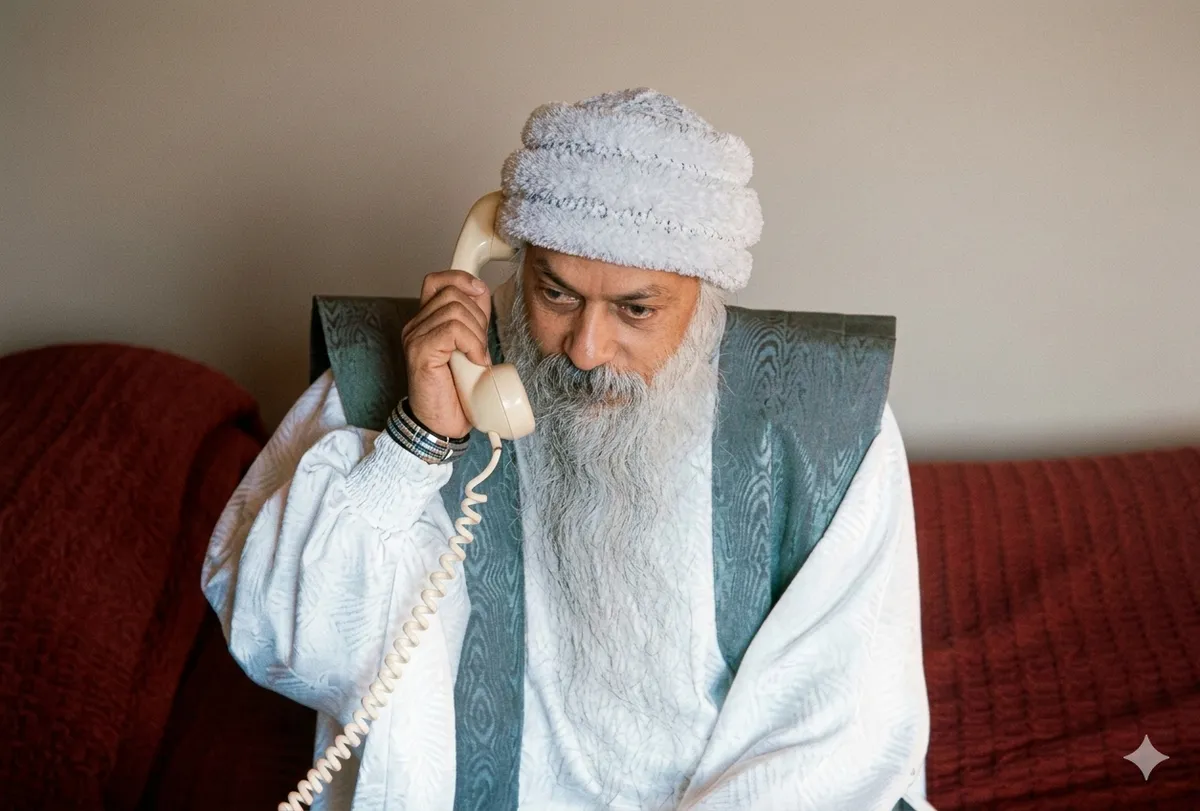
According to Osho, love and insults can’t coexist: abuse betrays hidden opposition, hurt pride, and a desire to get even after having to bow. Calling insults ‘love’ is self-deception; they reveal your inner cobbler, not compassion. In true love, abuse withers; even if one accepts your insult, it’s out of love on their side, not proof that insult came from love.
If you insult someone and call it love, you’re actually angry or proud inside—not loving.
From the Discourses
Passages where Osho speaks to this question — each links to the complete discourse.
Should I take it, Osho, that an escapist cannot love and cannot be nonviolent?
Yes, an escapist can neither love nor be nonviolent. But an escapist may appear to love, and he can even put on the costume of nonviolence—and often he will do exactly that. The escapist cannot love because he has not yet been born; he is not yet there. Who will love? As I have said, it does not depend on the one who is loved; it depends on the one who loves. Only one whose individuality has dawned within, whose person has been born, can love. And the person is born out of struggle and challenge, by fighting every day—just as a sculptor chisels a stone. If the stone refuses to be cut and struck, no statue appears; it remains a rough rock. The struggles of life polish the statue within. If we refuse them, we remain stone. If individuality, soul, being, have not yet arisen within, who is there…
Question: Second question: Osho, is love a sin? Yogendra, if love is a sin then there can be nothing meritorious in the world. If love is sin, virtue is impossible—because the very essence of virtue is nothing other than love. People misunderstood. Priests and pundits said it. But what understanding do priests have? What is their experience? They parrot the scriptures. Yes, you can have them recite the Ramayana, repeat the Gita, chant the entire Quran—like parrots, like machines. Machines can do that now. Computers can do all of it—and with greater accuracy than humans. The buddhas said something; the pundits understood something else. In a way it is inevitable: the awakened ones speak from mountain peaks, and the priests understand from dark valleys. The buddhas call from the summits; the priests crawl through shadowed ravines. From down there whatever echoes they hear, they assign meanings to and start interpreting.
[A sannyasin asks about his relationship which is bringing up some hatred and aggression on both sides.] Mm, it's natural. When you allow love to come out, hate will also come out. That's why many people repress their love -- because they have been taught to repress their hate and they are both aspects of the same energy. They are not two; they are one. So when love comes up, hate will also, and if you repress hate, love will be repressed simultaneously. ... If you understand, you will not think in terms of wanting or not wanting. It is a fact. Your wanting or not wanting does not make any difference. One has to accept it, one has to accept whatsoever is. What can you do? If you repress hate -- and your dislike will repress it -- then immediately love will be repressed.
Osho, the moment I heard someone talk of shooting you the other day, I kept crying. I have never cried in my life even over anyone’s death! Now I tremble just hearing talk of your death. Why? Please explain.
I cradle upon my eyelids this delicate dream of someone’s. Why does someone say I am lost in the tangle of the dark, that in smoke-filled streets I have wept like lightning, hiding? I am pouring into every particle, O bee, a love like tears for someone’s. I cradle upon my eyelids this delicate dream of someone’s. On the dust the thorn’s soft kiss, in the sky the clouds’ invitation; today the ocean of cataclysm greets my trembling. A storm-messenger has brought, fragrant, someone’s breath as a gift. I cradle upon my eyelids this delicate dream of someone’s. The pupil has stolen the sky, the heart has hidden a lightning-realm; like body-color upon my limbs is the boundless shadow of the One. Upon my own body, O bee, how becoming is, I know not why, someone’s adornment. I cradle upon my eyelids this delicate dream of someone’s. For the first…
Osho, why did Bhagwan Buddha not use the word “love” in place of avair?
Buddha’s words are worth hearing: “I did not love you because you did not spit on me. If that were the reason, then a spit would break love. I love you because I cannot do otherwise. It is my nature. Whether you spit or not is your affair. Whether you accept my love or not is also your affair. My love is like a flower: it blossoms and the fragrance spreads. If an enemy passes by, his nostrils are filled too. He may hold a handkerchief to his nose—that is his matter. A friend passes; his nostrils are filled too. If the friend lingers by the flower and shares its bliss—that is another matter. Even if no one passes on the path, the fragrance keeps falling—in empty solitude. My love is my nature.” Understand this. What you call love is not nature; it is your act, a mood-state of your…