
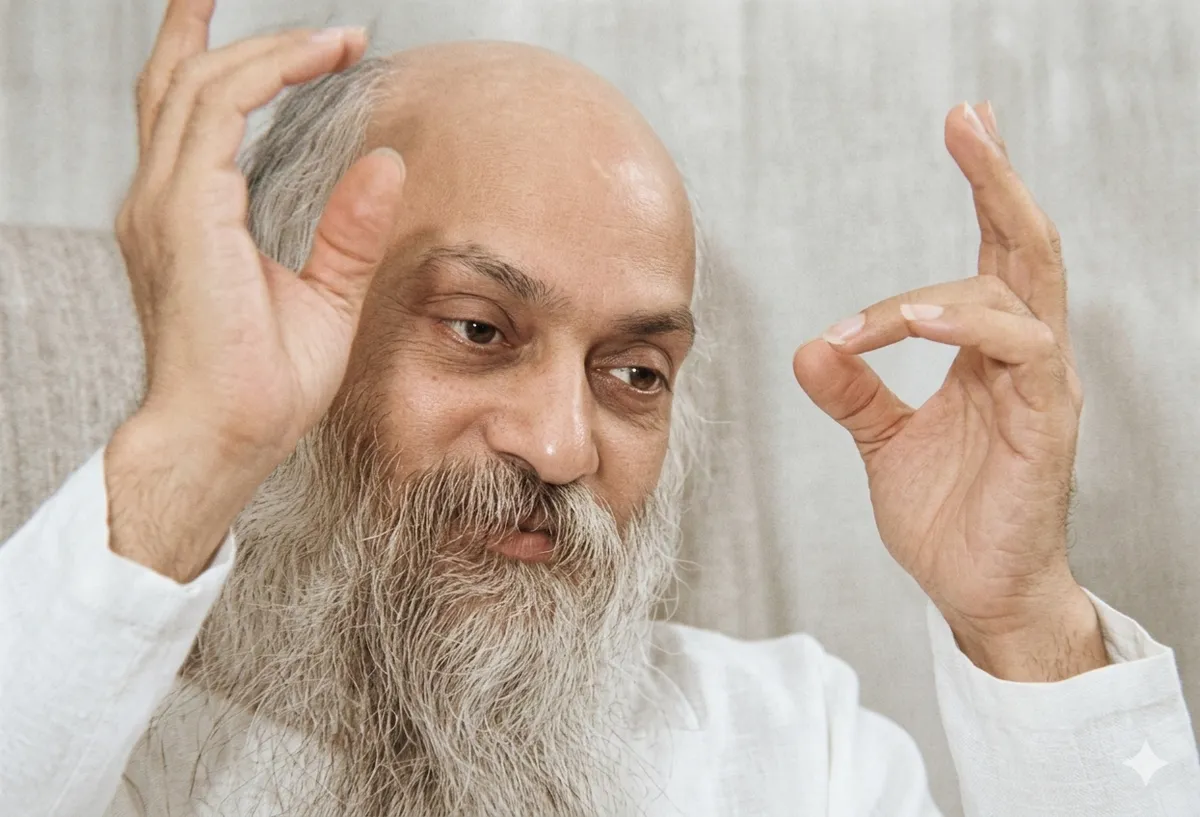
Being a theist means trusting life like a wave trusts the ocean—by saying yes instead of fighting it.
From the Discourses
Passages where Osho speaks to this question — each links to the complete discourse.
Osho, yesterday you said that when anger is watched consciously, it dissolves. But why is it that when sexual desire arises, even in awareness its intensity persists? Why is it so?
There is no entanglement in the breath. If you try to practice on anger… Anger is not happening every moment; it happens sometimes. And when it happens, it happens with such intensity that you are already going deep into it; so much is at stake in those moments that you may think, “We will look into awareness later; first let’s settle this now.” Lust is very deep, because existence has made it so deep; life depends on it. If lust were so easy that you decided and were freed, perhaps you would not even have been born—because many before you would have become free, and the possibility of your being would have been almost nil. But your parents, and their parents, did not become free; therefore you are. You too will not get free so easily, because your children are also to be—they are waiting: “Do not run away midway.”…
दूसरा प्रश्न: ओशो, आपने कल कहा कि क्रोध को होशपूर्वक देखने पर क्रोध विलीन हो जाता है। लेकिन क्या कारण है कि कामवासना के उठने पर होश में भी उसकी प्रगाढ़ता बनी रहती है। ऐसा क्यों है?
श्वास में कुछ झंझट नहीं है। अब तुम या तो क्रोध पर साधोगे...। क्रोध रोज तो होता नहीं, प्रतिपल होता नहीं, कभी-कभी होता है; जब होता है तब इतनी प्रगाढ़ता से होता है कि तुम गहरे में उतर रहे हो; जब होता है तब इतनी बातें दांव पर लग जाती हैं कि शायद तुम सोचोगे, ‘फिर देख लेंगे होश इत्यादि! यह अभी, अभी तो निपट लें।’ कामवासना तो बहुत गहरी है, क्योंकि प्रकृति ने उसे बहुत गहरा बनाया है, क्योंकि जीवन उस पर निर्भर है। अगर कामवासना इतनी आसान हो कि तुमने चाहा और छूट गए, तो तुम शायद पैदा ही न होते, क्योंकि तुमसे पहले बहुत लोग छूट चुके होते; तुम्हारे होने की संभावना न के बराबर होती। मगर वह तो तुम्हारे माता-पिता उनके माता-पिता नहीं छूट सके, इसलिए तुम हो। तुम भी इतनी आसानी से न छूट जाओगे, क्योंकि तुम्हारे बच्चों को भी होना है; वे भी प्रतीक्षा कर रहे हैं कि ऐसे भाग मत जाना बीच से। जीवन बहुत कुछ टिका है कामवासना पर। इसलिए उसका छूटना इतना आसान नहीं है। असंभव नहीं है, आसान भी नहीं है। …
Beloved Osho, yes!
Sarjano, this simple word "yes" contains all the religions of the world. It contains trust, it contains love, it contains surrender. It contains all the prayers that have ever been done, are being done, and will ever be done. If you can say yes with the totality of your heart, you have said all that can be said. To say yes to existence is to be religious, to say no is to be irreligious. That's my definition of the atheist and the theist. The atheist is not one who denies God, and the theist is not one who believes in God -- not necessarily so, because we have seen great theists who never believed in any God. We have known Buddha, Mahavira, Adinatha: we have known tremendously enlightened people who never talked about God. But they also talked about yes; they had to talk about yes. God can be dropped…
Osho, how long will I keep wandering? Will the heart’s longing be fulfilled or not?
This is what I mean by “theist” (astik). My meaning is not “one who believes in God,” for millions believe in God and I see no theism in them. They go to temples, mosques, gurudwaras—and have nothing to do with true theism. I have seen atheists who are truly theistic—who never even mention God. So do not define theist by God. I define a theist as one who has said “yes” to life, who has stopped saying “no.” Call it tathata, call it witnessing, call it acceptance—supreme acceptance. One who has learned to say “yes” to life. As his “no” drops, the ego drops in the same measure. Your ego is the pile of your negations. Wherever you said “no,” there a line of ego was drawn. “No” is atheism; “yes” is theism. Say “yes” to life—unconditionally. Then you will find the heart’s longing fulfilled, for sure. It is meant…
दूसरा प्रश्न: ओशो, मैं कब तक भटकता रहूंगा? दिल की लगी पूरी होगी या नहीं?
आस्तिक का मैं यही अर्थ करता हूं। आस्तिक का मेरा यह अर्थ नहीं है कि जो ईश्वर को मानता है। क्योंकि करोड़ों लोग ईश्वर को मानते हैं, और मैंने उनमें कोई आस्तिकता नहीं देखी। मंदिर जाते, मस्जिद जाते, गुरुद्वारा जाते--और आस्तिकता से उनका कोई संबंध नहीं है। मैंने कुछ ऐसे नास्तिक भी देखे हैं जो आस्तिक हैं; जिन्होंने ईश्वर की बात ही कभी नहीं उठायी। फिर आस्तिक की परिभाषा ईश्वर से नहीं करनी चाहिए। मैं आस्तिक की परिभाषा करता हूं जिसने जीवन को ‘हां’ कह दिया, और ‘ना’ कहना बंद कर दिया। कहो तथाता, कहो साक्षी भाव, कहो स्वीकार, परम स्वीकार। जिसने जीवन को ‘हां’ कहना सीख लिया। उसका ‘ना’ जैसे-जैसे गिरता है, वैसे-वैसे अहंकार गिरता है। तुम्हारा अहंकार तुम्हारे कहे गये नकारों का ढेर है। तुमने जहां-जहां ‘ना’ कहा है, वहीं-वहीं अहंकार की रेखा खिंची है। ‘नहीं’ यानी नास्तिकता; ‘हां’ यानी आस्तिकता।
Osho, can an atheist become enlightened without becoming a theist?
So what will be the meaning of theist? There will be two meanings. One is the theism taught to children, in which we say, “God is above.” It looks as if there is a great engineer who is managing everything—or a great judge, ruling the world from there; punishing people; protecting the good, destroying the bad. Or it seems there is some dictator—the colossal figure of a Stalin or a Hitler—who does as he pleases. When He wants the leaves to tremble, He makes them tremble; when He doesn’t, they do not. The law is in His hands; He may save or He may kill. Everything is in His hands. All you can do is praise Him. This is children’s God. Children need it too. And don’t think only little children are children. Ninety percent of people remain childish until they die; their intelligence never matures. Then there is a…
दूसरा प्रश्न: ओशो, क्या नास्तिक आस्तिक हुए बिना प्रबुद्ध हो सकता है?
इसलिए आस्तिक का क्या अर्थ होगा? दो अर्थ होंगे। एक तो बच्चों को सिखाई जाने वाली आस्तिकता, जिसमें हम कहते हैं, परमात्मा ऊपर है। ऐसा लगता है, कोई बड़ा इंजीनियर है, जो सब चीजों को सम्हाल रहा है। या कोई बड़ा न्यायाधीश है और वहां से कानून चला रहा है। और लोगों को दंड दे रहा है; अच्छों को बचा रहा है, बुरों को मार रहा है। या लगता है कि कोई तानाशाह है, कोई स्टैलिन, हिटलर की महाप्रतिमा, कि जो उसकी मौज में आ रहा है, कर रहा है। जब पत्तों को हिलाना है, हिला देता है। जब नहीं हिलाना, नहीं हिलाता। नियम उसके हाथ में है; चाहे बचाए, चाहे मारे। सब उसके हाथ में है। तुम स्तुति करो, इसके अतिरिक्त तुम्हारे पास कुछ भी नहीं है।
This is theism. The magistrate released the thieves because the fakir said, Do not harass them; they are dear people, good people, virtuous people. The thieves fell at the fakir’s feet and said, Initiate us. They took sannyas. And afterwards the fakir laughed much and said, I gifted the blanket so that you could enter into sannyas. You could not possibly have digested it. All my prayers were woven into that blanket. In that blanket was the whole story of my prostrations. It was not a blanket—as Kabir says: jhini-jhini beeni re chadariya!—it was woven of prayers. Wrapped in it, I had meditated. It carried the color of my Samadhi, its fragrance. You could not have escaped it—I was certain. That blanket would bring you back; and at last you have come. That night you came as thieves; today you have come as disciples.
यह आस्तिकता है। मजिस्टे्रट ने तो चोरों को छोड़ दिया, क्योंकि फकीर ने कहा: इन्हें मत सताओ, ये प्यारे लोग हैं, अच्छे लोग हैं, भले लोग हैं। फकीर के पैरों पर गिर पड़े चोर और उन्होंने कहा: हमें दीक्षित करो। वे संन्यस्त हुए। और फकीर बाद में खूब हंसा। और उसने कहा कि तुम संन्यास में प्रवेश कर सको इसलिए तो कंबल भेंट दिया था। इसे तुम पचा थोड़े ही सकते थे। इस कंबल में मेरी सारी प्रार्थनाएं बुनी थीं। इस कंबल में मेरे सारे सिज्दों की कथा थी। यह कंबल नहीं था। जैसे कबीर कहते हैं न--झीनी-झीनी बीनी रे चदरिया! ऐसे उस फकीर ने कहा, प्रार्थनाओं से बुना था इसे! इसी को ओढ़ कर ध्यान किया था। इसमें मेरी समाधि का रंग था, गंध थी। तुम इससे बच नहीं सकते थे। …