
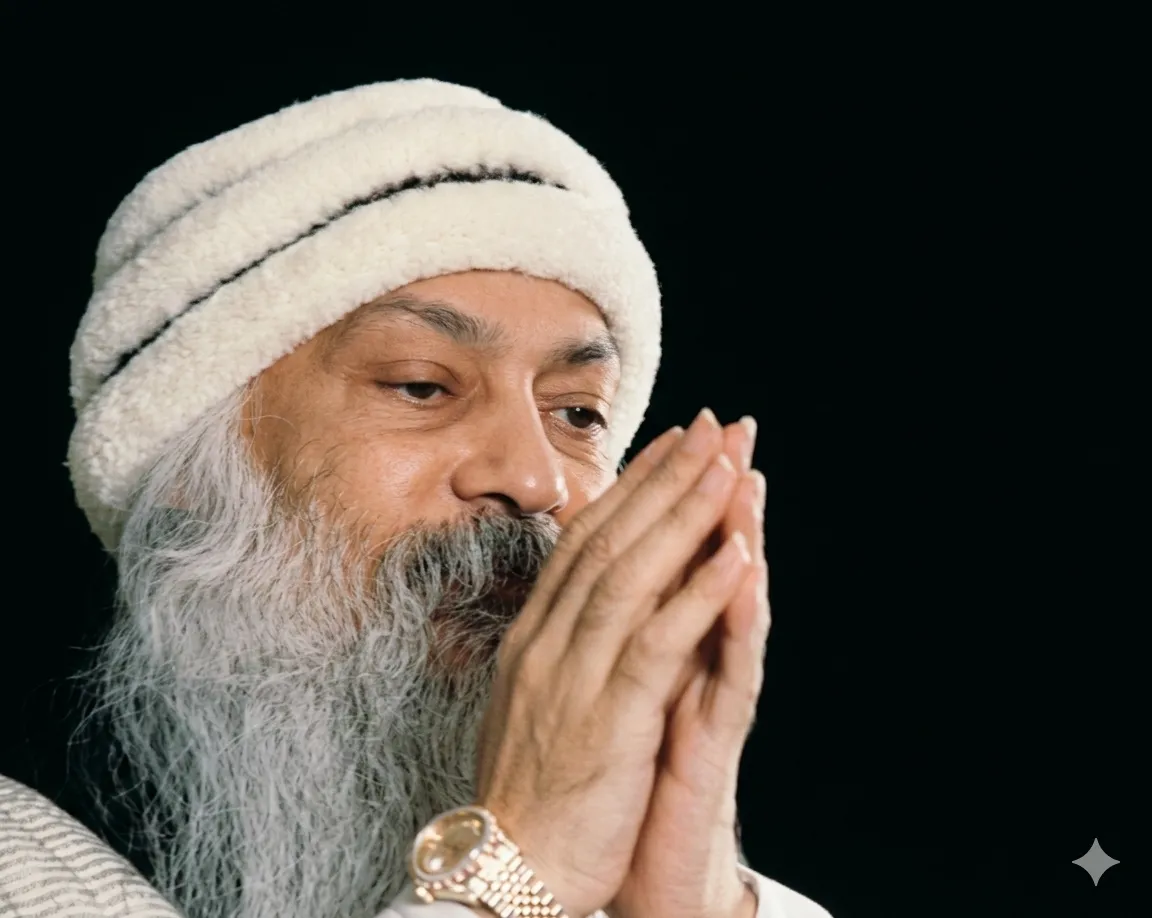
Let the love you already feel become cleaner and selfless until it turns into love for the Divine—start where you truly care and polish it.
From the Discourses
Passages where Osho speaks to this question — each links to the complete discourse.
Osho, what is the real meaning of bhakti-bhava—the spirit of devotion?
Good sir! Ever fallen in love and such? Bhakti is simply the culmination of love. If you’ve never loved, I won’t be able to make you understand. If you have, the point can begin to land. These things are of experience; some taste in that direction is needed. A man once came to Nagarjuna and said, “Take me too on the journey to That.” He was a poor man. Nagarjuna asked, “Have you ever loved anyone?” He said, “Love? Well, why hide it from you—there’s a buffalo I own; it’s her that I love. I’m a poor man, I have nothing else, but I’m very attached to her. If she ever goes missing in the forest, it feels like my life is in danger. If she falls ill, I can’t find peace.” He must have been a simple, straightforward man—otherwise how could he have spoken so truly? People usually talk…
आखिरी प्रश्न: ओशो, भक्ति-भाव का वास्तविक अर्थ क्या है?
… कभी प्रेम इत्यादि किया? प्रेम की ही पराकाष्ठा है भक्ति। प्रेम न किया हो तो मैं भी समझा न पाऊंगा। प्रेम किया हो तो समझ में बात आ सकती है। ये बातें अनुभव की हैं। कुछ तो उस दिशा में अनुभव चाहिए ही। नागार्जुन के पास एक आदमी आया और उसने कहा कि मुझे भी ले चलो ‘उसकी’ यात्रा पर। वह गरीब आदमी था। नागार्जुन ने कहा: तूने किसी से कभी प्रेम किया है? उसने कहा: प्रेम! अब आप से क्या छिपाना, मेरे पास एक भैंस है, उसी से मेरा प्रेम है। गरीब आदमी हूं, और तो मेरे पास कुछ है भी नहीं, मगर उससे मेरा बड़ा लगाव है। …
Osho, what is the definition of God?
Words are very small. If you say God is light, then what of darkness? The scriptures have said that God is light. Suppose we accept this as a definition—then what about darkness? Where will darkness go? Darkness is too; in fact it is far more than light. Light sometimes is and sometimes is not; darkness is always, eternal. Where will you place darkness? If you say God is light, darkness is left out. If you say God is darkness, then light is left out. If you say God is both darkness and light, a contradiction arises: they cannot be together. Try to have both darkness and light in the same room. If you bring in light, darkness disappears; if you preserve darkness, you cannot have light. Then how can both be together? That becomes an impossibility. So you cannot say “both” either. Then the fourth device is to say: it…
पहला प्रश्न: ओशो, परमात्मा की परिभाषा क्या है?
शब्द तो बड़े छोटे-छोटे हैं। अगर कहो परमात्मा प्रकाश है, तो फिर अंधेरे का क्या होगा? ऐसा कहा है शास्त्रों में कि परमात्मा प्रकाश है। चलो मान लें इसे परिभाषा, फिर अंधेरे का क्या होगा? फिर अंधेरा कहां जायेगा? अंधेरा भी है, प्रकाश से कहीं ज्यादा है। प्रकाश तो कभी होता है कभी नहीं भी होता; अंधेरा सदा है, शाश्वत है। अंधेरे को कहां रखोगे? अगर कहा परमात्मा प्रकाश है, तो अंधेरा बाहर पड़ गया। अगर कहा परमात्मा अंधेरा है, तो प्रकाश बाहर पड़ गया। अगर कहो परमात्मा अंधेरा प्रकाश दोनों है, तो विरोधाभास होता है। दोनों एक साथ हो नहीं सकता। एक ही कमरे में अंधेरा और प्रकाश करके दिखाओ। प्रकाश करोगे, अंधेरा खो जायेगा; अंधेरा बचाओगे, प्रकाश न कर सकोगे। तो दोनों साथ कैसे होंगे? तब एक असंभव बात हो गई। तो यह भी नहीं कह सकते कि दोनों है।
Bhakti is life’s supreme acceptance. So it is auspicious that Shandilya begins this incomparable garland of sutras with Om. Rightly so, because bhakti is the method of birthing music in life. The day you become musical, the day not a single note remains within you that creates discord, the day you are no longer off-key—that day the meeting with the Beloved happens. The Beloved is not elsewhere—He is in harmony, in rhythm. The day the dance becomes total, the song finds its voice, the inner meter unfurls in freedom, in that very instant union with the Divine is. That is why the Vedas say those who have known Om have nothing left to know. This is not the Om written in scriptures, but the cadence experienced in life, lived and felt. Gayatri is hidden within you, as is the Bhagavad Gita.
भक्ति जीवन का परम स्वीकार है। इसलिए शुभ ही है कि शांडिल्य अपने इस अपूर्व सूत्र-ग्रंथ का उदघाटन ओम से करते हैं। ठीक ही है, क्योंकि भक्ति जीवन में संगीत पैदा करने की विधि है। जिस दिन तुम संगीतपूर्ण हो जाओगे, जिस दिन तुम्हारे भीतर एक भी स्वर ऐसा न रहेगा जो व्याघात उत्पन्न करता है, जिस दिन तुम बेसुरे न रहोगे, उसी दिन प्रभु-मिलन हो गया। प्रभु कहीं और थोड़े ही है--छंदबद्धता में है, लयबद्धता में है। जिस दिन नृत्य पूरा हो उठेगा, गान मुखरित होगा, तुम्हारे भीतर का छंद जिस क्षण स्वच्छंद होगा, उसी क्षण परमात्मा से मिलन हो गया।
Osho, bhakti is both practice and attainment. Kindly explain its different forms to us.
No, devotion has no forms. Do loves have different forms anywhere? Love is simply one. Its taste is one. Differences arise from the intellect; in the heart there are no distinctions. The Hindu’s intellectual notion is different, the Muslim’s intellectual notion is different, the Christian’s philosophy is different—those are matters of the mind. But when a Hindu is filled with devotion, when a Muslim is filled with devotion, when a Christian is filled with devotion, there is no difference in those devotions—they are one. Devotion is of the heart. It relates to your inmost core, not to the external workings of your intellect. What you have learned is irrelevant; what your nature is, that is what matters. Yet it is true that devotion is both practice and attainment. There the first step is also the last step. The means are themselves the goal. Devotion means: supreme love. What is to…
तीसरा प्रश्न: ओशो, भक्ति साधना भी है और सिद्धि भी। कृपापूर्वक उसके अलग-अलग रूपों को हमें समझाएं।
भेद तो बुद्धि से होते हैं; हृदय में भेद नहीं होते। हिंदू की बौद्धिक धारणा अलग, मुसलमान की बौद्धिक धारणा अलग, ईसाई का फलसफा अलग है। वे बुद्धि की बातें हैं। लेकिन जब हिंदू भक्ति से भरता है और जब मुसलमान भक्ति से भरता है और जब ईसाई भक्ति से भरता है, तो उन भक्तियों में भेद नहीं हैं, वे एक हैं। भक्ति हृदय की बात है। उसका तुम्हारे अंतस्तल से संबंध है, तुम्हारी बुद्धि की बाहरी बातों से नहीं। क्या तुमने सीखा है, उससे संबंध नहीं है; क्या तुम्हारा स्वभाव है, उससे संबंध है। लेकिन यह बात सच है कि भक्ति साधना भी है और सिद्धि भी। वहां पहला कदम ही आखिरी कदम भी है। वहां साधन ही साध्य भी है।
Bhakti means: do not stand away. Do not be the seer; be the enjoyer. Bhakti is to become the experiencer—immerse; let nothing in you remain untouched. Every hair should be drenched, absorbed. The act is complete only when your consciousness is completely dissolved in it. When you are not a seer but an enjoyer—so completely that you do not remain separate at all; only the enjoyment remains—that ultimate enjoyment is called bhakti. When you vanish in the act—when singing remains, but no singer; when dancing remains, but no dancer; when in the hymn only the hymn remains, and not the devotee—when the bhakta bows at the Lord’s feet and there is only bowing, not a watcher standing behind saying, “See, I am bowing!” If you are watching yourself bow, you have not bowed. Your ego remained; the body bent, you did not.
भक्ति का अर्थ है: दूर नहीं खड़े रहना है। द्रष्टा नहीं बनना है, भोक्ता हो जाना है। भक्ति यानी बिलकुल भोक्ता हो जाना, डूब जाना है; जो हो रहा है उसमें ऐसे डूब जाना है कि तुम्हारा कोई कोना-कातर भी अछूता न रह जाए। तुम्हारा रोआं-रोआं डूब जाए, तल्लीन हो जाए। कृत्य तब पूर्ण होता है जब तुम्हारी चेतना उसमें पूरी डूब गई होती है। जब तुम द्रष्टा नहीं रहते, भोक्ता होते हो; जब तुम इस तरह भोक्ता होते हो कि तुम बचते ही नहीं अलग, भोग ही बचता है--उस परम भोग का नाम भक्ति है। और जब तुम बिलकुल मिट जाते हो कृत्य में--गीत गाते वक्त गीत गाना ही बचता है, गीत गाने वाला नहीं; नाचते वक्त नाच ही बचता है, नर्तक नहीं; भजन में भजन ही बचता है, भजनीक नहीं। जब झुकता है भक्त परमात्मा के चरणों में तो सिर्फ झुकना ही होता है वहां, वहां कोई झुकने को देखने वाला नहीं होता पीछे खड़ा कि देख भी रहे हैं कि मैं झुक रहा हूं। अगर तुम देख रहे हो कि तुम झुक रहे हो तो तुम झुके ही नहीं; तुम्हारा अहंकार तो खड़ा ही रहा। …