
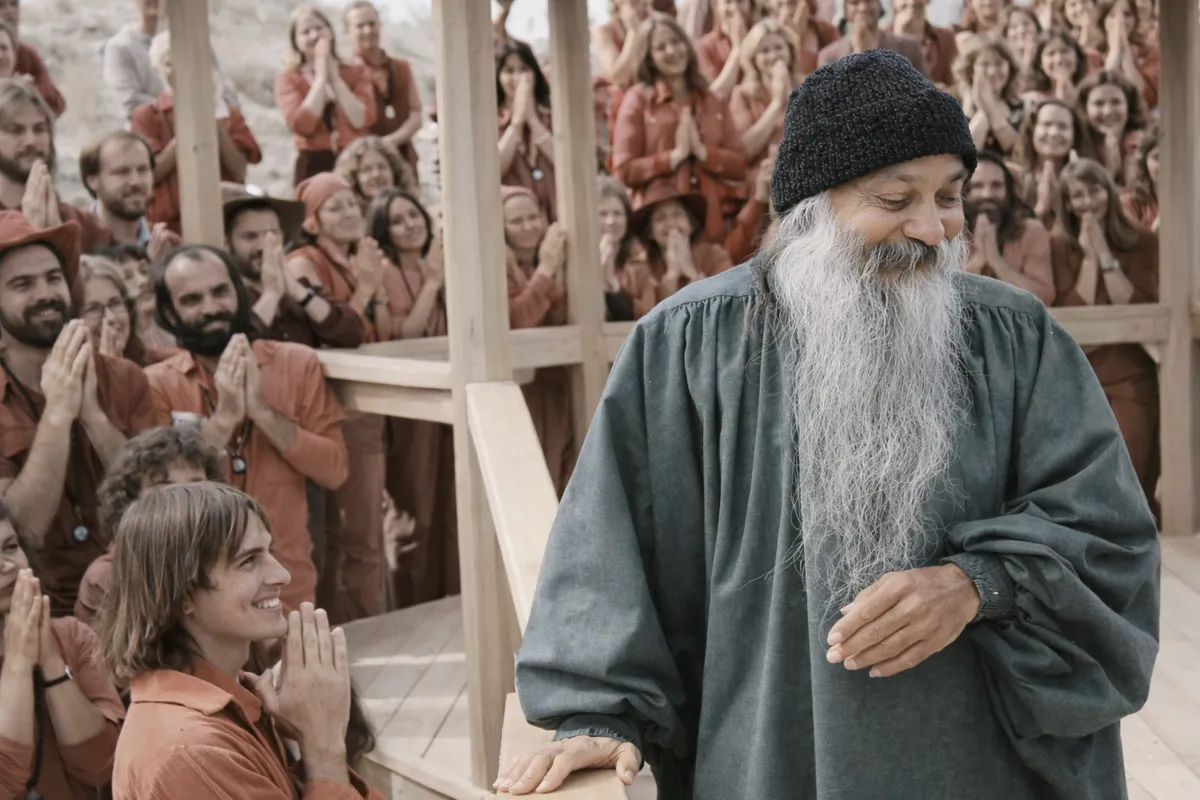
He knocks down fake heroes so you stop following blindly and start choosing what’s truly kind and true.
From the Discourses
Passages where Osho speaks to this question — each links to the complete discourse.
Yogis still condemning others, eating meat, drinking wine, taking drugs? By the hundreds they go to hell, shree gorakh raja speaks plain truth. Aloneness the siddha knows, needing two is sadhu, the true seeker, needing four-five the householder, ten-twenty the worldly man. Greatness is when greatness effaced, consider this word of truth: one who becomes tiny the master seeks out, lifts the load off his head.
Criticism is an exploration into what truth is, into how is truth is. Criticism can be very hard because a sword sometimes must be used to cut falsehood. There are stones of falsehood so the hammers and chisels of truth have to prepare them. Ultimately Gorakh is making blows with hammer and chisel. And after Gorakh comes Kabir who keeps a sharper blade -- on his sword there is more of an edge. Kabir's blows are such that they cut to bits. But they don't cut you to bits, they cut your falseness. When you attack a thief it is condemnation and when you attack stealing it is criticism. When you start hating the sinner it is condemnation and when you hate the sin it is criticism. A yogi cannot condemn. Only a completely unconscious person enjoys condemning. What is the psychology of condemning? Most people in the world have…
Osho, asking you a question is not without danger. But you are a very funny man. It’s great fun listening to you—never felt that before with any saint or holy man. One thing I don’t understand: why do you so often make the condemnation of great men the basis of your talk? It would be better if you put your points before us in a constructive way.
Deendayal Khatri, Khatri as you are, you’ve taken on khatra—danger. And what is a Khatri worth if he won’t take risks! But do you know, nowhere in the Vedas or the shastras has any of your so-called great men said how Khatris came into being. Shudras were born from the feet; Vaishyas from God’s thighs; Kshatriyas from the chest, from the arms; Brahmins, naturally, from the skull. But Khatris? Is God some Muslim that he created a few people by circumcision! Now that you’ve chosen danger, what can I do? Still, I’ll tell you the secret of how Khatris were born. You’ll worry, because you’ll say I am again maligning great men. What can I do? I must speak the truth. One “great man” arose—Parashurama. I don’t call him a great man, though you do. He emptied the earth of Kshatriyas eighteen times. His life’s only trade was cutting off…
तीसरा प्रश्न: ओशो, आपसे प्रश्न पूछना खतरे से खाली नहीं है। लेकिन आप आदमी बहुत मजेदार हैं। आपकी बातें सुन कर बड़ा मजा आता है। ऐसे किसी संत-महात्मा को सुन कर कभी नहीं हुआ पहले। एक बात समझ में नहीं आती कि आप अपनी बातों का आधार अक्सर महापुरुषों की निंदा क्यों बना लेते हैं? अच्छा होगा यदि आप अपनी बात विधायक रूप से हमारे सामने रखें।
दीनदयाल खत्री, खत्री हो सो खतरा तुमने मोल लिया। अरे खत्री ही क्या! खत्री बच्चा ही क्या जो खतरा मोल न ले! मगर तुम्हें पता है कि कहीं भी वेदों में, शास्त्रों में, तुम्हारे किसी महापुरुष ने, खत्री कैसे उत्पन्न हुए, इसके संबंध में कुछ भी नहीं कहा है। शूद्र पैर से पैदा हुए; वैश्य जंघाओं से पैदा हुए ईश्वर की; क्षत्रिय छाती से पैदा हुए, बाहुओं से पैदा हुए; ब्राह्मण, स्वभावतः खोपड़ी से पैदा हुए। मगर खत्री? भगवान क्या कोई मुसलमान है कि कुछ लोगों को खतना करके ही पैदा कर दिया! अब तुमने खतरा ही ले लिया तो मैं भी क्या करूं? मगर मैं तुम्हें राज बताता हूं कि खत्री कैसे पैदा हुए। तुम्हें चिंता होगी, क्योंकि तुम कहोगे कि मैंने फिर महापुरुषों की निंदा कर दी। अब मैं भी क्या करूं? सत्य को कहना ही पड़ेगा। एक महापुरुष हो गए--परशुराम। मैं उनको महापुरुष नहीं कहता, मगर अब तुम कहते हो। उन्होंने पृथ्वी को अठारह बार क्षत्रियों से खाली कर दिया। उन्होंने जिंदगी भर एक ही धंधा किया--क्षत्रियों की गर्दन काटते फिरे। …
Beloved Osho, when does the disciple's freedom become his master's condemnation?
How can one even think to do something, in the name of freedom, against his own master? The master is his freedom, and if something is going against the master, that is not freedom. You are going against yourself and against freedom. It may appear on the surface that you are acting on your own, but you will harm yourself. If you think harming yourself is your freedom, destroying the work that the master has been doing on your eyes... if you think it is your freedom to destroy the glasses that have been provided to you, then you are behaving in an absolutely idiotic way. To find the master is a blessing, and to dissolve oneself into the master is the most delicious experience experience of freedom and joy, a kind of unburdening of all the unnecessary load, an experience of lightness and laughter.... But it is very difficult…
Osho, why does there seem to be so much conflict between the world and God?
It is as if someone were sleeping deeply in this garden. The cuckoo comes and sings, birds are chattering, the sun rises, breezes dance through the trees; but someone is fast asleep. The breezes touch him, the birds’ songs echo at his ears, the sun’s rays play on his face, but he knows nothing. Then someone comes and shakes him awake. His eyes open—the glory of the sun is revealed, the song of the passing breeze is heard, suddenly the cuckoo’s call, the fragrance of flowers. Do you think something new has happened? Everything was already there, just as it is. Only this man has become new—nothing else has changed. The same garden, the same sun, the same flowers, the same birds—everything the same; only a small difference: he was asleep; he is awake. The meaning of “world” is: you are asleep in God. The meaning of “God” is: you…
पहला प्रश्न: ओशो, संसार और परमात्मा में इतना विरोध क्यों लगता है?
फिर कोई आए और उसे झकझोर कर जगा दे। आंख खुले सूरज की महिमा प्रकट हो, पास से गुजरती हवा का गीत सुनाई पड़े, अचानक कोयल की आवाज आए, फूलों की सुगंध आए, क्या तुम सोचते हो कुछ नया हो गया? सब था, सब वैसा का वैसा है, सिर्फ यह आदमी नया हो गया और कुछ नया नहीं हुआ है। वही बगीचा, वही सूरज, वही फूल, वही पक्षी, सब वही है, सिर्फ इस आदमी में थोड़ा फर्क पड़ा है, यह सोया था, यह जाग गया।
A clash ensues; defeat is near certain. So the mind finds an easier device: To prove I am the greatest is hard; to prove no one is greater than me is easy. Positive assertion is hard; negation is easy. To prove God exists—difficult: a tapasya through fire is needed, who knows in this life or many lives. But to prove God does not exist—possible right now. A little skill in argument is enough. To be an atheist is not a sign of great intelligence; even a fool can be an atheist. Turgenev’s tale of The Grand Fool: A man branded a great fool—whatever he said people laughed. Even when right, they laughed. He shrank from speaking; whether he spoke or kept silent, people mocked. A fakir came to the village. The fool begged for a blessing: Is there no way to gain a little intelligence?