
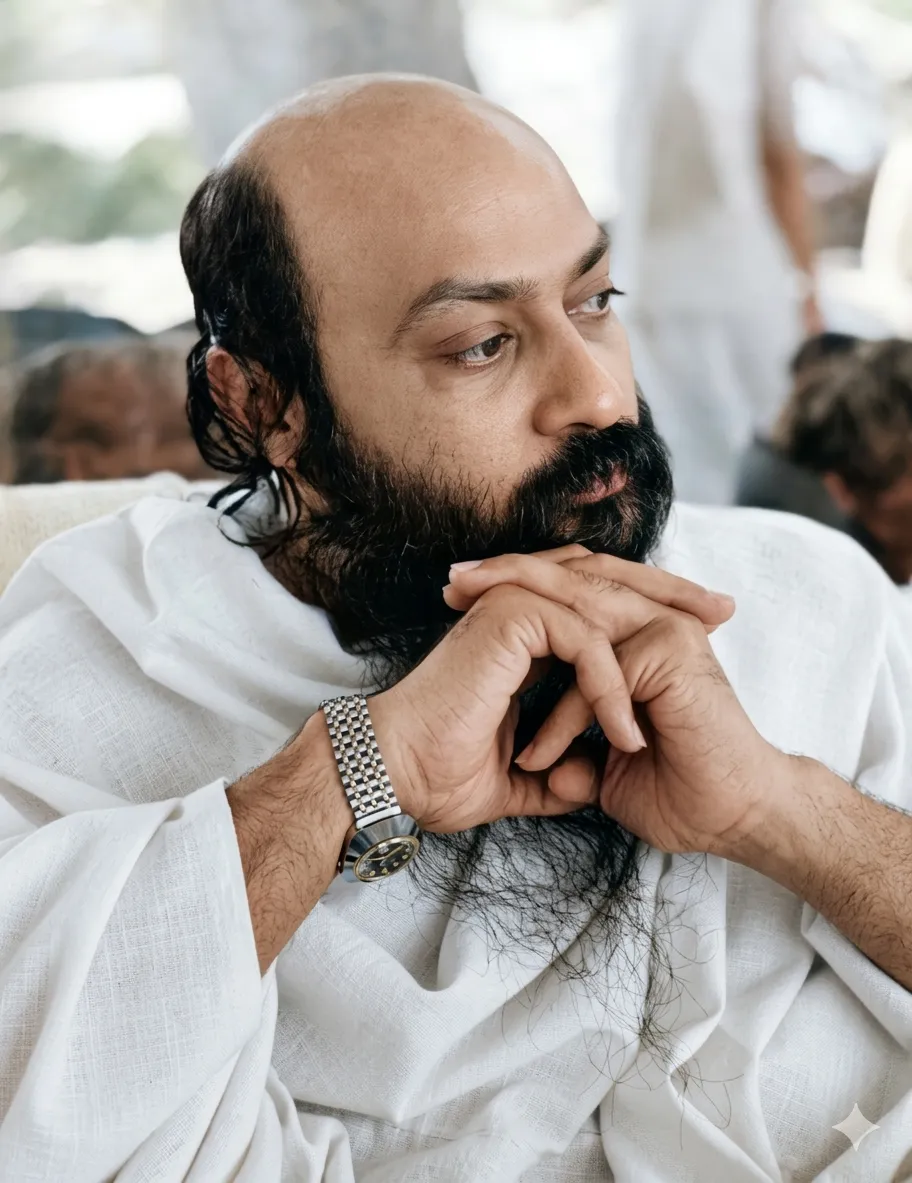
We give up asking and wondering so people will like and accept us.
From the Discourses
Passages where Osho speaks to this question — each links to the complete discourse.
It has been asked: “Under the sway of what paramount ambition do we renounce our incomparable capacity for wonder?”
The paramount ambition is: to be accepted by people! A child wants the father to accept him, the mother to accept him—because he depends on them. He wants the mother to love him, the father to love him—so he thinks, let me not do anything that makes father angry or uneasy, otherwise the love will stop. Let me not ask anything that makes mother angry. Let me not ask anything that makes the teacher angry. Slowly, in order to get love, to get acceptance, so that others will cooperate in his life—on that basis, wonder dies. The child drops wonder and clutches at the ego. This is all the ego’s ambition: to be respected among people, not insulted; that everyone should accept me; that everyone should say, “What a good, quiet, gentle child!” The one who asks questions looks like a nuisance. The one who asks beyond the limit begins…
पूछा है कि ‘किस महत आकांक्षा के वश हम अपनी अनुपम आश्चर्यबोध-क्षमता का त्याग कर देते हैं?’
महत आकांक्षा है: लोग स्वीकार करें! बच्चा चाहता है: बाप स्वीकार करे, मां स्वीकार करे। क्योंकि बच्चा उन पर निर्भर है। वह चाहता है कि मां प्रेम करे, बाप प्रेम करे--तो ऐसा कोई काम न करूं, जिससे बाप नाराज हो जाता है या बाप को बेचैनी होती है, अन्यथा प्रेम रुक जाएगा। ऐसी कोई बात न पूछूं, जिससे मां नाराज होती है। ऐसी कोई बात न पूछूं जिससे शिक्षक नाराज होता है। धीरे-धीरे प्रेम पाऊं, स्वीकार पाऊं; दूसरे मेरे जीवन में सहयोगी बनें--इस आधार पर आश्चर्य की मृत्यु हो जाती है। बच्चा आश्चर्य को छोड़ देता है, अहंकार को पकड़ लेता है। यह सब अहंकार की आकांक्षा है कि लोगों में सम्मान मिले, अपमान न मिले, सभी लोग मुझे स्वीकार करें; सब लोग कहें कितना अच्छा, कितना शांत, कितना सौम्य बच्चा है!
A sense of wonder is the foundation of yoga. To be established in oneself is strength. A transcendental logic is a means to self-realization. To enjoy the blissfulness of the existence is enlightenment. A sense of wonder is the foundation of yoga.
We are separated only at the circumference. 'You' and 'I' are separations of the body. As we leave the body and turn within, the distance gets smaller and smaller. The day you know the soul you will also have known God. The day you know your own self you will know the self of all creation, because at the center all is one. Distances only exist at the periphery. Shiva says: By attaining this existence within one's self, the joy of samadhi is attained. Samadhi-sukham, the 'bliss of samadhi'; these words should be understood. You have known many joys: the joy of a good dinner, the joy of good health and well-being. When you quench your thirst or enjoy sex -- such bodily joys you know fully, but understand well that all these joys carry complementary sorrows with them. If you are not thirsty, water will bring no joy. If…
I don't have any sense of wonder in me. Why?
It happens to almost everybody. The more knowledgeable you become, the less wonder is felt. And parents, schools, universities, society, they all go on forcing you to become knowledgeable. Their whole effort is to give you knowledge. Your inner space becomes so full of knowledge that wonder disappears, wonder has no space left to abide in you. A child has the yes of wonder. He feels awe, he is mystified by each and everything, small things surprise him. Hence his bubbling joy, because his life is a constant discovery. You become knowledgeable, the society wants you to become knowledgeable. Knowledge is very very needed, knowledge has much utility. And wonder is dangerous, because a person who wonders is bound to become either a philosopher or a poet or a mystic, and all these three kinds are useless for the society. Society needs machines, skillful machines. By giving you more and…
Better than a hundred years of mischief is one day spent in contemplation.
BETTER THAN A HUNDRED YEARS OF IGNORANCE IS ONE DAY SPENT IN REFLECTION. BETTER THAN A HUNDRED YEARS OF IDLENESS IS ONE DAY SPENT IN DETERMINATION. BETTER TO LIVE ONE DAY WONDERING HOW ALL THINGS ARISE AND PASS AWAY. BETTER TO LIVE ONE HOUR SEEING THE ONE LIFE BEYOND THE WAY. BETTER TO LIVE ONE MOMENT IN THE MOMENT OF THE WAY BEYOND THE WAY. Gautama the Buddha has raised the most important question for all those who are capable of inquiring into truth, into life, into existence. The most important question of all questions is: What is true happiness? And is there a possibility to achieve it? Is true happiness possible at all, or is all momentary? Is life only a dream, or is there something substantial in it too? Does life begin with birth and end with death, or is there something that transcends birth and death? Because…
Osho, why is there so much secrecy in the ashram?
The ashram is not a marketplace; it is not open to the crowd. Here I am available to those few who genuinely want to be transformed. Sightseers, passersby—there is no purpose in their coming here. The invitation is only for those who have truly come close to transformation, for that small number. Therefore there is privacy in every respect. And the privacy will increase. Because as I see that more of the unnecessary can be sifted out, I will sift them out—since they themselves gain nothing, and by their presence they do not let others gain either. I have remained open to all for a long time and have seen what happens. I found that the crowd of the pointless becomes so thick that the meaningful person gets no chance at all. The merely curious surround so much that the true inquirer is left standing at the back. The mumukshu—the…
तीसरा प्रश्न: ओशो, आश्रम में इतनी गोपनीयता क्यों है?
आश्रम कोई बाजार नहीं है, भीड़-भाड़ के लिए खुला नहीं है। यहां मैं उन थोड़े से लोगों के लिए उपलब्ध हूं, जो वस्तुतः रूपांतरित होना चाहते हैं। तमाशबीन, राह चलते लोग, उनके लिए कोई यहां आने का प्रयोजन नहीं है। यहां तो उन्हीं के लिए निमंत्रण है जो सच में ही रूपांतरित होने के करीब आ गए हैं, उन थोड़े से लोगों के लिए है। इसलिए सब तरह की गोपनीयता है। और गोपनीयता बढ़ती जाएगी। क्योंकि जैसे-जैसे मैं पाऊंगा कि और व्यर्थ लोग छांटे जा सकते हैं, उनको मैं छांट दूंगा। क्योंकि न तो उनको कोई लाभ होता, न उनके कारण दूसरों को वे लाभ होने देते। मैंने बहुत दिन सबके लिए खुला रह कर देख लिया। मैंने पाया, उसमें जो व्यर्थ के लोग हैं उनकी भीड़ इतनी हो जाती है कि सार्थक आदमी को मौका ही नहीं मिल पाता। उसमें कुतूहल वाले लोग इतना घेर लेते हैं कि जिज्ञासु पीछे ही खड़ा रह जाता है। मुमुक्षु तो विनम्र होता है। वह कहता है, जब मुझे मौका मिलेगा तब मैं पूछ लूंगा। उसको मौका ही नहीं मिलता। …