
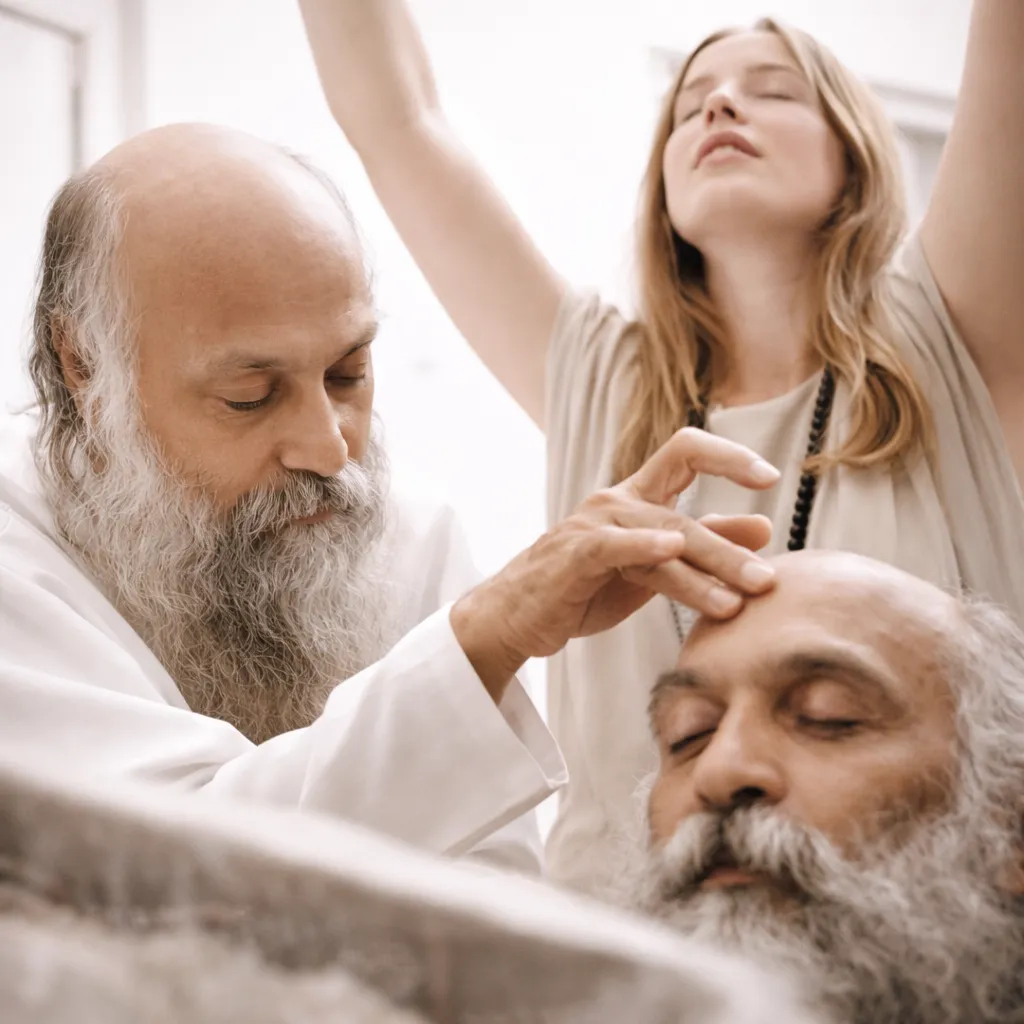
Deep down you miss being one with everything (God); people and experiences are just small tastes that make you realize you want the whole.
From the Discourses
Passages where Osho speaks to this question — each links to the complete discourse.
What is this longing in me that no relationship can satisfy, that no tears relieve, that is not changed by many and beautiful dreams and adventures?
That's why in the East, particularly in India.... It is a very ancient country, and ancient countries become cunning just as old people become cunning. Out of cunningness this country decided for child marriage, because once somebody is adolescent hope starts arising -- longing, romance, poetry; now it will be difficult. The best way that India found was child marriage, marriage of children. They don't know what marriage is, they don't know what relationship is, they don't know what love is -- they are not even hungry for it -- sex has not yet become a mature thing in them. Let them get married. Just think -- a three-year-old girl being married to a five-year-old boy. Now they will grow together, just as brothers and sisters grow together. Have you ever felt any desire to divorce your sister? I don't think anybody ever divorces one's own sister, there is no…
Osho, what is the difference between surrender and blind imitation?
So be careful: the freedom you allow yourself, allow the other too. You have no right to judge another as blindly credulous or as a surrendered being. Drop that concern. You cannot judge anyway—how will you enter another’s heart? How will you know? Think only about yourself. See within whether, up to now, you have lived by blind belief or by surrender. Decide only there; leave worrying about others. Otherwise, all your judgments will be wrong. Jesus said: Judge not; do not set yourself up as a judge in relation to another. To the friend who has asked: if you are asking for yourself, good. Drop worrying about others. Look within and see: whatever I have been clinging to till now—have I ever staked my life to hold it? Have I meditated for it? Have I loved for it? Or am I just clutching what culture, society, civilization handed me?…
चौथा प्रश्न: ओशो, समर्पण और अंधानुकरण में क्या अंतर है?
इसलिए खयाल रखना, जो तुम अपने लिए मौका देते हो, वह दूसरे को भी देना। तुम्हें कोई हक नहीं है किसी दूसरे के बाबत निर्णय करने का कि वह अंधविश्वासी है, या समर्पित हुआ व्यक्तित्व है। तुम इसकी चिंता छोड़ो। तुम कर भी नहीं सकते निर्णय। तुम दूसरे के हृदय में उतरोगे कैसे? जानोगे कैसे? तुम तो अपनी ही सोच लो। इतना ही देखो अपने भीतर कि अब तक तुम अंधविश्वास से जी रहे हो, या समर्पण से जी रहे हो। बस, वहीं निर्णय कर लो, दूसरों की फिकिर छोड़ दो। अन्यथा तुम्हारे सभी निर्णय गलत होंगे। जीसस ने कहा है, निर्णय करो ही मत; दूसरे के संबंध में न्यायाधीश बनो ही मत। तो जिन मित्र ने पूछा है, अगर अपने लिए पूछते हों, तो ठीक। दूसरों की चिंता छोड़ दें। अपने भीतर ही देख लेना है कि अब तक जो मैं पकड़े हुए हूं, उसको पकड़ने के लिए मैंने कोई जीवन दांव पर लगाया है? कोई ध्यान किया है? कोई प्रेम किया है? या सिर्फ संस्कृति ने, समाज ने, सभ्यता ने जो दिया है, उसे पकड़े हुए हूं! दूसरों ने दिया है। …
Osho, please say something about viraha—the ache of separation.
Nothing can really be said about viraha; it can only be experienced. For viraha does not come in words—it comes in tears. Viraha does not speak; it is silence, it is mute. Viraha weeps, viraha keeps vigil; it does not talk. Nothing can be said about viraha, yet whoever has known love will begin to pass through the feeling of viraha. Know love, and separation comes with it. The deeper the love, the deeper the state of viraha. Viraha means that our true nature—the very core of us—has slipped from our hands; we are not meeting it. Our center has been lost; we spin on the circumference like the bullock tied to the oil press. We experience things, but the Divine is not seen. And that is the master. The master is lost; only the servants are visible. The temple walls are understood, but the deity is not recognized. Yet…
पांचवां प्रश्न: ओशो, विरह के संबंध में कुछ कहें।
विरह के संबंध में कुछ भी नहीं कहा जा सकता; विरह को अनुभव किया जा सकता है। क्योंकि विरह शब्दों में नहीं आता, आंसुओं में आता है। और विरह बोलता नहीं, मौन है, मूक है। विरह रोता है, विरह जागता है; विरह बोलता नहीं। विरह के संबंध में कुछ भी कहा नहीं जा सकता, लेकिन जिसने भी प्रेम को जाना है वह विरह की अनुभूति से गुजरने लगेगा। तुम प्रेम को जानो, विरह तो उसके साथ आयेगा। जितना गहन प्रेम होगा उतनी ही विरह-अवस्था गहरी हो जायेगी। विरह का अर्थ यह होता है कि हमारा जो वास्तविक स्वरूप है, वही हम से चूक गया है, वही हमें नहीं मिल रहा है। जो हमारा केंद्र है वही हम से छिटक गया है, और हम परिधि पर घूम रहे हैं कोल्हू के बैल की तरह। हमें अपनी आत्मा का ही अनुभव नहीं हो रहा है। हम देखते तो हैं पदार्थ को, लेकिन परमात्मा हमें दिखाई नहीं पड़ रहा है। और वही मालिक है। मालिक खो गया है, नौकर-चाकर दिखाई पड़ रहे हैं। मंदिर की दीवालें समझ में आ रही हैं, मंदिर की मूर्ति पहचान में नहीं आती। …
Say something about virah, this unknown longing in my heart.
It is such a clear and simple matter, there cannot be two opinions about it. But Mahatma Gandhi went on a fast. He was non-violent, he initiated a non-violent war. He went on a fast saying, "I will kill myself, I will starve myself. This would be tremendously harmful to the Hindus. Harijans are Hindus and will always remain Hindus." He fasted long, his health was failing, finally Ambedkar had to yield. Ambedkar agreed, don't give a separate vote. And the Gandhian historians write: a victory for non-violence! This is very strange: who is the non-violent one in this? Ambedkar is non-violent. Seeing that Gandhi would die, he dropped his insistence. Gandhi is the violent one in this. He forced Ambedkar with this threat of killing himself. Understand it. If you threaten to kill someone else it is violence and if you threaten to kill yourself it is non-violence: but…
One can seek bodily pleasures. That's what millions of people go on doing. Nothing is wrong in it, but it is a little stupid. Not a sin, but it is as if you have been given a big palace to live in and you go on living on the porch. You never enter into the palace, so you have completely forgotten about it. You have made the porch your whole life. And the palace is waiting for you, and it is yours, you just have to explore a little bit deeper. Very few people enter into human love. Those are the people who are sensitive, alert, intelligent, who have some sense of poetry in life, some aesthetic values, for whom sex in itself is not of much value unless it is rooted in love, for whom to be under the influence of chemistry and hormones looks like slavery.