
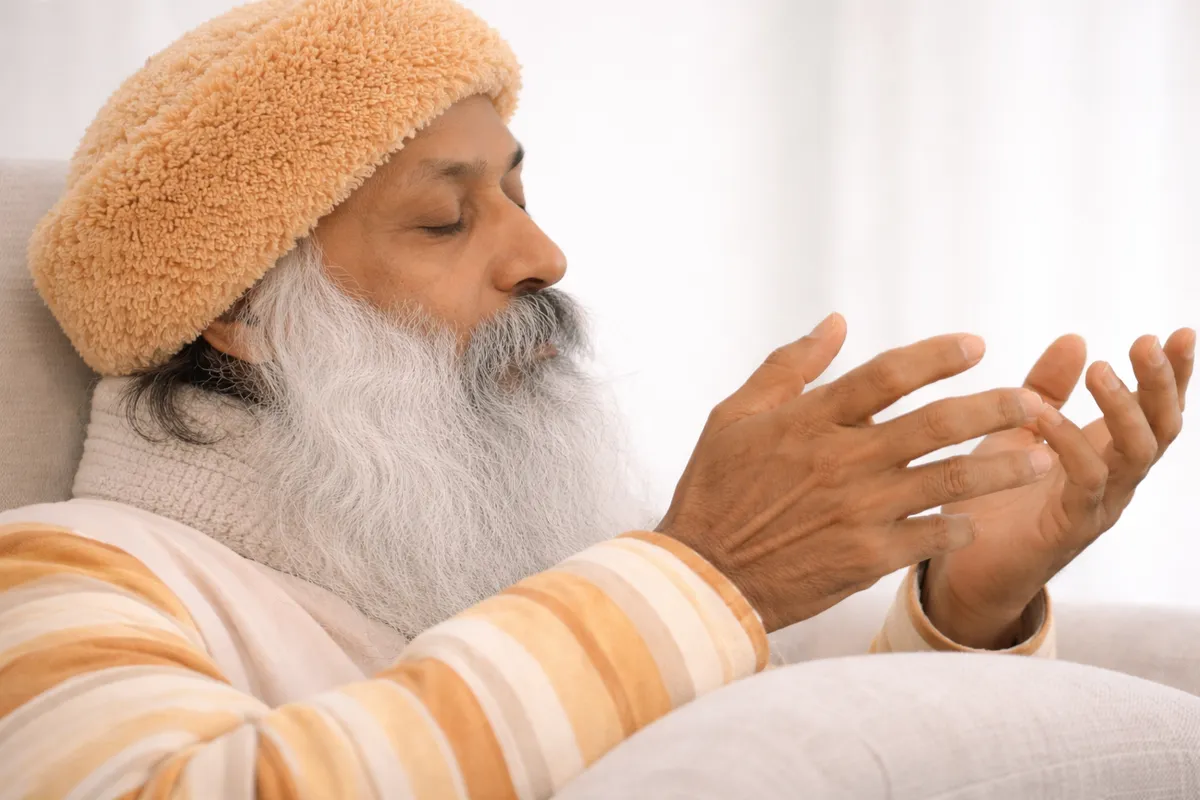
Patience means trusting life and yourself, seeing the good in change, and not letting others misuse your waiting.
From the Discourses
Passages where Osho speaks to this question — each links to the complete discourse.
Question: BELOVED OSHO, WHAT IS THE ESSENCE OF PATIENCE? Patience has been exploited by people. There has been poverty for centuries and people have been told just to be patient, "It is a test of your trust in God." They have been told just to be patient, "It is only a question of a few years and then you will be entering into paradise." Patience has been used as part of an exploitation of people in every field, but patience itself is a beautiful quality. You should not allow your patience to be exploited. But to be patient, to me means trust -- trust in nature, trust in existence, trust in yourself. Things are going to be better every day; whatever happens, your patience finds in it something better for you. It is a very great alchemy; it changes suffering into blessing.
Deva means divine and dheeraj means patience -- divine patience. And that is very significant to remember. On the path nothing more is needed than patience. Man can do everything that he is capable of, but still there is no necessity that the ultimate happens; it may happen, it may not. We can grope in the dark; the door may open, it may not So if one has not infinite patience, one starts getting tired of the search. There is no short cut to it -- and there cannot be because of the very nature of things. The journey is long and many times one starts losing hope. Those are the moments when patience will be needed. Patience is nothing but a fragrance of trust. The night is dark but one trusts that the dawn is coming. Each moment it is coming closer and closer.
Osho, what is the relationship between meditation and patience?
If you sit to meditate to remove mental restlessness, you will keep looking back again and again: “Has it gone yet?” And the irony is that when you begin to meditate, restlessness will increase. Because what has been repressed will start surfacing; catharsis will begin. The rubbish you have kept hidden within and never allowed to express—meditation will break open those doors too. It will clean the house. Dust piled up for years, for births, will rise again; there will be gusts and storms. For a while even the little peace you had will be lost. Then you will panic: “I came for peace, and even what I had is gone.” Without patience, you could even become unhinged, because meditation brings such a great storm. The disease is not from a day or two; it’s from lifetimes. Meditation will break through all the layers to reach your innermost core. In…
दूसरा प्रश्न: ओशो, ध्यान और धैर्य में क्या संबंध है?
अगर मन की अशांति को मिटाने के लिए तुम ध्यान करने बैठे हो, तो तुम बार-बार लौटकर देखोगे, अब तक मिटी नहीं! और मजा तो यह है कि जब ध्यान शुरू करोगे, तो अशांति बढ़ेगी। क्योंकि जो दबी पड़ी है, वह भी प्रकट होगी। जो सदा-सदा से दबाई है, उसका भी रेचन शुरू होगा, कैथार्सिस होगी। जो कूड़ा-करकट भीतर छिपाकर बैठे रहे हो, प्रकट नहीं किया है, ध्यान उन द्वारों को भी तोड़ेगा। घर की सफाई करेगा। वर्षों की जमी धूल, जन्मों की जमी धूल उठेगी फिर से, अंधड़-तूफान होंगे। कुछ देर तो थोड़ी-बहुत जो शांति तुम्हारे पास थी, वह भी खो जाएगी। …
Verse (Sanskrit): धैर्यं कन्था। उदासीन कौपीनम्। विचार दंडः। ब्रह्ममावलोक योग पट्टः। श्रियां पादुकाः। परेच्छाचरणम्। कुंडलिनी बंधः। परापवाद मुक्तो जीवनमुक्तः। Transliteration: dhairyaṃ kanthā| udāsīna kaupīnam| vicāra daṃḍaḥ| brahmamāvaloka yoga paṭṭaḥ| śriyāṃ pādukāḥ| parecchācaraṇam| kuṃḍalinī baṃdhaḥ| parāpavāda mukto jīvanamuktaḥ| Translation: Patience is the patched cloak. Dispassion is the loincloth. Discernment is the staff. The vision of Brahman is the yoga-belt. Riches are the sandals. Another’s will is the way. Kundalinī is the bond. Free from slandering others, he is liberated while living. Patience is his ragged quilt (the renunciate’s bag). A dispassionate disposition is the loincloth. Reflection is the staff. The vision of Brahman is the yoga-belt. Riches are his sandals. The longing for the Supreme alone is his conduct. Kundalinī is his bond. He who is free from speaking ill of others is liberated while living. Patience is the kanthā—patience is his ragged quilt.
Question: Third question: How long to wait? Osho! How long to wait? The very question “how long” tells me you do not know the art of waiting. “How long” is already impatience—where is waiting in that? “How long” is haste—where is waiting in that? True waiting is infinite. Anything less than the infinite is not waiting; it is a counterfeit. And the one whose waiting is infinite will find it this very moment. The more impatience you have, the longer it will take. Let this arithmetic settle within you: the more the haste, the longer the delay. The more the impatience, the longer the delay. For a mind full of impatience is agitated, trembling; it cannot be still. An impatient mind keeps peering into the future; it is not present in the present.
‘कब तक’ पूछा कि खबर दे दी कि तुम्हें प्रतीक्षा का शास्त्र नहीं आता। कब तक में तो अधैर्य है, प्रतीक्षा कहां? कब तक में तो जल्दबाजी है, प्रतीक्षा कहां? प्रतीक्षा हो तो अनंत ही होती है। अनंत से कम प्रतीक्षा, प्रतीक्षा नहीं होती; प्रतीक्षा का धोखा होता है। और जिसकी अनंत प्रतीक्षा है, उसे इसी क्षण मिलना हो जाएगा। और जिसने अधैर्य किया, जितना अधैर्य किया, उतनी ही देर लग जाएगी। इस गणित को ठीक बैठ जाने दो अपने भीतर। जितनी जल्दबाजी की, उतनी देर लग जाएगी। जितना अधैर्य किया, उतनी देर लग जाएगी। क्योंकि अधैर्य से भरा हुआ चित्त उद्विग्न होता है, कंपता होता है, शांत नहीं हो सकता। अधैर्य से भरा चित्त भविष्य में झांकता होता है, वर्तमान में नहीं होता। अधैर्य से भरा चित्त--अब हुआ, तब हुआ, अब होना चाहिए, अब तक नहीं हुआ--हजार शिकायतें आ जाती हैं, हजार संदेह आ जाते हैं, हजार शंकाएं मन को घेर लेती हैं--होगा कि नहीं होगा, है भी या नहीं है, मैं व्यर्थ ही तो समय नहीं गंवा रहा हूं, मैं नाहक बैठा यह क्या कर रहा हूं? …