
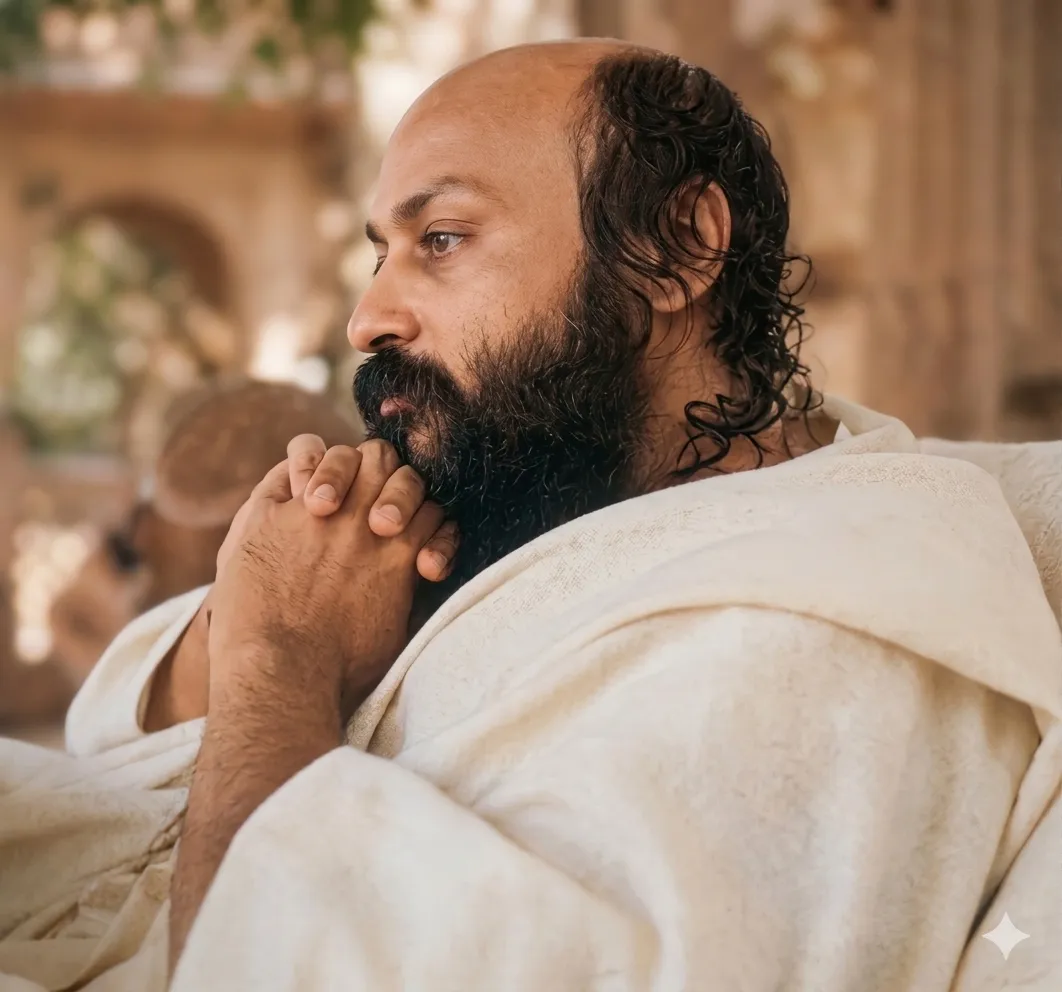
Satori is a short peek you can remember; samadhi is a never-ending state where ‘you’ vanish and only the present remains.
From the Discourses
Passages where Osho speaks to this question — each links to the complete discourse.
Question: what is the difference in experience between satori -- in zen, a glimpse of enlightenment -- and samadhi, cosmic consciousness?
The moment samadhi has happened, the future becomes nonexistential. It is not; only the present moment is. It is the only time, there is not even any past. The past has dropped and the future also, and a single, momentary existence becomes the total existence. You are in it, but not as an entity that is different from it. You cannot be different because you only become different from the total existence due to your past or your future. The past and future crystallized around you is the only barrier between you and the present moment that is happening. So when samadhi happens there is no past and no future. Then it is not that you are in the present, but you are the present, you become the present. Samadhi is not a glimpse, samadhi is a death. But satori is a glimpse, not a death. And satori is possible…
Beloved Osho, over the years, I have heard various sannyasins saying that they experienced a satori. What exactly is a satori, and how does it come about?
Satori is a glimpse of the ultimate... as if you are seeing the Himalayan peaks. But you are far away, you are not on the peaks, and you have not become the peaks. It is a beautiful experience, very enchanting, exciting, challenging. Perhaps it may lead you towards samadhi. Satori is a glimpse of samadhi. Samadhi is the fulfillment of satori. What was a glimpse has become now an eternal reality to you. Satori is like opening a window -- a little breeze comes in, a little light. You can see a little sky, but it is framed. Your window becomes a frame to the sky, which has no frame. And if you always live in the room and you have never been out of it, the natural conclusion will be that the sky is framed. It is only in this decade that a few modern painters have started painting…
This is to be understood: Ignorance has no beginning, it is beginningless. Ignorance has no beginning, it is beginningless but it has an ending. Knowledge has a beginning but no end. And this is the complete circle. So ignorance and knowledge are not two things because one has only the beginning and one has only the end. So they must be part of one great circle because we don't know when ignorance begins -- it is always. We have been in it, whenever we are... wherever we are we have been in it. We are always in the middle, it has no beginning. And knowledge has no end -- it begins, then we are always in the middle and no end there is to it. So samadhi means the beginning of knowing without any end. Satori means -- and in India we have no corresponding word for satori.....
During samadhi, the objects of the experiences are not separate from the soul, hence they are not experienced. But these glorified experiences of the seeker who has come out of samadhi are inferred through recollections of the mind.
IN THIS BEGINNINGLESS WORLD, MILLIONS AND MILLIONS OF KARMA, ACTION-IMPRESSIONS, ARE ACCUMULATED. THEY ARE ALL DESTROYED BY THIS SAMADHI AND PURE DHARMA, THE SELF-NATURE, GROWS. THE KNOWERS OF YOGA CALL IT DHARMAMEGHA -- THE RAINCLOUD OF DHARMA -- SAMADHI, BECAUSE IT SHOWERS A THOUSAND NECTAR-STREAMS OF DHARMA, THE SELF-NATURE, LIKE A RAINCLOUD. IN THIS SAMADHI, THE NETWORK OF DESIRES DISSOLVES COMPLETELY AND THE THICKETS OF ACCUMULATED KARMA CALLED VIRTUE AND SIN ARE ALL UPROOTED AT THEIR VERY SOURCE. AT FIRST, THIS BOUNDLESS STATEMENT -- TATTVAMASI, THAT ART THOU -- BEING TRUE, IS ONLY REALIZED INDIRECTLY; THEN THE DIRECT KNOWLEDGE, LIKE A MYROBALAN FRUIT KEPT ON ONE'S OWN PALM, IS BORN. Dharmamegha is a lovely word. Clouds we have seen. When Ashadh, the first month of monsoon comes, clouds gather in the sky. But we are not aware of the whole phenomenon. Those clouds gather in the sky in Ashadh, and…
At the death of a parishioner, master dogo, accompanied by his disciple zengen, visited the bereaved family.
WITHOUT TAKING TIME TO EXPRESS A WORD OF SYMPATHY, ZENGEN WENT UP TO THE COFFIN, RAPPED ON IT, AND ASKED DOGO:'IS HE REALLY DEAD?' 'I WON'T SAY,' SAID DOGO.'WELL?' INSISTED ZENGEN.'I'M NOT SAYING, AND THAT'S FINAL,' SAID DOGO. ON THEIR WAY BACK TO THE TEMPLE THE FURIOUS ZENGEN TURNED ON DOGO AND THREATENED: 'BY GOD, IF YOU DON'T ANSWER MY QUESTION, WHY I'LL BEAT YOU.' 'ALL RIGHT,' SAID DOGO, 'BEAT AWAY.' A MAN OF HIS WORD, ZENGEN SLAPPED HIS MASTER A GOOD ONE. SOME TIME LATER DOGO DIED, AND ZENGEN, STILL ANXIOUS TO HAVE HIS QUESTION ANSWERED, WENT TO THE MASTER SEKISO, AND, AFTER RELATING WHAT HAD HAPPENED, ASKED THE SAME QUESTION OF HIM. SEKISO, AS IF CONSPIRING WITH THE DEAD DOGO, WOULD NOT ANSWER.'BY GOD!' CRIED ZENGEN. 'YOU TOO?' 'I'M NOT SAYING,' SAID SEKISO, 'AND THAT'S FINAL.' AT THAT VERY INSTANT ZENGEN EXPERIENCED AN AWAKENING. Whenever a lover dies,…