
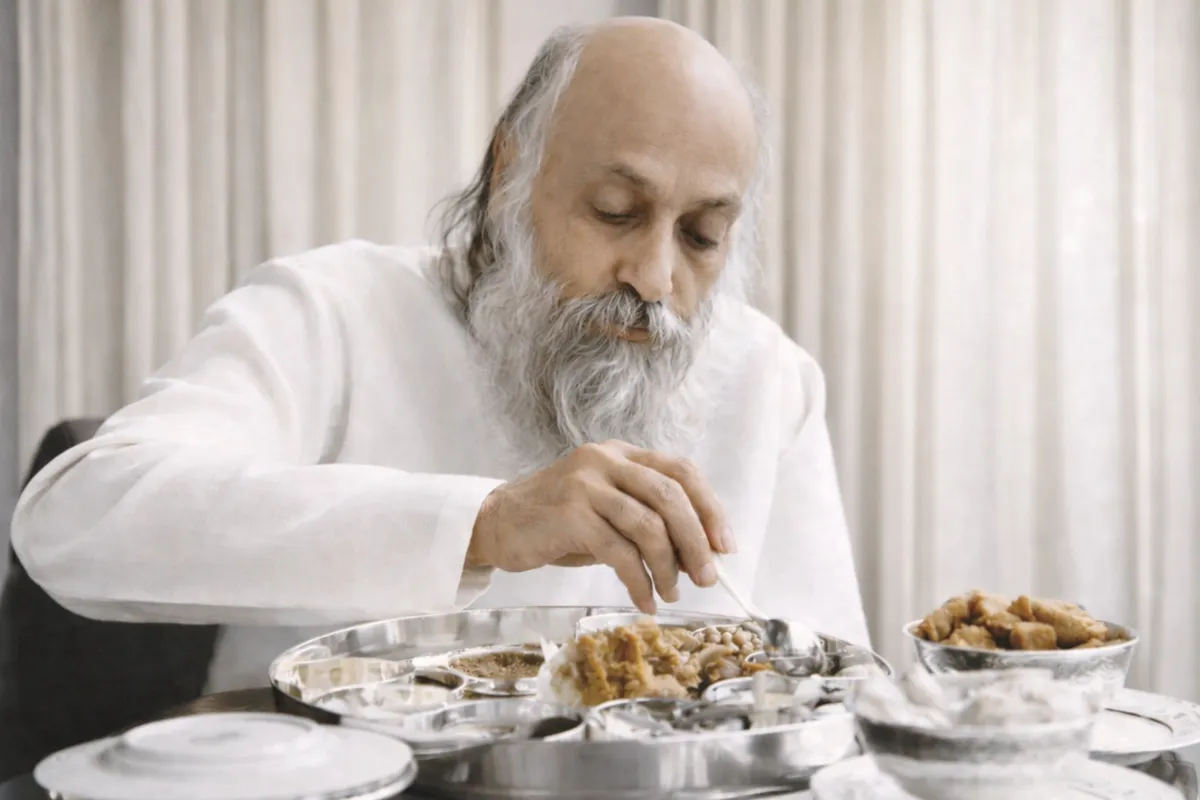
The old sage seeks approval by obeying society, while the new rebel follows truth and freedom even if society rejects him.
From the Discourses
Passages where Osho speaks to this question — each links to the complete discourse.
Beloved master, what is the difference between the old sage and the new rebel?
If the world is a school, then the poor should be given all the pleasures so they can get a little bit ready; otherwise even in heaven they will feel too guilty to enjoy anything. They will bring their conditioning with them. But the society was happy that the poor were told that they would inherit the kingdom of God. Then there is no need of any revolution here, there is no need to revolt against the structures which are making them poor. The old sage was anti-revolutionary. He was for those who were oppressing and sucking the blood of the people. The new rebel will not be an agent of the bloodsuckers, of the parasites. He will not say, "Blessed are the poor." He will not say, "Suffer your misery patiently, because after death you are going to inherit the kingdom of God." There is no kingdom of God…
Question: BELOVED OSHO, WHAT IS YOUR NOTION OF REBELLION AND OF A REBEL? Giulia, my notion about the rebel and rebellion is very simple: a man who does not live like a robot conditioned by the past. Religion, society, culture... anything that is of yesterday does not in any way interfere in his way of life, in his style of life. He lives individually -- not as a cog in the wheel, but as an organic unity. His life is not decided by anybody else, but by his own intelligence. The very fragrance of his life is that of freedom -- not only that he lives in freedom, he allows everybody else also to live in freedom. He does not allow anybody to interfere in his life; neither does he interfere in anybody else's life.
Question: BELOVED MASTER, WHAT ARE THE QUALITIES OF A REBEL? ... A rebel simply lives his life in the moment, with awareness, with no desire to dominate, either while he is living or when he is dead. He does not have any lust for power. He is a scientist of the soul -- that is the fourth dimension. Just as science uses doubt, skepticism, inquiry, he uses the same methods for his inner search. Science uses them for objective reality, he uses them for his subjectivity. But he does not condemn doubt, he does not condemn skepticism, he does not condemn disobedience, he does not condemn a nonbelieving approach to reality. He enters within his own being with a scientific mind. His religion is not superstitious -- it is scientific.
Osho, what is the definition of God?
Words are very small. If you say God is light, then what of darkness? The scriptures have said that God is light. Suppose we accept this as a definition—then what about darkness? Where will darkness go? Darkness is too; in fact it is far more than light. Light sometimes is and sometimes is not; darkness is always, eternal. Where will you place darkness? If you say God is light, darkness is left out. If you say God is darkness, then light is left out. If you say God is both darkness and light, a contradiction arises: they cannot be together. Try to have both darkness and light in the same room. If you bring in light, darkness disappears; if you preserve darkness, you cannot have light. Then how can both be together? That becomes an impossibility. So you cannot say “both” either. Then the fourth device is to say: it…
पहला प्रश्न: ओशो, परमात्मा की परिभाषा क्या है?
शब्द तो बड़े छोटे-छोटे हैं। अगर कहो परमात्मा प्रकाश है, तो फिर अंधेरे का क्या होगा? ऐसा कहा है शास्त्रों में कि परमात्मा प्रकाश है। चलो मान लें इसे परिभाषा, फिर अंधेरे का क्या होगा? फिर अंधेरा कहां जायेगा? अंधेरा भी है, प्रकाश से कहीं ज्यादा है। प्रकाश तो कभी होता है कभी नहीं भी होता; अंधेरा सदा है, शाश्वत है। अंधेरे को कहां रखोगे? अगर कहा परमात्मा प्रकाश है, तो अंधेरा बाहर पड़ गया। अगर कहा परमात्मा अंधेरा है, तो प्रकाश बाहर पड़ गया। अगर कहो परमात्मा अंधेरा प्रकाश दोनों है, तो विरोधाभास होता है। दोनों एक साथ हो नहीं सकता। एक ही कमरे में अंधेरा और प्रकाश करके दिखाओ। प्रकाश करोगे, अंधेरा खो जायेगा; अंधेरा बचाओगे, प्रकाश न कर सकोगे। तो दोनों साथ कैसे होंगे? तब एक असंभव बात हो गई। तो यह भी नहीं कह सकते कि दोनों है।
Question: Second question: Osho, is religion rebellion? Religion is rebellion; a sect is not. A sect is status-quo-ism. A sect means: religion has died. Rebellion has died; it has become an organization. The breaths of revolution have stopped; a corpse lies there. What moved at the feet of Mahavira is religion; what sits as a load on the heads of the Jains is a sect. What Buddha said is religion; what the Buddhists are carrying is a sect. What Krishna sang is religion; what the Hindus are arguing about is a sect. Hindus, Jains, Buddhists, Christians, Muslims, Jews—these are the corpses of religion. They have nothing to do with religion, just as a corpse has nothing to do with the living person. How much you loved your wife, your son! You were ready to give up everything.
महावीर के पैरों में जो चला, वह धर्म; जैनियों के सिर पर जो लदा है, वह संप्रदाय। बुद्ध ने जो कहा, वह धर्म; बौद्ध जिसे ढो रहे हैं, वह संप्रदाय। कृष्ण ने जो गाया, वह धर्म; हिंदू जिसके संबंध में विवाद कर रहे हैं, वह संप्रदाय। हिंदू, जैन, बौद्ध, ईसाई, मुसलमान, यहूदी, ये धर्म की लाशें हैं। इनका धर्म से कुछ लेना-देना नहीं। इनका धर्म से कुछ लेना-देना नहीं है वैसे ही जैसे लाश का जीवित व्यक्ति से कुछ लेना-देना नहीं है। कितना तुमने चाहा था अपनी पत्नी को, अपने बेटे को! सब निछावर करने को राजी थे! और आज बेटे की सांस उड़ गई, पंछी उड़ गया, चले तुम लेकर उसे मरघट, चले तुम जलाने उसे! जिसके पैर में कांटा गड़ जाता तो तुम रात भर न सो पाते, जिसे जरा सी तकलीफ होती तो तुम सब कुछ दांव पर लगा देते, आज उसे लेकर चले तुम मरघट! तुम्हीं लेकर चले मरघट, जमीन में गड़ाने, कि आग पर सुलाने! थोड़ा सोचो तो, क्या हो गया?