
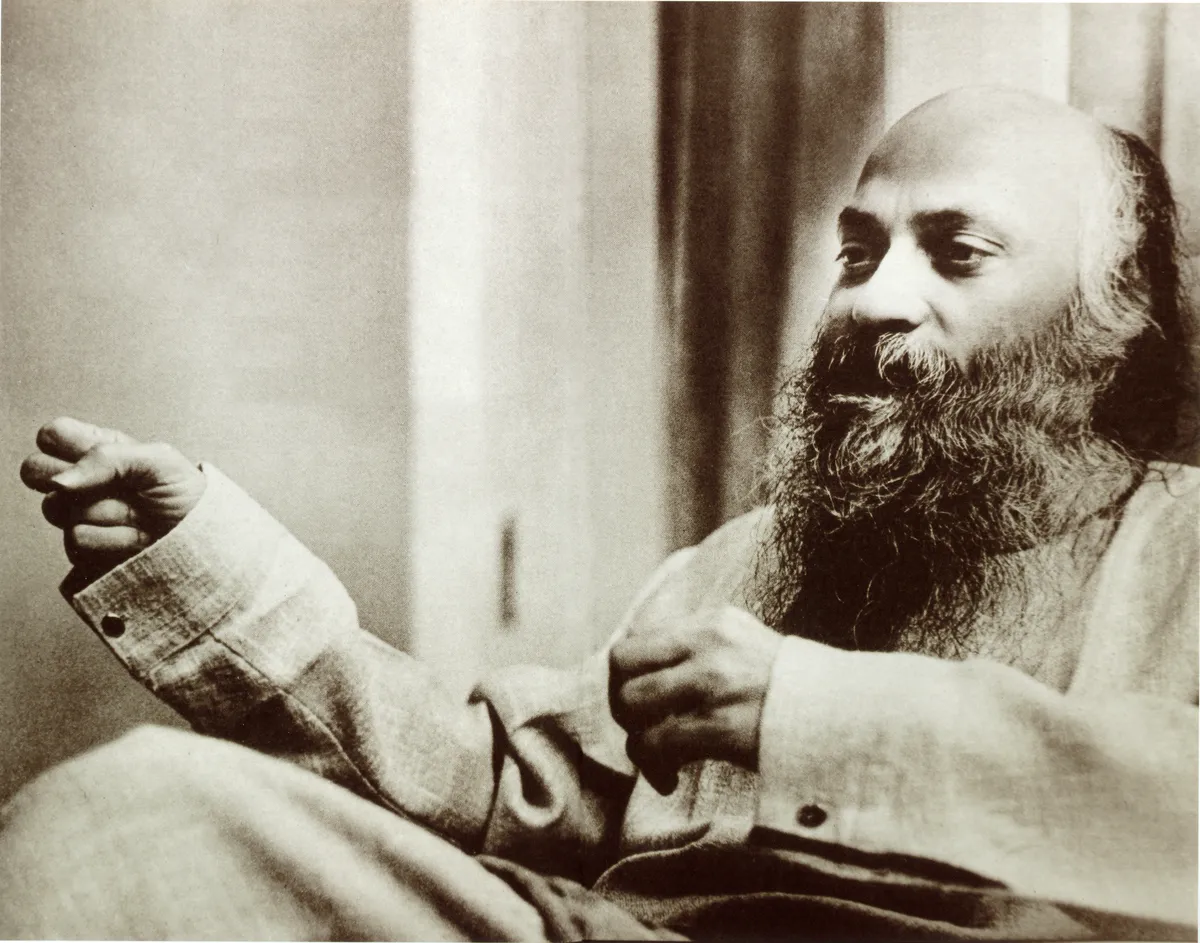
Osho's perspective on The New
When Osho Spoke About The New
Passages from the discourses where this theme comes alive.
My concept of the new man is that he will be Zorba the Greek and he will also be Gautam the Buddha: the new man will be Zorba the Buddha. He will be sensuous and spiritual, physical, utterly physical, in the body, in the senses, enjoying the body and all that the body makes possible, and still a great consciousness, a great witnessing will be there. He will be Christ and Epicurus together. The old man's ideal was renunciation; the new man's ideal will be rejoicing. And this new man is coming every day, he is arriving every day. People have not yet become aware of him. In fact he has already dawned. The old is dying, the old is on its death-bed. I don't mourn for it and I say please don't mourn for it.
Osho, what according to you is the most significant thing that is happening today in the world?
The new man will have no use for sham, facade or pretense, he will be true, because only through truth is there liberation. All lies create bondages. Tell a single lie and you will have to tell a thousand and one to defend it -- you will have to tell lies AD NAT(SEAM. Then there is no end to it. A single lie sooner or later will spread all over your being. It is like cancer. Be truthful and you need not hide, you can be open. Be truthful and you need not protect yourself against existence, you can be vulnerable. In that vulnerability existence penetrates you, God reaches your heart. Tell a lie and you are afraid. You will be afraid of God too, you will be afraid of facing him. You will be afraid of facing yourself. You will be continuously escaping from yourself, from others, from God.…
Osho, the twenty-one-day ritual you have hinted at—was that practice or elemental realization in any way traditional? Because from your mode of expression it continually seems that you surely represent some teacher’s or Tirthankara’s method. Within this I also want to dare to ask: do you want to add a link to some established spiritual lineage, or, like Buddha, are you attempting to cut a new path through the mountains?
Nor is the issue one of tolerance. It is a matter of sky-like spaciousness, not tolerance. Not mere forbearance. Not that a Hindu “puts up with” a Muslim or a Christian “puts up with” a Jain. Forbearance already holds violence within it. I do not say the Quran and the Gita say the same thing. The Quran says something quite different; it has its own individual voice—that is its greatness. If it only repeated what the Gita says, it would be worth two pennies. The Bible says something else again, which neither the Gita nor the Quran says. Each has its own voice. Mahavira does not say what Buddha says; they say very different things. And yet from these differing statements one ultimately arrives at the same place. My emphasis is on the oneness of the destination, not on the oneness of the paths. My emphasis is that in the…
ओशो, जिस इक्कीस दिन के अनुष्ठान की ओर आपने संकेत किया है, क्या वह साधना या तत्वानुभूति किसी परंपरागत थी? क्योंकि आपके अभिव्यक्तिकरण से निरंतर ऐसा भास होता है कि आप भी निश्चित ही किसी टीचर एवं तीर्थंकर की पद्धति का प्रतिनिधित्व करते हैं। इसी के अंतर्गत यह जानने का साहस भी करना चाहता हूं कि आप किसी परंपरा की अध्यात्म-श्र्ृंखला की कड़ी को जोड़ना चाहते हैं, या बुद्ध की भांति किसी पहाड़ में नया मार्ग काटने का प्रयास कर रहे हैं?
इसलिए मैं कहता हूं इक्लेक्टिक! पूरी गीता को राजी हैं, फिर गीता के भी समानांतर कुछ मिलता हो कहीं कुरान में तो उसके लिए राजी हैं। इसमें राजी होने में कोई कठिनाई ही नहीं है। इसको तो कोई भी राजी हो जाएगा। मैं कहता हूं कि नहीं मैं आपसे बिलकुल राजी हूं, उतनी दूर तक, जहां तक कुरान गीता का अरबी रूपांतर है, बस। उससे इंच भर ज्यादा नहीं। वह तो कुरान वाला भी राजी हो जाता है। लेकिन यह बहुत मजेदार प्रयोग होगा कि कुरान वाले से आप गीता में चुनवाएं कि कौन-कौन सी बात का मेल है, तो आप बिलकुल हैरान हो जाएंगे। जो चीजें वह चुनेगा वे गांधी ने कभी नहीं चुनीं। वह बहुत भिन्न चीजें चुनेगा। इसको इक्लेक्टिसिज्म कहता हूं मैं। यह चुनना है। यह पूरे की स्वीकृति नहीं है। स्वीकृति तो हमारी ही है। उससे आप भी मेल खाते हो कहीं, तो आप भी ठीक हो। ठीक तो हम ही हैं अंततः। लेकिन आप भी उतने दूर तक ठीक हो, इतना कहने की हम सहिष्णुता दिखलाते हैं, जितनी दूर तक आप हमसे मेल खाते हैं। यह कोई बहुत सहिष्णुता नहीं है। …
Osho, what new thing did Mahavira give us? Talk of love has been going on since the human race began.
Rabindranath wrote of an old man, a friend of his father’s, who lived next door and often came to their house. He troubled Rabindranath a great deal. Whenever Rabindranath wrote poems about God, the soul, the Supreme, the old man would laugh, grab his hand and shake it, and ask, “Have you experienced it? Have you seen God?” He would laugh so heartily that Rabindranath says he began to fear him. If he saw him on the street he would slip away, because the man would catch him there and ask, “Have you experienced God? Have you seen God?” And he did not have the courage to say yes. Truly, what experience had he had? He was writing poems. The man pestered him so much. But one day—it was the rainy season—he had gone out toward the sea. The sun had come out; it was morning. The sun’s reflection was…
Profound Quotes on The New
Explore our structured collection of meaning-mapped quotes regarding The New.