
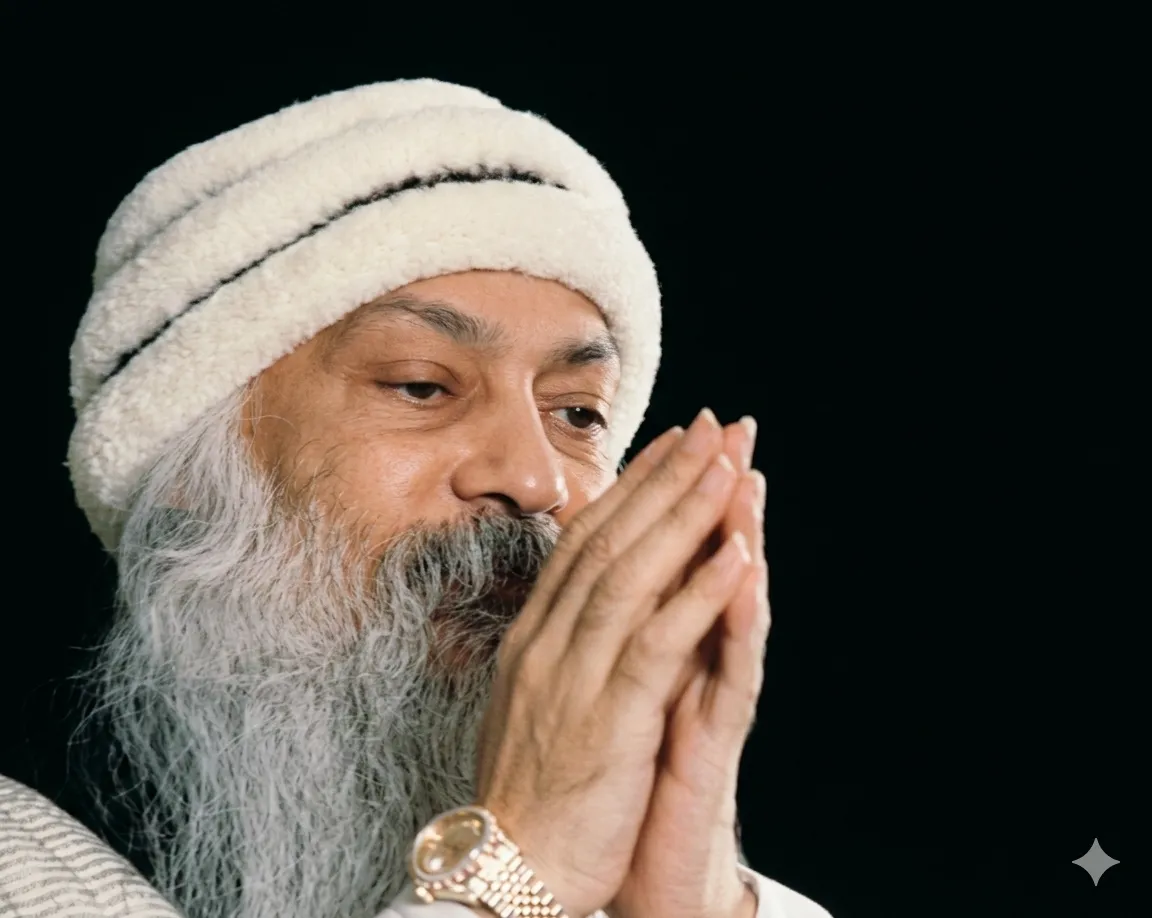
Like trusting your own eyes to see, Osho says real authority is your own inner knowing, not someone else’s book or voice.
From the Discourses
Passages where Osho speaks to this question — each links to the complete discourse.
Osho, you said... then you will find that the devotee is God. The question arises: if one devotee prefers to be God and another wants to remain only a devotee, then which of the two is superior?
The one who wants to be God will not be able to be. And the one who wants to remain a devotee will become God. The question of superior or inferior does not arise, because only one of the two will happen. The one who does not want to be will be. The one who wants to be will be deprived. That very wanting is of the ego. But the matter is a little delicate. Sometimes humility too belongs to the ego. Beware that your humility may not be of the ego. Perhaps you are saying, “No, I don’t want to be,” because you know that those who refuse are the ones who attain. Then you are clever. Then your humility is adulterous. Your humility is not pure, not sacred, not virginal—it is like a prostitute. The one who wants to be God, whose ego says, “I must become God,”…
दूसरा प्रश्न: ओशो, आपने कहा... तब पाओगे कि भक्त ही भगवान है। प्रश्न उठता है कि एक भक्त भगवान होना पसंद करे और दूसरा सिर्फ भक्त रहना चाहे, तो दोनों में श्रेष्ठ कौन है?
जो भगवान होना चाहे वह तो हो न पाएगा। और जो भक्त भक्त ही रहना चाहे वह भगवान हो जाएगा। श्रेष्ठ-अश्रेष्ठ का सवाल नहीं उठता, क्योंकि एक ही हो पाएगा। जो नहीं होना चाहता वही हो पाएगा। जो होना चाहता है, वह तो वंचित रह जाएगा। वह तो चाह भी अहंकार की ही है। लेकिन मामला थोड़ा नाजुक है। कभी-कभी ऐसा होता है कि विनम्रता भी अहंकार की ही होती है। कहीं तुम्हारी विनम्र्रता भी अहंकार की ही न हो। कहीं तुम इसलिए ही न कर रहे होओ कि नहीं मैं नहीं होना चाहता, क्योंकि तुम जानते हो कि जो इनकार करते हैं वही हो पाते हैं। तो तुम चालाक हो। तो तुम्हारी विनम्रता व्यभिचारी है। तो तुम्हारी विनम्रता शुद्ध नहीं, पवित्र नहीं, कुंआरी नहीं, वेश्या जैसी है।
One who has been with Buddha and Buddha says, “Tat tvam asi”—having known Buddha, he cannot even imagine that Buddha could speak untruth. Though he does not know whether the sentence is true, he knows Buddha. Therefore what Buddha says becomes proof. From Buddha no untruth can come—that thought does not arise. For one who has been with the master, the master’s word is authority. But it is the master’s word that is authority. That is indirect—coming through another. The first realization for Buddha’s seeker on reaching samadhi will be to bow at Buddha’s feet: “You spoke rightly; what you said, I have known.” But when this realization deepens, and he goes on drowning, the situation changes entirely: he says, “I know I am That. And now I say: since my experience says so, therefore the master spoke truly.
… बुद्ध से कुछ अप्रमाण निकल सकता है, इसकी कोई बात ही नहीं बनती, इसका कोई खयाल ही नहीं आता। जो गुरु के पास रहा है, गुरु को जाना है, गुरु का वचन उसे प्रमाण है। लेकिन गुरु का ही वचन प्रमाण है। यह परोक्ष है। दूसरे के द्वारा आया है। पहली प्रतीति तो यही होगी, जब बुद्ध का साधक पहुंचेगा समाधि में, तो हाथ जोड़ कर बुद्ध के चरणों में सिर झुकाएगा, कहेगा: ठीक कहा था, जो कहा था वह जाना। लेकिन जब यह प्रतीति और गहरी होगी, और डूबेगा, और डूबेगा, तो स्थिति बिलकुल बदल जाएगी। तब वह कहेगा कि मैं जानता हूं कि मैं वही हूं। और अब मैं कहता हूं कि चूंकि मेरा अनुभव कहता है कि ठीक है, इसलिए गुरु ने जो कहा था, वह ठीक है।
Osho, do devotion, knowledge, and action arise from one’s own nature or from outside influence? Osho, please explain.
Om, you ask: from influence or from nature? Influence is worth two pennies. To be influenced is already to go wrong. Devotion under influence will have some other motive hidden within; only the label will be devotion. Knowledge will be parroted; of little worth. Action you will do in the hope of heaven arriving any minute—the Pushpak chariot descending to carry you bodily to paradise. Your service will be dipped in desire: serving in hope of a payoff—pressing the poor man’s feet today so that gods and goddesses will press yours forever. Is that service? That is not karma. Until action is desireless, it is bondage; a hidden craving slips in through the back door. And here, everyone seems “knowledgeable.” In this land, hard to find anyone who admits ignorance. Read ten books, compile an eleventh, and you are a great scholar; people will discuss you. People come to me…
Osho, how can one be free of scriptures and doctrines? They have such a grip that no way to be free seems visible.
Scriptures are not to be discarded. Where have I discarded them? Has anyone given as much respect to scriptures as I have? So how can I tell you to drop them? I am saying something else. I am saying that nothing of your purpose will be fulfilled by scriptures until your own samadhi happens. To give value to samadhi I say, “Drop scriptures,” otherwise you will cling to scripture and go on missing samadhi. I have heard: A young man went to America’s great millionaire, Morgan, and said, I have written this book. It is so astounding that millions of copies will sell and millions will benefit. Please publish it. Morgan asked—without even taking the book in his hand—What is the name of this book? The young man said: Its name is “A Hundred Ways to Make Money.” Morgan looked him up and down—shabby condition. He asked: How did you…
अंतिम प्रश्न: ओशो, शास्त्रों और सिद्धांतों से छुटकारा कैसे हो? उन्होंने ऐसा पकड़ा है कि छूटने का कोई उपाय ही नहीं दिखता है।
… मैंने कहां छोड़े? जितना सम्मान मैंने शास्त्रों को दिया है, किसी और ने दिया है? तो मैं कैसे कह सकता हूं तुमसे कि छोड़ दो? कुछ और कह रहा हूं। यह कह रहा हूं कि शास्त्रों से तब तक कोई भी तुम्हारा प्रयोजन सिद्ध होने वाला नहीं, जब तक तुम्हारी अपनी समाधि न लग जाए। समाधि को मूल्य देने के लिए कह रहा हूं कि शास्त्र छोड़ दो, नहीं तो तुम शास्त्र को ही पकड़े बैठे रहोगे, समाधि से चूकते चले जाओगे। मैंने सुना है, एक युवक ने अमरीका के एक बहुत बड़े करोड़पति, मॉर्गन के पास जाकर कहा कि मैंने यह किताब लिखी है। यह किताब ऐसी अदभुत है कि इसकी करोड़ों प्रतियां बिकेंगी और करोड़ों लोग लाभांवित होंगे। आप इसे छपवाएं। मॉर्गन ने पूछा: बिना किताब हाथ में लिए, कि इस किताब का नाम क्या है? तो उस युवक ने कहा: इस किताब का नाम है--‘धन कमाने के सौ तरीके।’ मॉर्गन ने नीचे से ऊपर तक युवक को देखा. फटी हालत। …
Osho, yesterday you said one should not seek a master without first reading the scriptures. I have never studied the scriptures, and the very first time I heard you I accepted you as my master. So is my path wrong? Since yesterday I feel at sea; will I go on wandering forever?
In the depths, whatever happens happens only through your own experience. If your experience is ready and you meet a master, surrender, refuge arises. If your inner experience is not ready and you meet a master, influence arises. Influence comes in a moment and goes in a moment; it has little value. It is like going to see a picture—a film; you are moved for a while. But as soon as the lights come on and the bell rings, you remember it was only a film, a play of light and shadow; there was nothing to cry about, and you walk out laughing. Your eyes may still be wet, but it was all on the surface; it has no inner consequence. Listening to me can also be an influence. My words may feel pleasant, may seem logical. The poetry of my speech may capture your mind. But there is not…
पहला प्रश्न: ओशो, कल आपने कहा कि बिना शास्त्रों को पढ़े गुरु की तलाश नहीं करनी चाहिए, मगर मैंने कभी शास्त्रों का अध्ययन नहीं किया और आपको पहली बार सुनकर ही गुरु मान लिया है। तो क्या मेरा रास्ता गलत है? कल से मुझे सूझ नहीं पड़ता; क्या मैं सदा ही भटकता रहूंगा?
प्राणों की गहराई में तो जो घटना घटती है, वह आपके ही अनुभव से घटती है। आपका अनुभव तैयार हो और गुरु का मिलन हो जाए, तो समर्पण, शरणागति पैदा होती है। आपका अनुभव भीतर न हो और गुरु का मिलना हो जाए, तो प्रभाव पैदा होता है। लेकिन प्रभाव क्षण में आता है, क्षण में चला जाता है; उसका कोई बहुत मूल्य नहीं है। वह वैसे ही है, जैसे आप चित्र देखने गए; फिल्म देखी और थोड़ी देर को प्रभावित हो गए हैं। और बाहर निकलते ही बात समाप्त हो गई है। यह भी हो सकता है कि फिल्म देखते क्षण में करुणा उमड़ आई हो, आंख आंसुओं से भर गई हो। लेकिन जैसे ही परदे पर प्रकाश होता है, घंटी बजती है, स्मरण आ जाता है कि सिर्फ फिल्म थी, प्रकाश-छाया का खेल था; रोने जैसा कुछ भी न था; और आप हंसते हुए बाहर आ जाते हैं। हो सकता है अभी भी आंखें गीली हों, लेकिन वह सब ऊपर-ऊपर था; भीतर उसके कोई परिणाम नहीं है।