
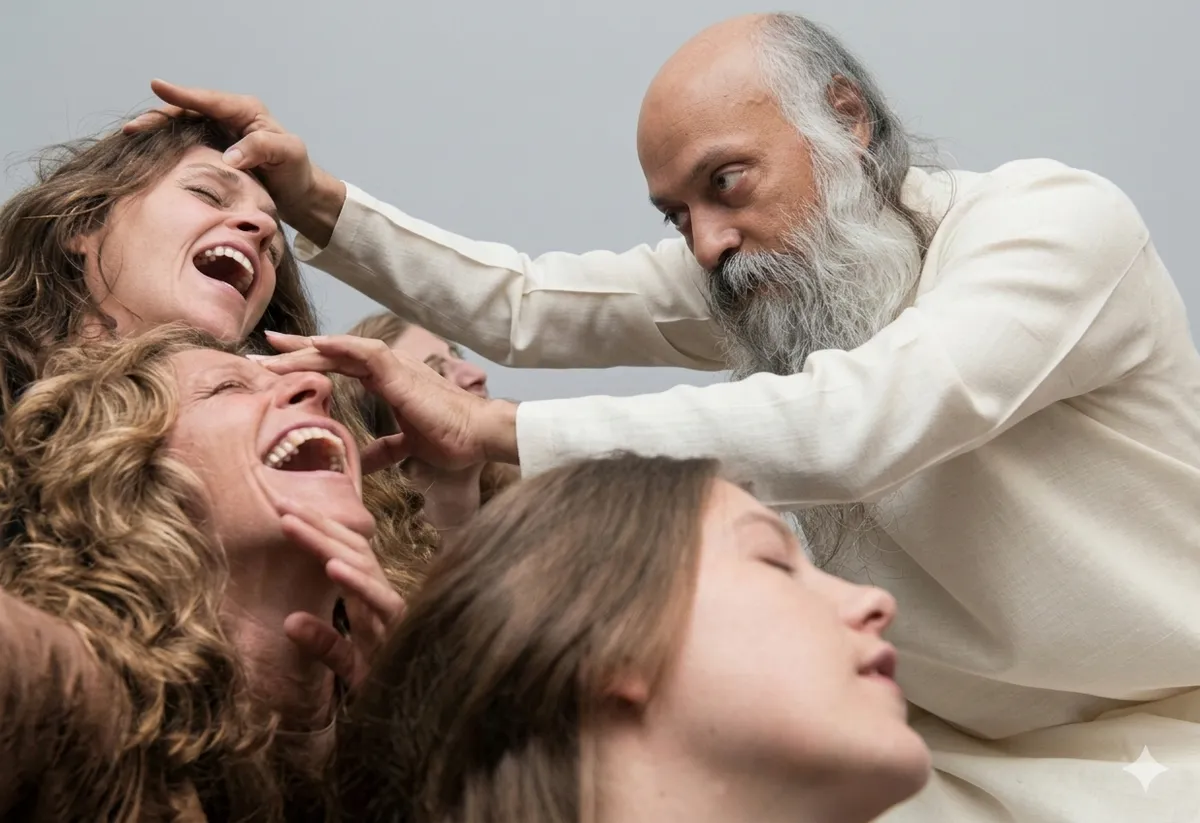
It’s like cleaning your inner eye so you can clearly see the real moment and your true self.
From the Discourses
Passages where Osho speaks to this question — each links to the complete discourse.
Osho, what is the definition of God?
Words are very small. If you say God is light, then what of darkness? The scriptures have said that God is light. Suppose we accept this as a definition—then what about darkness? Where will darkness go? Darkness is too; in fact it is far more than light. Light sometimes is and sometimes is not; darkness is always, eternal. Where will you place darkness? If you say God is light, darkness is left out. If you say God is darkness, then light is left out. If you say God is both darkness and light, a contradiction arises: they cannot be together. Try to have both darkness and light in the same room. If you bring in light, darkness disappears; if you preserve darkness, you cannot have light. Then how can both be together? That becomes an impossibility. So you cannot say “both” either. Then the fourth device is to say: it…
पहला प्रश्न: ओशो, परमात्मा की परिभाषा क्या है?
शब्द तो बड़े छोटे-छोटे हैं। अगर कहो परमात्मा प्रकाश है, तो फिर अंधेरे का क्या होगा? ऐसा कहा है शास्त्रों में कि परमात्मा प्रकाश है। चलो मान लें इसे परिभाषा, फिर अंधेरे का क्या होगा? फिर अंधेरा कहां जायेगा? अंधेरा भी है, प्रकाश से कहीं ज्यादा है। प्रकाश तो कभी होता है कभी नहीं भी होता; अंधेरा सदा है, शाश्वत है। अंधेरे को कहां रखोगे? अगर कहा परमात्मा प्रकाश है, तो अंधेरा बाहर पड़ गया। अगर कहा परमात्मा अंधेरा है, तो प्रकाश बाहर पड़ गया। अगर कहो परमात्मा अंधेरा प्रकाश दोनों है, तो विरोधाभास होता है। दोनों एक साथ हो नहीं सकता। एक ही कमरे में अंधेरा और प्रकाश करके दिखाओ। प्रकाश करोगे, अंधेरा खो जायेगा; अंधेरा बचाओगे, प्रकाश न कर सकोगे। तो दोनों साथ कैसे होंगे? तब एक असंभव बात हो गई। तो यह भी नहीं कह सकते कि दोनों है।
The message is to never think about yourself in any way which condemns. One has to learn to respect oneself; that is the beginning of a great change. We have been taught to condemn, to despise, to hate. We have been told to love others but we have not been told to love ourselves, so we don't have a good image of ourselves. And without a good image of yourself, you will never be able to know who you are. One does not want to look at oneself if one is condemned as a sinner. One can enter into oneself only when one feels that one is going into something beautiful. The beginning of love is to love oneself. The beginning of god is to think of oneself as divine.
But one thing is certain, that if mind continues to work you will never be able to know your innermost core -- and that is the liberating experience, the most ecstatic experience. Once you have tasted of it you are freed from all kinds of nonsense. You are freed from politics, you are freed from the so-called religions, you are freed from all kinds of ideologies. You start living in the moment, immediately related with reality, in tune, a dance arises in you -- a dance of spontaneity. Of course, whenever you need the mind you can put it on and put it off. Sambodh means right intelligence. Intellect is the wrong intelligence. It pretends to be intelligence -- it is not. But we have accepted its pretension, so from the school to the university all that we do is to cultivate intellect.
Osho, in the Chandogya Upanishad there is a sutra: na pashyato mṛtyuṁ pashyati na rogaṁ noto duḥkhatām, sarvaṁ ha paśyaḥ paśyati sarvam āpnoti sarvaśa iti. That is, the knower does not see death, nor disease, nor sorrow; he sees all as the Self and attains everything. You are a witness—does a buddha truly see even death, disease, and sorrow as the very Self? Kindly give us direction on this sutra.
Buddha uses nirvana in exactly this sense. When the flickering lamp of ego is extinguished, the whole sky is yours. The moons and stars are yours. When you are not, everything is yours. Understand this paradox well—here lies the secret of religion, the distilled essence of the mystics and seers. The sutra of the Chandogya is profound—very profound. Let the ego dissolve; you are no more; then all is yours. When you are not, nothing is “other.” It is the “I” that creates the “you,” the division. When the line of “I” disappears, the courtyard becomes the sky. Demolish the walls you have drawn around your yard—your courtyard is the open heavens. Na pashyato mṛtyum... To the knower death is not seen—he does not know death, he does not die—because whatever could die he let die in advance. Ego could die—and what is unreal alone can die. What is, is…
पहला प्रश्न: ओशो, छान्दोग्य उपनिषद में एक सूत्र इस प्रकार है: न पश्यतो मृत्युं पश्यति न रोगं नोत दुखतां सर्वं ह पश्यः पश्यति सर्वमाप्नोति सर्वश इति। अर्थात ज्ञानी न मृत्यु को देखता है, न रोग को और न दुख को; वह सबको आत्मरूप देखता है। और सब कुछ प्राप्त कर लेता है। आप तो गवाह हैं, क्या सच ही बुद्धपुरुष को मृत्यु, रोग और दुख में भी आत्मरूप ही दिखाई पड़ता है? इस सूत्र पर हमें दिशा-बोध देने की कृपा करें।
ठीक बुद्ध ने इसी अर्थों में निर्वाण कहा है। अहंकार का टिमटिमाता दीया बुझ जाए, तो यह सारा आकाश तुम्हारा है। ये सारे चांद-तारे तुम्हारे हैं। तुम नहीं हो तो सब तुम्हारा है। इस विरोधाभास को ठीक से समझ लेना, क्योंकि इसमें ही सारे धर्म का राज, सारी अनुभूतियों का निचोड़ है। जैसे कोई हजार-हजार गुलाब के फूलों को निचोड़ कर इत्र बनाए, ऐसा इसमें सारा निचोड़ है रहस्यवादियों का, ऋषियों का। छांदोग्य का यह सूत्र गहरा है। बहुत गहरा है। अहंकार मिट जाए, तुम न रहो, तो सब तुम्हारा है। तुम न रहे, तो कुछ पराया न रहा। यह मैं ही है जो तू को खड़ा कर देता है। यह मैं ही है जो विभाजित कर देता है। यह मैं का विभाजन गिर गया, यह रेखा हट गई, तो आंगन मिट कर आकाश हो जाता है। आंगन के चारों तरफ तुमने जो दीवाल खींच रखी है, उसे गिरा दो, तो तुम्हारा आंगन आकाश है। न पश्यतो मृत्युं... ज्ञानी को मृत्यु दिखाई ही नहीं पड़ती। ज्ञानी मृत्यु को जानता ही नहीं। ज्ञानी मरता ही नहीं। …
Samyam means: life in balance. Balance means: life in awareness, in apramad. Take each step with awareness; do not fear falling. If you must fall—no need to panic. Cultivate the capacity to recover. If you fall, cultivate the capacity to rise. If you err, cultivate the understanding to correct. But do not be afraid to move. Do not sit down on the roadside because the path has thorns, mistakes, robbers—“we might be looted, we might stray; better not to walk at all.” This is what happened in India. Many sat down by the roadside—India died. Not religious—only dead. The West is better—they made many mistakes; but what of it? They are alive, and the living can set things right. Becoming a corpse is not becoming religious. To be religious is to burn the trash off the gold—not to throw away the gold along with the trash.
संयम का अर्थ है, जीवन संतुलित हो। संतुलन का अर्थ है, जीवन बोधपूर्वक हो, अप्रमाद का हो। तुम एक-एक कदम होशपूर्वक उठाओ, गिरने का डर मत रखो। गिरना भी पड़े तो घबड़ाने की बात नहीं है। सम्हलने की क्षमता पैदा करो। गिर पड़ो तो उठने की क्षमता पैदा करो। भूल हो जाए तो ठीक करने का बोध पैदा करो। लेकिन चलने से मत डर जाना। किनारे उतरकर बैठ मत जाना कि रास्ते पर कांटे भी हैं, भूलें भी हैं, लुटेरे भी हैं--लूट लिए जाएंगे, भटक जाएंगे, इससे तो चलना ही ठीक नहीं। भारत में यही हुआ। बहुत से लोग रास्ते के किनारे उतरकर बैठ गए; भारत मर गया। धार्मिक नहीं हुआ, सिर्फ मुर्दा हो गया। इससे तो पश्चिम के लोग बेहतर हैं। भूलें उन्होंने बहुत कीं--भूलों से भी क्या डरना! …