
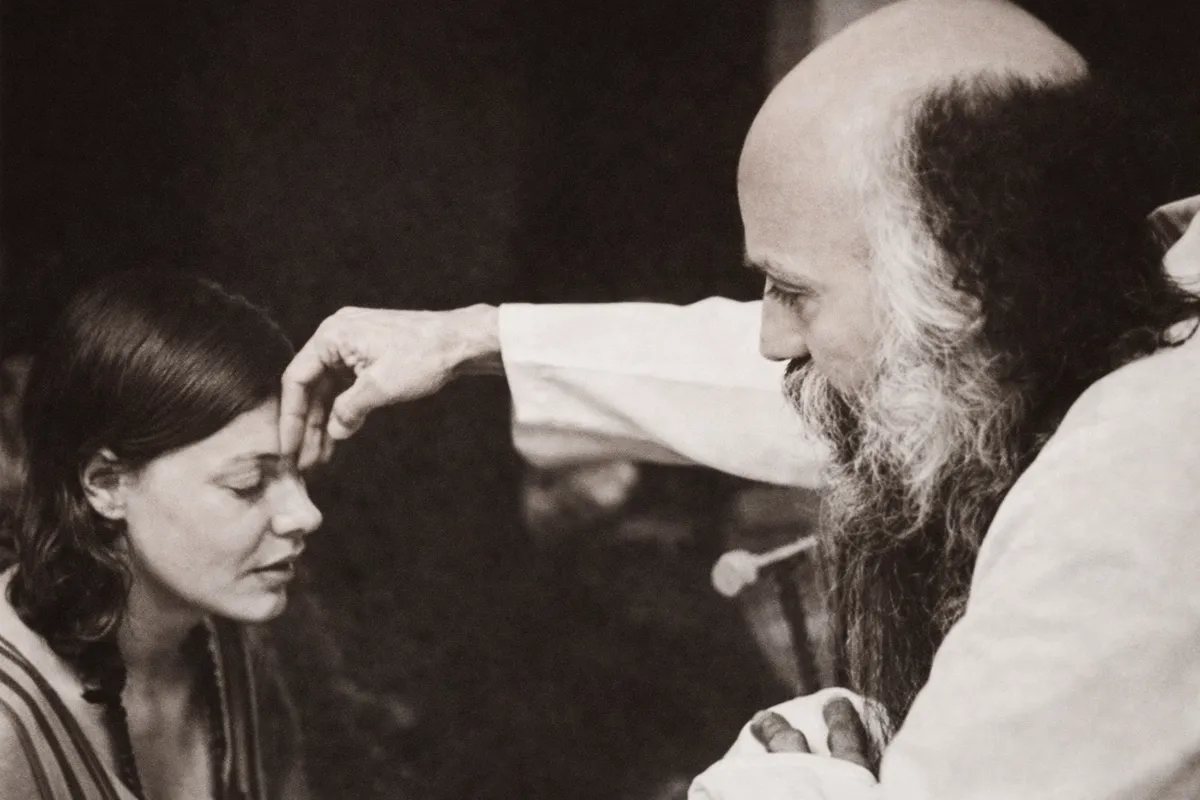
According to Osho, enlightenment is realizing there is nothing to attain or go toward; you are already that. It is the disappearance of hope and desire, the dropping of past and future, and a sudden, choiceless awareness in the present. When thought ceases even for a moment, the truth flashes—ordinary life continues, but without a seeker or footprints.
Enlightenment means stopping the chase and simply being here now, seeing you were already home.
From the Discourses
Passages where Osho speaks to this question — each links to the complete discourse.
What is enlightenment?
Enlightenment is finding that there is nothing to find. Enlightenment is to come to know that there is nowhere to go. Enlightenment is the understanding that this is all, that this is perfect, that this is it. Enlightenment is not an achievement, it is an understanding that there is nothing to achieve, nowhere to go. You are already there -- you have never been away, you cannot be away from there. God has never been missed. Maybe you have forgotten, that's all. Maybe you have fallen asleep, that's all. Maybe you have got lost in many, many dreams, that's all -- but you are there. God is your very being. So the first thing is: don't think about enlightenment as a goal, it is not. It is not a goal, it is not something that you can desire. And if you desire it you will not get it. In desiring…
Beloved Osho, what is enlightenment? Have the experience and the idea of enlightenment evolved with time?
So nirvana is just like darkness. The light is put off and your reality is all there, with all its beauty, benediction, blessing. But there is no word in English to translate nirvana. Jainas use the word moksha. Moksha means absolute freedom, ultimate freedom, freedom from all fetters. And the biggest fetter is the ego. Other fetters are just parts of the ego: greed, lust, ambition, anger. All that is thought to be sin in other religions, in Jainism is thought only to be a fetter. But the root, the main root of the whole tree of your slavery, is the ego. So cut the main root and all other roots will die of their own accord. Don't bother to cut small roots, branches, leaves, because they will come again. Cut the main root and the whole tree will die. And when all your fetters fall, what remains? The unfettered…
Since coming to you, living a meditative life has become an easier and more natural phenomenon. However, I have practically given up all hope for enlightenment are these tendencies contradictory?
Not at all. To attain to enlightenment that is a must -- that you should lose all hope and desire for it. Otherwise the desire for enlightenment becomes a nightmare in itself. And the more you desire it, the further away you are from it -- greater the desire, greater will be the distance. Drop all desiring for it, all hoping for it. If you have really become desireless about enlightenment, any moment it is possible to happen. Give space; don't be filled with the desire for it. The greatest barrier to enlightenment is the longing for it, because a mind that longs and desires is always tense. It has a subtle anxiety around it; it is never at ease. How can you be at ease if you have to go somewhere, reach somewhere? You may be sitting, but you are on the move. Visibly you may be resting, but…
Question: BELOVED OSHO, HOW DO YOU EXPERIENCE YOUR ENLIGHTENMENT? But in this whole changing, riverlike being... who are you? Only the stupid will speak out; the wise will remain silent. One who knows not will say, "I am this; I am a man, I am a woman, I am young, I am Hindu, I am a Christian..." Only the stupid will speak out. The wise will become absolutely silent. He is also answering -- his silence is the answer. Buddha calls this silence "right remembrance"... sammasati. You are saying, "I go on remembering all kinds of things you have said, and my own insights..." Agyeya, I had no idea that you also have insights! But... okay. Remembering all kinds of things that I have said, and what you have imagined as your intuitions... just try to find a single intuition that is yours, and you will be surprised.
Osho, what is the most significant thing about enlightenment?
People want definite answers to believe in: this way or that. Either be a Catholic or be a communist, but be clear. People want clarity because they are so confused, and this man brings all these seven categories; now their confusion is worse, they are even more confounded. First you were at least aware that you were confused. Now you will not be aware to which category you belong: yes, no, yes -- no both, neither yes nor no, or indescribable. Mahavira could not create a world religion for the simple reason that perhaps he had the deepest penetration into reality. If you ask about his enlightenment, he will answer in seven sentences. You will not be able to come to any conclusion -- and I feel this is something tremendously valuable. Why this urge to come to a conclusion? If existence is a continuum, an ongoing process -- never…