
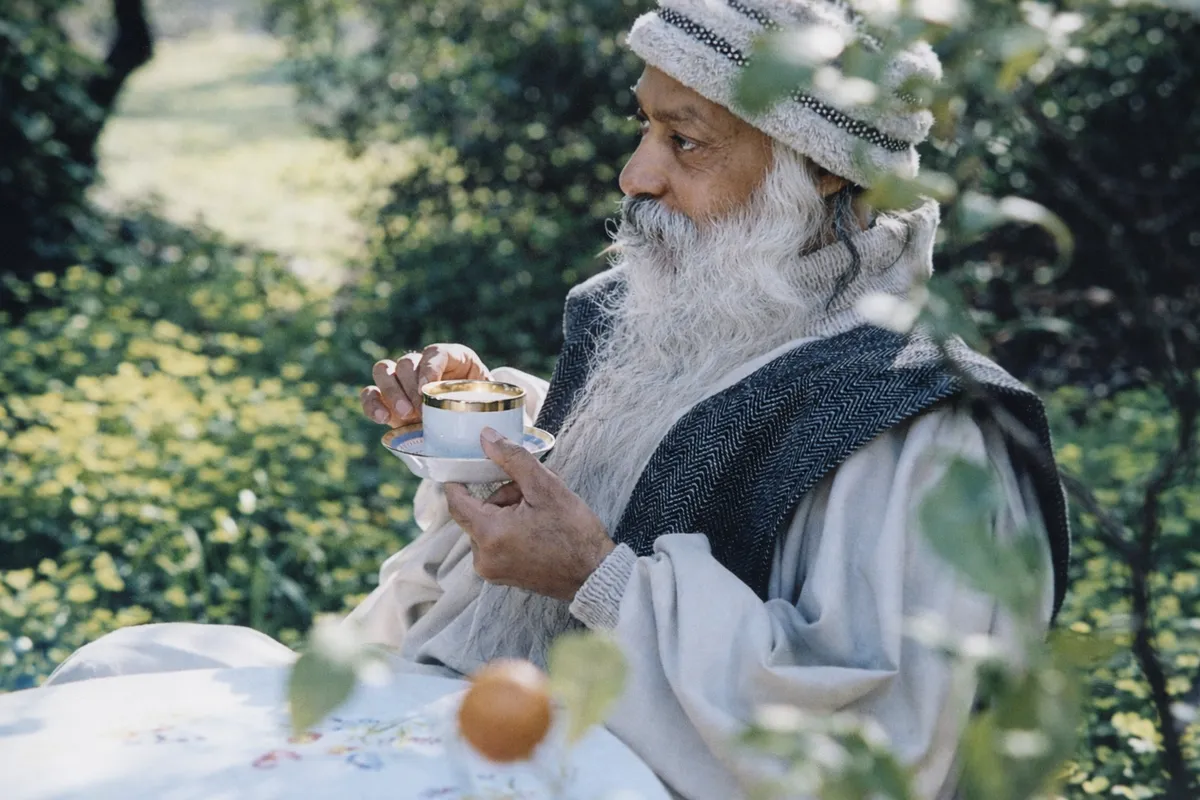
If you sit grumpy and stiff, you can’t really hear; if you relax and smile, the message can enter your heart.
From the Discourses
Passages where Osho speaks to this question — each links to the complete discourse.
Osho, Krishnamurti keeps telling his listeners, “Listen seriously; it is a serious matter!” But you do not say this to your sannyasins: “Listen seriously; it is a serious matter!”
What does “listen” mean? It means: don’t keep inserting your opinion in between; put yourself aside a little. Listen straight. Listening does not mean “agree with me.” Listening only means: keep deciding for or against for later; for now, just listen—listen exactly to what is being said. You hear only what you want to hear. You hear only what suits you. You hear only up to the point that serves your purpose. You cut and prune as you listen. You allow in only as much as will not be capable of changing you. You allow in only as much as will strengthen your oldness—make you more entrenched, harden and empower your ego. You will go away a little more knowledgeable. I don’t say this to you. I don’t say it precisely because, after forty years of saying it, whom has Krishnamurti managed to make listen! I simply say what I…
तीसरा प्रश्न: ओशो, कृष्णमूर्ति बार-बार अपने श्रोताओं से कहते हैं: ‘सुनो गंभीरतापूर्वक; यह गंभीर बात है! लिसन सीरियसली; इट इज़ ए सीरियस मैटर।’ पर आप अपने संन्यासियों से ऐसा नहीं कहते: ‘सुनो गंभीरतापूर्वक; यह गंभीर बात है!’
‘सुनो’ का क्या अर्थ होता है? ‘सुनो’ का अर्थ होता है: अपनी मत बीच-बीच में डालो, जरा अपने को हटाकर रख दो। सीधा-सीधा सुन लो! सुनने का यह अर्थ नहीं होता है कि मेरी मान लो। सुनने का इतना ही अर्थ होता है: मानने न मानने की फिक्र पीछे कर लेना; अभी सुन तो लो; जो कहा जा रहा है, उसे ठीक-ठीक सुन तो लो। तुम वही सुनते हो जो तुम सुनना चाहते हो। तुम वही सुनते हो जो तुम्हारे मतलब का है। वहीं तक सुनते हो जहां तक तुम्हारे मतलब का है। तुम बड़ी काट-पीट करके सुनते हो। तुम उतना ही भीतर जाने देते हो जितना तुम्हें बदलने में समर्थ न होगा। तुम उतना ही भीतर जाने देते हो जितना तुम्हारे पुरानेपन को और मजबूत करेगा; तुम्हें और प्रगाढ़ कर जाएगा; तुम्हारे अहंकार को और कठोर, मजबूत, शक्तिशाली बना जाएगा। तुम थोड़े और ज्ञानी हो कर चले जाओगे। मैं तुमसे यह नहीं कहता। नहीं कहता इसीलिए कि कृष्णमूर्ति चालीस साल कहकर भी किसको सुना पाये! मुझे तो जो कहना है, तुमसे कहे चला जाता हूं। …
Once in a while, my mind looks at your close disciples, like the tall english guy with the sad face. One hears his sad voice as he reads the sutra. The guy never smiles, never lets go. Do people become very serious if they are so near you?
I am not serious, and a certain balance is needed. Teertha balances me. He has to be serious on purpose. When the Master is not serious, disciples have to be serious. You can ask Narendra, one of our sannyasins. His father is a beautiful man -- a little crazy. For thirty, forty years he has been crazy. Small children will watch him -- his own children will watch him -- because he can steal. He can take things from the money box and disappear. Hmm? the father. So small kids, they will just sit there in the shop and watch. When the father can steal, then the children have to watch. Otherwise ordinarily it happens the other way: the father watches, and the kids steal. This is how it is happening here. The Master is nonserious: the kids have to be serious. It certainly balances. Teertha is not serious; he…
How should one approach you, how should one sit, what rhythm should the breath have, and should the eyes be open or closed? Sometimes it seems that an obstacle arises in receiving the invisible waves coming from you, and those waves remain outside. How can one make oneself capable of receiving them? Kindly instruct us in this regard. Samadhi has asked. The question is important; it concerns everyone.
If you get into this calculation, you will have wasted your time. This is satsang—there is no debate going on here; discussion is only on the surface. Some people are here to hear the discussion; fine, they will hear it and go. They have collected rubbish; they carry away the trivial. Others are here for satsang. For them it does not matter whether what I say is right or wrong—they are simply listening. If you can listen so thoughtlessly, so impartially, without becoming a judge, suddenly you will find: what is true appears as true; what is not true appears as not true. It becomes so clear in that luminous state, in that bright state of mind where you are not thinking—where there is no smoke of thought—that truth is seen directly as truth. You do not have to think whether it is true or not. How will you think,…
पहला प्रश्न: कोई व्यक्ति आपके पास किस तरह आए, किस तरह बैठे, सांस की गति कैसी रखे, आंखें खुली रखे या बंद? कभी लगता है कि आपकी ओर से आने वाली अदृश्य तरंगों को ग्रहण करने में कोई बाधा आ जाती है और वे तरंगें बाहर ही रह जाती हैं। उन्हें ग्रहण करने के योग्य कोई स्वयं को कैसे बनाए? कृपापूर्वक इस संबंध में हमें उपदेश दें। पूछा है समाधि ने। प्रश्न महत्वपूर्ण है। सभी के काम का है।
… यह सत्संग है, यहां कोई चर्चा ही नहीं चल रही है--चर्चा तो ऊपर-ऊपर है। कुछ लोग हैं जो चर्चा सुनने आए हैं। ठीक है, वे चर्चा सुनकर चले जाएंगे। उन्होंने कचरा बटोरा। वे व्यर्थ को सम्हालकर ले गए। कुछ और हैं जो सत्संग को आए हैं। उन्हें इससे कुछ लेना-देना नहीं है कि मैं जो कह रहा हूं वह ठीक है कि गलत है, सुन रहे हैं। अगर तुम इतने निर्विचार से सुन सको, निष्पक्ष होकर सुन सको, निर्णायक न बनो, तो अचानक तुम पाओगे, जो सच है वह दिखायी पड़ता है कि सच है। जो सच नहीं है, वह दिखायी पड़ता है कि सच नहीं है। यह इतना स्पष्ट हो जाता है उस उजली दशा में, मन की उस उजियारी दशा में, जहां तुम विचार नहीं कर रहे, विचार का धुआं नहीं है, वहां यह बात इतनी साफ हो जाती है--सत्य सीधा दिखायी पड़ जाता है कि सत्य है, तुम्हें सोचना नहीं पड़ता कि है सत्य या नहीं। …
Osho, when you are giving a discourse, if I gaze at your face the words are not heard; and if I listen to the words, a kind of restlessness is felt. Why is this so?
Words are not of much value. Even if the words are not heard, it is all right; even if they are heard, there is no real gain. If you look toward me, it becomes meditation. If the meditation becomes right, if the wire is connected, the words will stop being heard—because to hear words, a restless mind is needed, an agitated, unquiet mind. In that moment—when the connection is made—the soundless will begin to be heard; that is the real satsang. It is not of much value that you hear what I say. If you can hear what I am, only then does it have value. Speaking is just a pretext; words are only devices. The arrival is into the soundless; the awakening is in silence. If this is happening, then drop all concern for words; just keep looking at me. Let the flame be joined. Forget that I am…
पहला प्रश्न: ओशो, जब आप प्रवचन कर रहे होते हैं, उस समय यदि आपका मुख निरखता हूं, तो शब्द सुनाई नहीं देते, और शब्द सुनता हूं तो बेचैनी सी मालूम होती है। ऐसा क्यों?
शब्द का मूल्य भी कोई ज्यादा नहीं है। शब्द न भी सुनाई पड़े, तो चलेगा, शब्द सुनाई भी पड़ जाए तो कोई लाभ नहीं है। मेरी तरफ देखोगे तो ध्यान बन जाएगा। अगर ध्यान ठीक बन गया, अगर तार जुड़ गया, तो शब्द सुनाई पड़ने बंद हो जाएंगे। क्योंकि शब्द सुनने के लिए भी एक बेचैन मन चाहिए। उद्विग्न मन चाहिए, अशांत मन चाहिए। उस घड़ी में, तार-बंधी घड़ी में निःशब्द सुनाई पड़ने लगेगा; वही असली सत्संग है। मैं क्या कहता हूं वह सुनाई पड़े, इसका बहुत मूल्य नहीं है। मैं क्या हूं वही सुनाई पड़ जाए, तो ही कोई मूल्य है। बोलना तो बहाना है, शब्द तो उपाय हैं, पहुंचना तो निःशब्द पर है। जागना तो मौन में है। अगर ऐसा होता हो तो शब्द की बिलकुल फिकर ही छोड़ दो; फिर मेरी तरफ देखते रहो। बंध जाने दो लौ को। भूल ही जाओ कि मैं बोल रहा हूं। कोई जरूरत नहीं है याद रखने की। शब्द को इकट्ठा करके भी कुछ पा न सकोगे। निःशब्द में जो सुन लोगे, निःशब्द को सुन लोगे, तो सब पा लिया। मौन में ही जुड़ सकते हो मुझ से। बोलने से तो टूट पैदा होती है। …
Osho, you constantly tell your sannyasins to keep laughing. But in the locket of the mala you give at initiation, your picture shows a serious expression. Why this seriousness?
Ashtavakra says: to know that state, one needs the same state. Christians say Jesus never laughed. That is false. Yet the Christians are also right, because on the plane on which they can understand laughter, Jesus never laughed. On the plane on which I understand laughter, I know Jesus was bubbling with laughter—he was laughing even on the cross. Have you seen a laughing statue of Buddha? Impossible. Have you heard Mahavira’s titter? Impossible. If you make a laughing statue of Mahavira, the Jains will sue you and drag you into court, saying you have disfigured our Mahavira’s face. Mahavira—and laughing? It cannot be! In one sense they are right too: a Mahavira like you would never laugh. Your laughter bears the imprint of tears. Mahavira’s laughter is very silent, serene—serene like Mahavira himself, without any disturbance. Perhaps there is no giggling in it—there cannot be. It rises from emptiness;…
आखिरी प्रश्न: ओशो, आप निरंतर अपने संन्यासियों को हंसते रहने का उपदेश करते हैं। लेकिन आप दीक्षा में जो माला उन्हें देते हैं, उसके लाकेट में लगा आपका तो चित्र गंभीर मुद्रा लिए है। यह गंभीरता क्यों?
अष्टावक्र कहते हैं: उस अवस्था को जानने के लिए वैसी ही अवस्था चाहिए। ईसाई कहते हैं: जीसस कभी हंसे नहीं। यह बात झूठी है। मगर ईसाई भी ठीक ही कहते हैं, क्योंकि जिस तल पर वे हंसी को समझ सकते हैं, उस तल पर ईसा कभी नहीं हंसे। जिस तल पर मैं हंसी को समझता हूं, मैं जानता हूं ईसा खिलखिलाते रहे, सूली पर भी हंस रहे थे। तुमने बुद्ध की हंसती हुई मूर्ति देखी? असंभव। तुमने महावीर की खिलखिलाहट सुनी? असंभव। अगर महावीर की हंसती हुई मूर्ति बना दो, जैनी तुम पर मुकदमा चला देंगे, अदालत में घसीटेंगे कि इन्होंने हमारे महावीर का चेहरा बिगाड़ दिया। महावीर, और हंसते हुए? यह हो ही नहीं सकता! एक बात ठीक भी है, तुम्हारे जैसे महावीर कभी हंसे भी नहीं। तुम्हारी हंसी में तो रोने की छाप है! महावीर की हंसी बड़ी मौन है, शांत है--महावीर जैसी शांत है, निर्विकार है। शायद हंसी में खिलखिलाहट नहीं है। खिलखिलाहट हो भी नहीं सकती। शून्य से उठती है, शून्य का स्वाद लिए है। लेकिन हंसी निश्चित है। …