
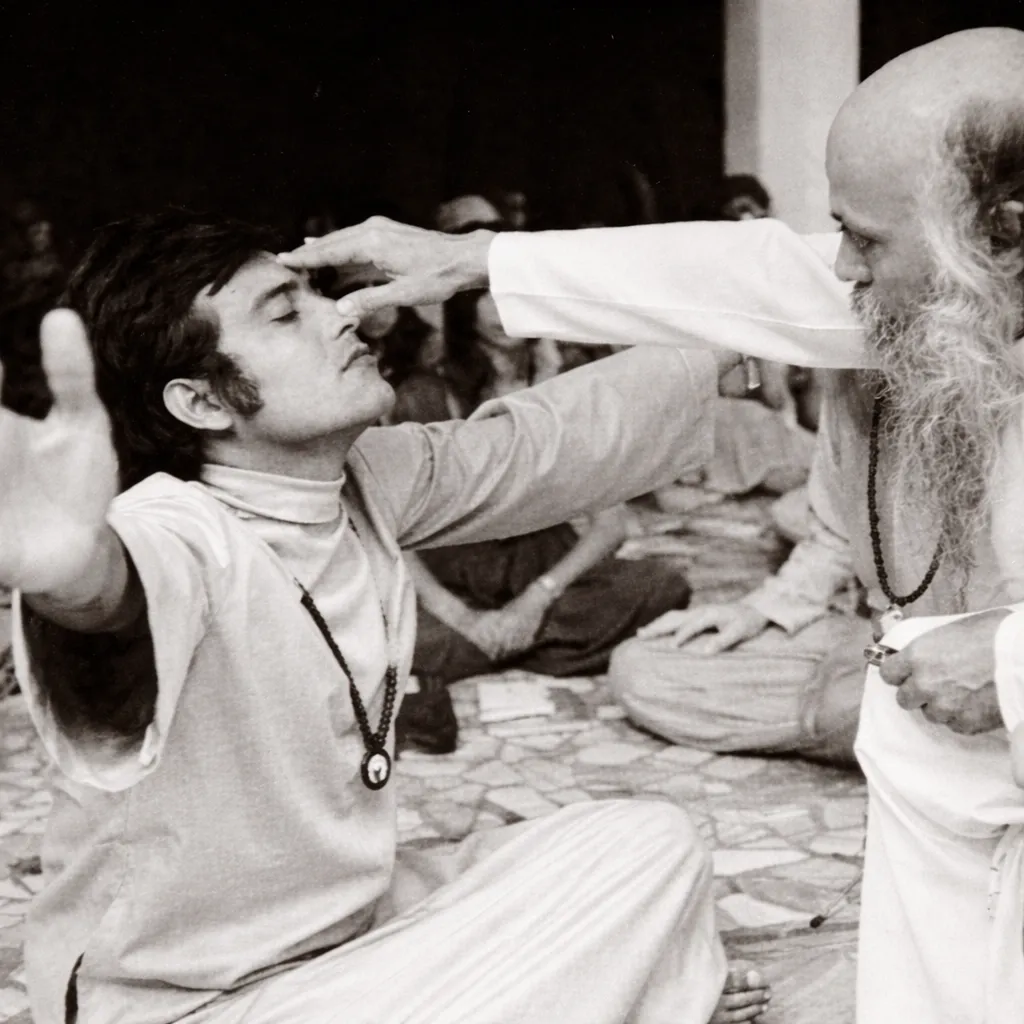
People who don’t really know can sound very sure and smooth, but they mostly mislead other unknowing people, while the truly wise speak carefully because truth is bigger than words.
From the Discourses
Passages where Osho speaks to this question — each links to the complete discourse.
How is it that people who are not enlightened can talk with such apparent inside knowledge and so convincingly about the whole business?
Precisely because of that. Not knowing, they don't hesitate; not knowing, they have nothing to say really, so they can go on spinning; not knowing, they can use language more perfectly. If you know, language is always a barrier; rather than a help it is a hindrance. When you know, you have to be constantly aware because whatsoever you are saying is not that which you know -- there is great distance between the two. Sometimes that which you say goes directly opposite to that which you know. A blind man can talk very easily about light, there is no problem. He has no experience to put into words. Words are empty, so he can go on throwing them out. Of course, he can talk only to another blind man -- no man with eyes will be deceived. People who are not enlightened can go on talking to people who…
Question: BELOVED OSHO, WHAT IS THE LANGUAGE OF ENLIGHTENMENT? "And even if somebody understands me, he is not going to take a single step, because every step is dangerous; it is walking on a razor's edge. I am not against speaking, just I cannot see that there is any use, and I have found every argument against it." The gods looked at each other. What Gautam Buddha was saying was right. They went aside to discuss what to do now. "We cannot say that what he is saying is wrong, but still we would like him to speak. Some way has to be found to convince him." They discussed for a long time and finally they came to a conclusion. They came back to Gautam Buddha and they said, "We have found just one single, small argument.
Well asked: “Whenever someone enters the vast, expression is bound to happen.”
There is no mention of Jesus anywhere except in the Bible. The Bible is written by his own disciples; therefore it is not “reliable,” people say. Thousands doubt whether Jesus ever existed at all! Whether Krishna ever was—people doubt it. Such vast beings—and history leaves no imprint of them? Because you write history; when no imprint is made upon you, how will any imprint appear on what you write! Your writing carries the imprints of Genghis Khan, of Tamerlane, of politicians, agitators, killers, bandits. No one doubts whether Genghis Khan or Tamerlane existed—there are millions of proofs. Krishna? Christ? There seem to be no proofs; believe if you will, if you won’t, no one can compel you. What could be the reason? How does history remain so untouched? Because you write history. Your heart itself remains untouched. When no mark is left upon you, how will any mark be left…
Beloved Osho, the rishi of the upanishad fears he may speak some untruth, and so he prays, "may my speech be rooted in my mind." does that mean that when he comes down to earth to speak, he comes out of his enlightened consciousness to do so, back into the ordinary mind again? If he is permanently in divine consciousness, how can nontruth come in?
These are the four ways: either I can say God is light or darkness, or I can say God is both, or I can say God is not both, but the problem remains. And these are the only ways to express. That's why Mahavira has developed saptabhangi -- sevenfold logic. You ask one question and Mahavira will answer seven answers. And if you can stay with him to listen to his seven answers, you will be more confused than when you came to him. If you ask about God, he will say God is; immediately he will say God is not; immediately he will say God is both, is and is not; immediately he will say God is both not, is and is not -- and he goes on. Sevenfold will be his answer, because he says, "I cannot be untrue. This is the whole truth." But you remain the…
Question: BELOVED OSHO, ENLIGHTENMENT: THE KEY SOME TAKE SITTING WORDLESSLY WITH EYES SHUT BENEATH THE BLACK MOUNTAIN, INSIDE THE GHOST CAVE, AND CONSIDER IT AS THE SCENE ON THE OTHER SIDE OF THE PRIMORDIAL BUDDHA, THE SCENE BEFORE THEIR PARENTS WERE BORN -- THEY ALSO CALL IT "SILENT YET EVER ILLUMINATING," AND CONSIDER IT CH'AN. THIS LOT DON'T SEEK SUBTLE WONDROUS ENLIGHTENMENT: THEY CONSIDER ENLIGHTENMENT AS FALLING INTO THE SECONDARY. THEY THINK THAT ENLIGHTENMENT DECEIVES PEOPLE, THAT ENLIGHTENMENT IS A FABRICATION. SINCE THEY'VE NEVER AWAKENED THEMSELVES, THEY DON'T BELIEVE ANYONE HAS AWAKENED. THERE'S A KIND ACTING AS TEACHERS SPREADING FALSE TALK WHO TELL STUDENTS, "JUST PRESERVE STILLNESS." ASKED, "WHAT THING IS THIS, PRESERVING? WHO IS THE STILL ONE?" THEY SAY, "THE STILL ONE IS THE BASIS.