
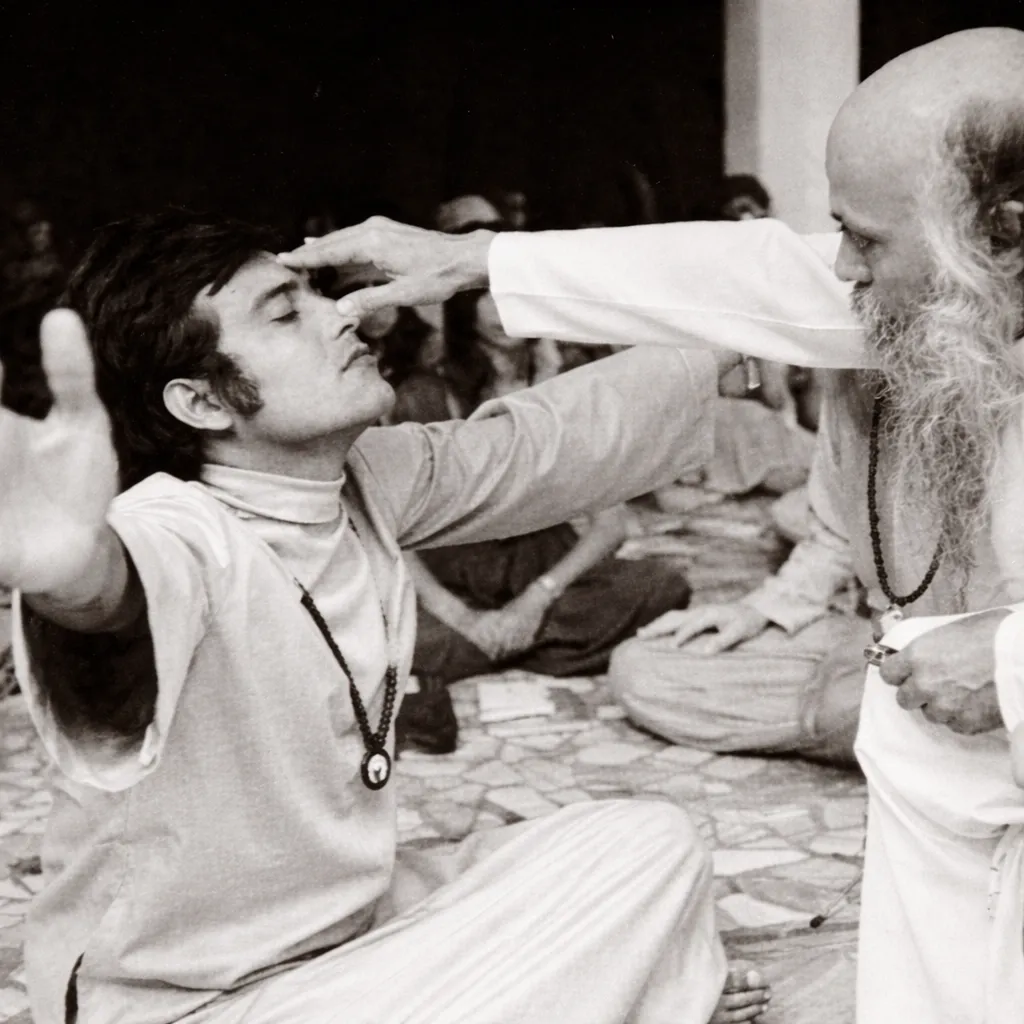
If you think calmly and clearly, you move ahead; if you just worry, you get stuck.
From the Discourses
Passages where Osho speaks to this question — each links to the complete discourse.
Can a thoughtful person make any progress?
Only a thoughtful person makes progress. How will a worried person progress? A thoughtful person progresses greatly. So in the outer world, whatever progress there is, it all happens through thought. And in the inner world...
It has been asked: It has been asked, Osho, you tell us to think—yet what will come from thinking alone? As I keep thinking, I get drowned in thoughts themselves, and my conduct does not change. My conduct remains exactly the same. So please tell me, how is conduct to be changed?
Commonly it is said, “What value is there in thought? The real value is in conduct.” This is utterly false and futile. It is false and futile because conduct, deep down, is nothing but the expression of thought. Where there is no seed of thought, there can be no plant of conduct. Yes, it is possible to throw a false conduct over oneself from the outside. But false conduct has no value whatsoever, except that it deceives others and destroys one’s own life. The question asked is: “What will happen by thought alone?” This is why I ask, and why the question arises—if I were to pray to you, I would say: as yet no thought has been born in you. You are taking others’ thoughts to be your own. Hence the problem of trying to bring thought and conduct into harmony. If the thought were truly yours, it would…
Osho, I too have begun to feel that it is not valuable.
If you decide to do social service—uplift the “Harijan,” redistribute land, do this and that—and you think self-realization will result, you are mistaken. Self-realization will not come from that. You may become a good and popular person; you will taste a subtle pleasure of ego—and nothing more. You will enjoy the pleasure of being “a servant,” but you will not taste the joy of service. The pleasure of the role of “servant” is one thing; the joy of service is entirely another. But if you enter religious practice, which is utterly personal, then a day will come when that sadhana will transform your life into service. Now life is self-interest; then life will be service. In self-ignorance, life is self-centered; whatever you do, some form of self-interest is present. In self-knowledge, life is service; whatever you do, self-interest cannot remain. For me, religion is fundamental; its result will surely come.…
Osho, should I practice meditation or devotion? I’ve been thinking about this for years. And since I can’t decide anything, even if I want to begin, how should I begin?
That is why, in my Buddhafield, meditation is happening and devotion is happening. Lovers are dancing in ecstasy, and meditators are sitting in silence. Both are flowing together. This has never happened before. Those who gathered around Buddha meditated; those who gathered around Meera were devoted. For the first time on this earth, Sufi ecstasy and Sufi dance are here, the joy of the devotees is overflowing, and alongside that, Vipassana, zazen, and deep, deep meditative processes are also here. I am giving you both opportunities. You are the master—taste both. Then the decision will happen by itself. But you are sitting outside. You neither meditate nor sing bhajans; you sit afar as a spectator, pondering: “What should I do? What should I not do?” Could it be that there is a great laziness in the mind, a great inertia? Two lazy men were lying under a tree—Satyapriya sent me…
Osho, when I listen to you, every word sinks to the depths of my heart and stirs me. But when I read you, it remains a mental game. Please tell me why this happens.
It’s plain. The arithmetic is simple. When you read, only you are there; I am not. What you read is nothing but you. It becomes a game of the mind. When you listen to me, then sometimes—knowingly or unknowingly—I also slip into you. You seldom give such a chance, but now and then a lapse happens on your side. Unaware, you leave the door a little open—and I come in. So when you are hearing me, it’s a different matter. That is why truth has always been spoken, not written. It cannot be written. Even speaking it is very difficult, yet it can still be said—at least a little can be said, a little news can be given. Because in speaking, many elements are involved that are lost in writing. When you read a book, the book is dead. A book cannot create an atmosphere around you. A book has…