
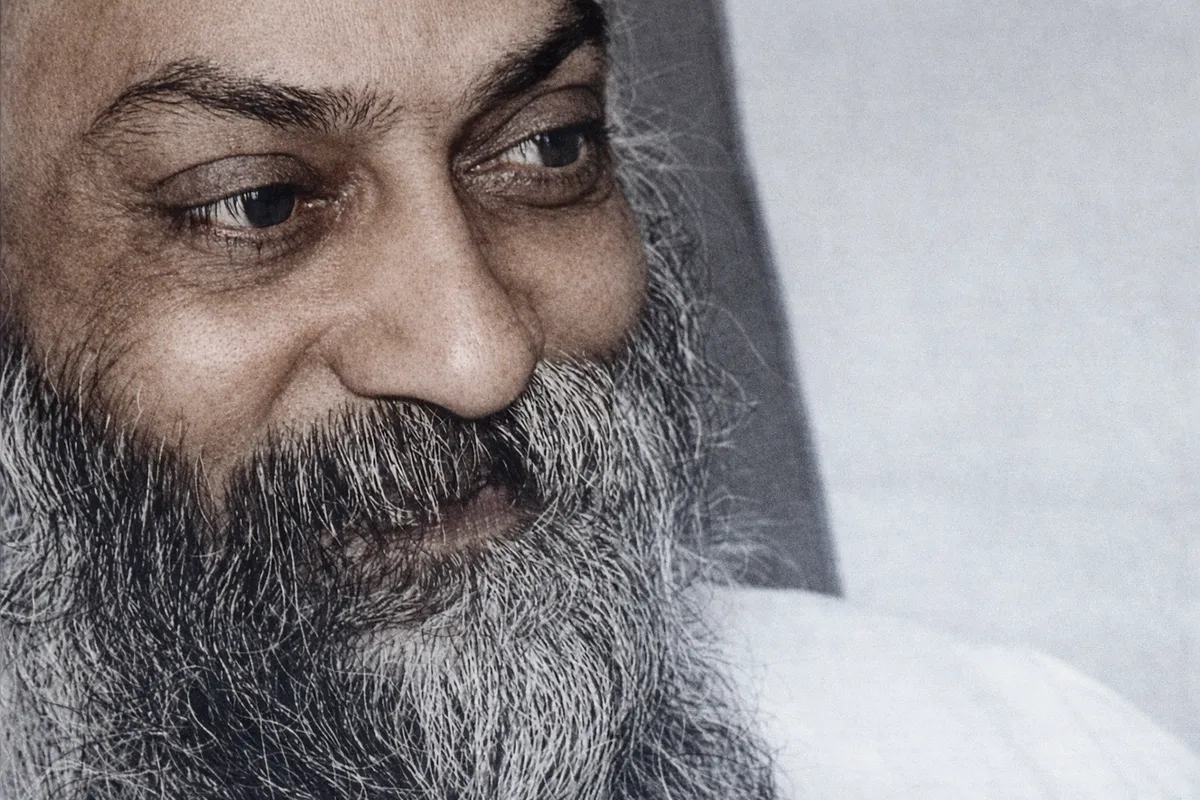
If the pot stays truly empty, its walls drop away and the little space inside becomes one with the whole sky.
From the Discourses
Passages where Osho speaks to this question — each links to the complete discourse.
The same friend has asked: Osho, if the pot becomes void, then the pot itself will disappear, won’t it?
The current of our births is a series. Buddha, for the first time, gave the world the sense of a living, flowing soul—dynamic, river-like, a stream. On the day the pot breaks, the very same soul that desired liberation will not be the one that is liberated. Some current of consciousness within that series will be liberated. The series is one. Not a unit, but a flow. And now even scientists, in the material realm, are nearing this truth. They say: it is no longer right to say “atom”; say “event.” Now, to say “particle” is wrong—say event. And no longer say “object”—say process, flow, quantum! Lao Tzu says: become the void. The moment the event of becoming void happens, the pot becomes useless. Even so, the pot may live for a while longer, because the pot has its own laws. You bring a pot into the house to fill…
उन्हीं मित्र ने पूछा है कि ओशो, घड़ा शून्य होगा, तो घड़ा भी मिट जाएगा न!
हमारे जन्म की धारा श्रृंखला है। बुद्ध ने पहली दफा इस जगत को जीवंत, प्रवाहमान आत्मा का भाव दिया--डायनैमिक, रिवर-लाइक, सरित-प्रवाह जैसी। जिस दिन भी घड़ा टूटेगा, उस दिन वही आत्मा मुक्त नहीं होगी, जिसने मुक्ति चाही थी। उसी श्रृंखला में कोई चेतना की धारा मुक्त होगी। श्रृंखला एक है। इकाई नहीं है, प्रवाह है। और अब जब कि वैज्ञानिक पदार्थ के जगत में भी इस सत्य के करीब पहुंच रहे हैं। क्योंकि वे कहते हैं, अब एटम कहना ठीक नहीं, ईवेंट कहना ठीक है। अब! अब यह कहना कि अणु है, गलत है। घटना, अणु नहीं। और अब यह कहना कि वस्तु है, ठीक नहीं है--वस्तु-प्रवाह, बहाव, क्वांटम! लाओत्से कहता है, शून्य हो जाओ। तो जैसे ही शून्य होने की घटना घटेगी, वैसे ही घड़ा व्यर्थ हो जाएगा। फिर भी घड़ा थोड़े दिन जी सकता है, क्योंकि घड़े के अपने नियम हैं। आप एक घर में घड़ा ले आए, भरने लाए थे, लेकिन घर लाते-लाते आप बदल गए और अब आप नहीं भरना चाहते। तो आपके नहीं भरने भर से घड़ा नहीं फूट जाएगा। घड़े का अपना अस्तित्व है। …
The same friend has asked: "if the vessel becomes empty, will it not be destroyed?"
Now here the point to understand is, what Lao Tzu means by the vessel and what you mean. There is a difference here of language. We look upon the wall of clay that forms the vessel as the vessel. So when we buy a water-pot from the market, we pay for that clay which the potter has made. That is what the water-pot means to us. Now Lao Tzu means by the vessel, that emptiness within which is surrounded by the wall of clay. The wall of clay only forms the boundary of that emptiness which Lao Tzu calls the vessel. And this boundary has to be made use of in order to fill the vessel. If it has to be kept empty only, these walls are not required. Now think -- why do we have to create this boundary? Why does the potter make a circular wall of clay?…
Osho, I am becoming empty; what should I do now?
Well, now nothing can be done! You’re a little late. Had you spoken a little earlier, something might have been done. Once you begin to become empty, nothing needs to be done—nor can anything be done. Because emptiness is the door to the Whole. Only when you are empty can the Divine enter you. You are filled with yourself—that is the obstacle. But emptiness feels frightening. Your question is meaningful, apt. Whenever emptiness approaches, the life-breath trembles; fear surrounds you. Emptiness seems like death—more than death. The wise have called it the great death, because in ordinary death only the body dies; in emptiness, you die. In emptiness, the very sense of “I” melts; no “I-ness” remains. You ask, “I am becoming empty; what should I do?” There is nothing to do. Let emptiness come; welcome it; honor it; hang festoons at the door; celebrate. For emptiness alone is good…
A Jain has asked: “You say that the ultimate state is emptiness. Then what will we do after attaining such emptiness? Better to keep this life—at least we experience pleasure and pain!”
What Mahavira said, you have not heard as he said it; otherwise these bad days, this misery, this poverty would not have befallen. Those who throw this blame and raise such disputes—the fact they point to is there; but it points toward you, not toward Mahavira. If only you had understood Mahavira, such blessedness would have flowered in this land, such a constellation of glorious blossoms gathered here as nowhere else could be. Had you understood Mahavira, the boundless within you would have manifested; a halo of light would surround you. Even if nothing were in your hands outwardly, you would be rich. And now the situation is such that even if you have everything, your poverty does not leave you. If you have not seen the poverty of the rich, you have seen nothing. If you have not seen the powerlessness of the powerful, you have seen nothing. If…
एक जैन ने प्रश्न पूछा है कि ‘आप कहते हैं कि वह परम अवस्था तो शून्य की है, तो ऐसे शून्य को पाकर क्या करेंगे? इससे तो यही जीवन ठीक है। कम से कम सुख-दुख का अनुभव तो होता है!’
महावीर ने जो कहा, उसको तुमने वैसा ही नहीं सुना है जैसा उन्होंने कहा था। अन्यथा ये दुर्दिन, यह दुर्दशा, यह दारिद्य्र, यह दीनता न घटती। इसलिए जो लोग ऐसा लांछन लगाते हैं, ऐसा विवाद खड़ा करते हैं, उनके विवाद में तथ्य तो है; लेकिन तथ्य का इशारा तुम्हारी तरफ है, उन्हीं की तरफ है। तथ्य का इशारा महावीर की तरफ नहीं है। काश! तुम महावीर को समझते तो इस देश में जैसा धन्यभाग फलता, इस देश में जैसे महिमावान फूलों का जमघट जुड़ जाता, वैसा कहीं भी नहीं हो पाता। अगर महावीर को समझे होते तो तुम्हारे भीतर जो अपरिसीम है, वह प्रकट होता। तुम्हारे चारों तरफ प्रकाश-मंडल निर्मित होता। न भी कुछ तुम्हारे पास होता तो भी तुम समृद्ध होते। …
But if the vision is of perfection, equality is impossible. Impossible. Then the journey will be different for each, and when it will be completed cannot be said. Time will be needed. And any dharma that requires time to be attained is, by nature, weak before time. If a dharma demands the condition that it will take such and such time, that dharma is no longer unconditional. It has a condition: time. If rightly understood, such a dharma becomes a product of time. And whatever is produced by time is not timeless. Whatever is born within time, dies within time. Take note: whatever takes birth in time, dies in time. If one end of a thing lies in time, the other end cannot lie outside time. But emptiness can happen instantaneously — here and now. Even to say instantaneous is wrong. In truth, emptiness occurs outside of the moment.
लेकिन पूर्णता की अगर दृष्टि हो, तो समानता असंभव है। असंभव है। और फिर यात्रा अलग-अलग होगी। और कब पूरी होगी, नहीं कहा जा सकता। समय की जरूरत पड़ेगी। और जिस धर्म को पाने में समय की जरूरत पड़े, वह धर्म समय से कमजोर होता है, स्वभावतः। जिस धर्म को पाने के लिए शर्त हो यह कि इतना समय लगेगा, वह धर्म बेशर्त न रहा, अनकंडीशनल न रहा। उस धर्म की शर्त हो गई कि इतना समय लगेगा। अगर ठीक से समझें, तो वह धर्म टाइम-प्रॉडक्ट हो गया, समय से उत्पन्न हुआ। और जो समय से उत्पन्न होता है, वह कालातीत नहीं होता। जिस चीज को समय के द्वारा पैदा किया जाता है, वह समय में ही नष्ट हो जाती है। ध्यान रखें, जो चीज समय के भीतर जन्मती है, वह समय के भीतर ही मर जाती है। जिसका एक छोर समय में है, उसका दूसरा छोर समय के बाहर नहीं हो सकता।