
Don’t worry about choosing a god; learn to truly bow with love, and you’ll find the divine everywhere.
From the Discourses
Passages where Osho speaks to this question — each links to the complete discourse.
Osho! Some ten thousand years ago the seers of the Vedas asked—“Kasmai devaya havisha vidhema?” Which god should we praise and worship? Is this question not still relevant today? Would you be kind enough to speak on it again?
People come to me and ask, “On whom should we meditate?” They start with a wrong question—“on whom!” They are asking, “On Ganesh or on Hanuman? Should we sit, close our eyes and visualize Hanuman?” Be careful: if you visualize Hanuman, you will become Hanuman. If you visualize Ganesh, you will become Ganesh. Whatever you visualize, that you will become—because you will be colored by it, merged into it. Be careful: stare too long at Ganesh and a trunk will sprout; stare too long at Hanuman and a tail will grow! “On whom to meditate?”—there is no “whom.” Meditation is the subjectless state of consciousness; there is no object in it—neither Ganesh nor Hanuman. Buddha said: If on your path you meet me, take up your sword and cut off my head. Which path is he talking about? The path of meditation. He says: If even I appear in your…
Osho, without seeing God, whom should I worship—how, and where? Please be compassionate and explain!
Jageshwar, When you have not seen God at all, why worship in the first place? Why does the question arise—whom should I worship, how, and where? That’s strange. It’s like a naked man asking, “If I take a bath, where shall I wring out my clothes? And even if I wring them, where shall I dry them?” When you have no sense of God yet, how will you worship now? No realization of God—and you want to go further! That’s Sheikh Chilli stuff, castles in the air. But often such foolishness passes for metaphysics. When you asked it, you probably thought you were asking a very profound, very religious question. You are asking something utterly pointless. It’s like the house isn’t even built, the foundation hasn’t been laid, and you are already worrying about the roof—should it be tiles or asbestos sheets? Worship will come later; first there must be…
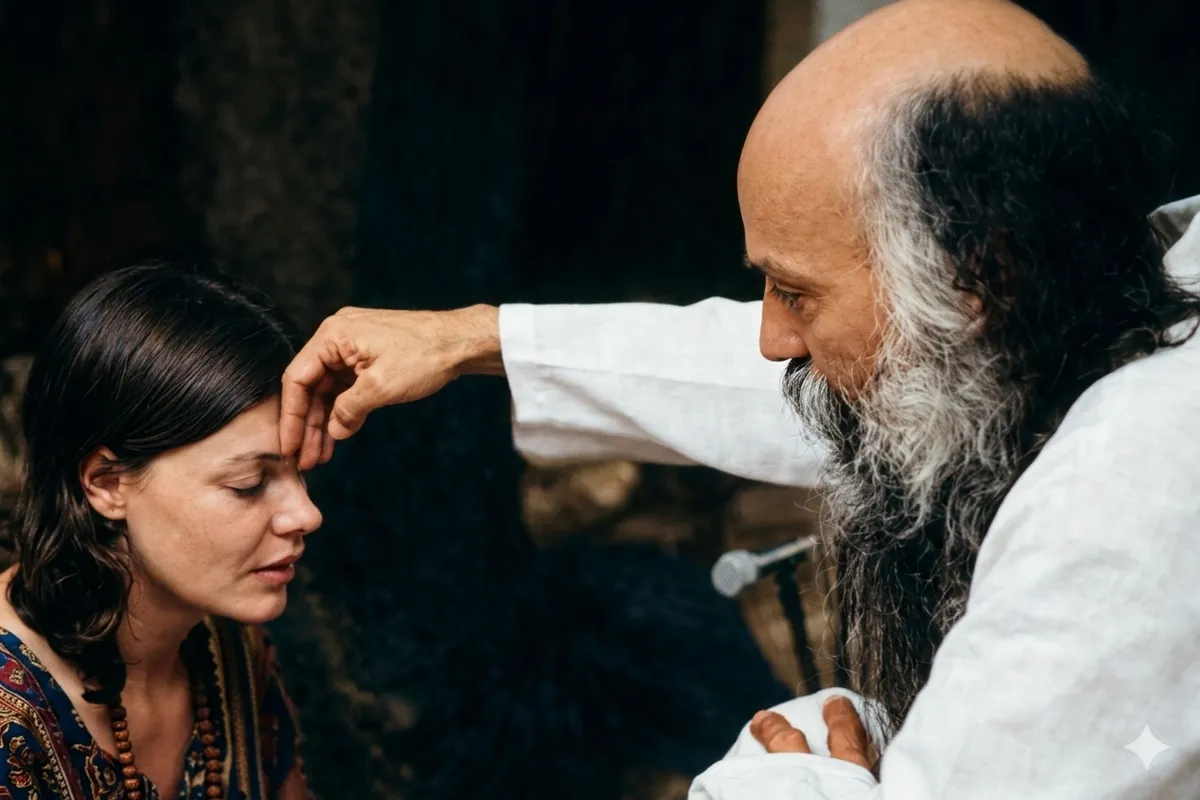
Worship means: whoever has bent the knees of ego even a little and bowed down; whoever has lowered his head even a little. Remember, the question is not before whom you bow, only that you bow. Bow in a mosque—fine; bow in a temple—perfectly fine; bow in a gurudwara—perfectly fine. Bow before a rock, bow before a tree, or bow before the empty sky—it does not matter. Bowing is the essence. Whether you “believe in God” or not does not matter. Mahavira bowed without believing—and attained. Buddha never accepted God—and became God. He learned the art of bowing. The real issue is not “attaining God,” the real issue is dissolving yourself. Worship means: whoever has dropped himself and said, “I am not.” There is no need to add, “You are.” Whoever has said, “I am not,” in that very moment knows, “Only You are.
Osho, what should I call you—Prabhu, Vibhu, or Shambhu? I ask this so that I may bow at your feet continuously. Only there do I wish to bow for all three times. Now please hear my prayer!
So absorbed in worship that one forgets even to raise the hands. You don’t remember to bow—you are bowed. So immersed in devotion! “Now, for prayer, my hands no longer rise; the heart seems lost in surrender and consent.” The temperament is so drowned in worship, in prayer: who remembers when to raise hands, when to offer flowers, when to mark the forehead? Bowed is bowed. Bowing is not an outer affair. It is inner—an inward mood. You ask to bow for three times. You will be in trouble, and you’ll put me in trouble too. If you must bow, bow—just spare me! “Because I may bow at your feet continuously.” What is the fear? Why make it “continuous”? Is this moment not enough? Settle this moment within itself. The next moment will care for itself. Why keep accounts of tomorrow? Surely your today is poor. Talk of tomorrow arises…
Osho, there are two parts to my personality: one lies down on the ground every day and offers you full prostrations and feels happy doing so; and the other, almost every day, blurts out, “How do you know that this is God!” Are both of these parts of my ego, and is reverence born only in egolessness?
Where does the mistake happen? If you get entangled in whether this person is God or not—whether this stone image is truly God’s image or not. If you obsess over this, gradually you will find that you have let go of faith’s hand and grasped doubt’s. Doubt is within you, and faith is within you; you hold the hand of faith—yet you have firmly taken doubt’s hand and are walking with it. And remember, do not hold faith’s hand so tightly that it becomes a prison. Do not tie knots, do not take binding vows. Do not turn it into a bondage that cannot be shaken off. This too is to be left—sooner or later it must be left. And if you keep this in mind—that sooner or later this too will go—then when doubt itself has gone, what will you do with faith? Faith was a medicine for the…