
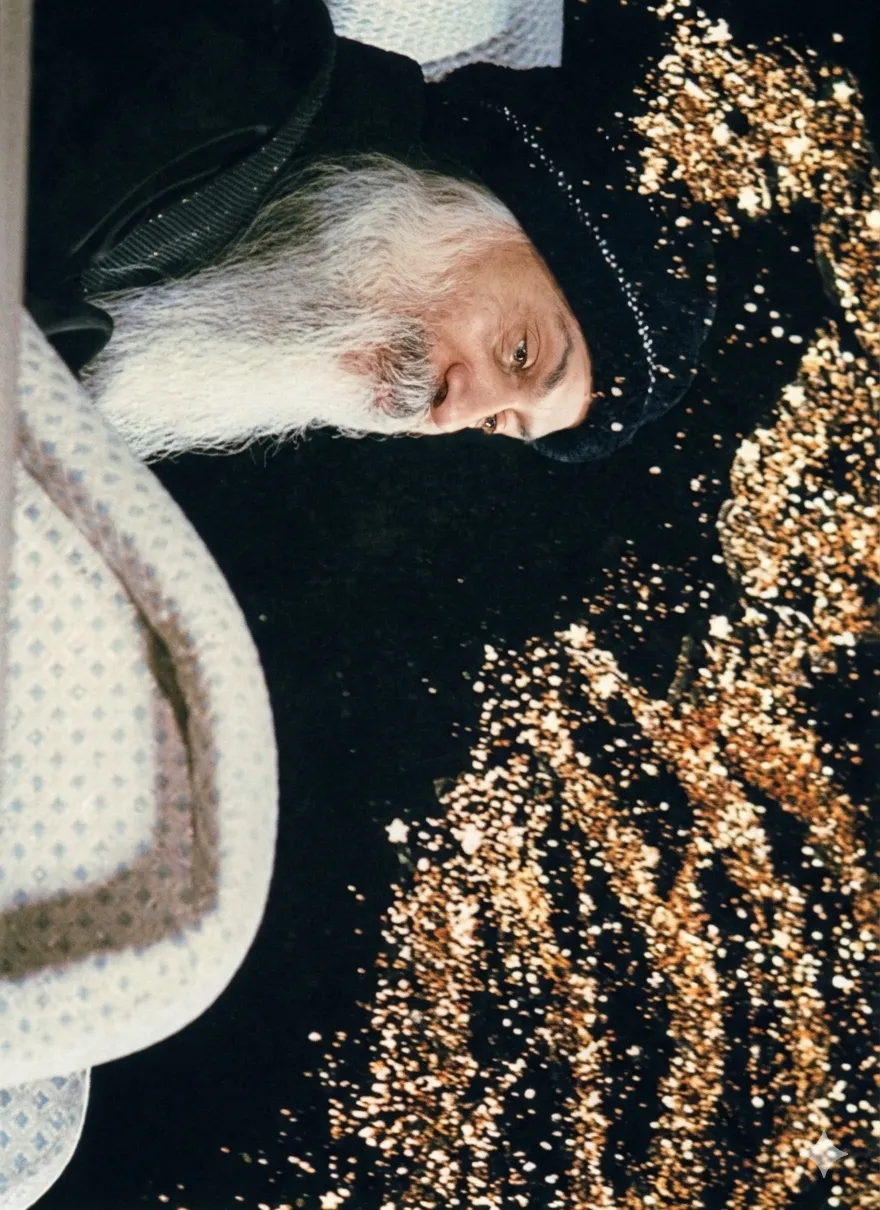
According to Osho, the mind’s craving for fictions, hopes, and future promises is not natural but programmed, manufactured by culture, advertising, priests, and ideology. Nature knows only the present. When conditioning stops, the compulsion for imagined needs dissolves, and awareness enjoys the here-now. Only meditation reveals what is real beyond implanted beliefs.
Wanting make-believe things and distant hopes isn’t natural; it’s taught to you, and when you just be here now, the craving fades.
From the Discourses
Passages where Osho speaks to this question — each links to the complete discourse.
Osho: It is not possible because mind likes enjoyment, that is right. Why does it like enjoyment? -- to forget itself. It likes enjoyment to be occupied, to be engaged, to forget oneself. A mind which is constantly trying to forget oneself is a mind which is constantly seeking some type of hypnosis, some type of unconsciousness. A mind which dreams or which is engaged in puja, in ceremony, in bhajan, in prayer, is a mind which is constantly escaping from oneself. and the mind which is escaping from oneself cannot know oneself; because to know oneself one has to cut this constant escapement. A thing may be beautiful; you may project beauty on it -- but you are projecting it. There is nothing like beauty or ugliness; that division is made by our own projections. There is nothing beautiful, there is nothing ugly. Things are, they exist in themselves.
It has been said that no desire, neither worldly nor religious, can lead towards freedom. But a positive imagination of happiness and bliss is also a sort of desire. Then isn't it true that imagination is also desire and hence creates tensions?
That is the meaning of the Indian concept of LEELA. God is playing; he is not engaged in work. This world is not utilitarian, it is just a play of energy. Energy enjoys itself playing; it divides itself and then plays the game of hide and seek. So, really, Indian seers have never said that God is the creator, they say that God is the player -- because the very word `creation' carries much seriousness about it, as if there is some end and something has to be achieved. God creating the world? This is absurd. Because it means that something is lacking, so God is creating the world to achieve something. Or it means that there is a future, so God also lives in desire. Jains and Buddhists could not understand the Hindu concept of LEELA, so they completely denied God. Because if God creates the world, then he…
Osho, can one not desire nothing but happiness in life?
What I am saying is: man is unhappy, therefore he wants to find happiness. And since he keeps seeking happiness but never sees that happiness and sorrow are two sides of the same coin, however much happiness he seeks he will remain unhappy—and keep seeking happiness. What I am saying is that fundamentally he fails to see that what he seeks is not happiness; a basic mistake is occurring. The mistake is that he is rejecting sorrow and seeking happiness, whereas happiness is a part of sorrow. That is, I am seeking birth and do not want to die; I am seeking youth and do not want to grow old. This is a great difficulty. If I want youth, old age is part of it; it is simply youth on the decline. When the flood has come, it must recede; when morning has happened, evening will be. Now I seek…
Thirty-six streams are rushing toward you! Desire and pleasure and lust.... Play in your imagination with them and they will sweep you away.
POWERFUL STREAMS! THEY FLOW EVERYWHERE. STRONG WINE! IF YOU SEE IT SPRING UP, TAKE CARE! PULL IT OUT BY THE ROOTS. PLEASURES FLOW EVERYWHERE. YOU FLOAT UPON THEM AND ARE CARRIED FROM LIFE TO LIFE. LIKE A HUNTED HARE YOU RUN, THE PURSUER OF DESIRE PURSUED, HARRIED FROM LIFE TO LIFE. O SEEKER! GIVE UP DESIRE. SHAKE OFF YOUR CHAINS. YOU HAVE COME OUT OF THE HOLLOW INTO THE CLEARING. THE CLEARING IS EMPTY. WHY DO YOU RUSH BACK INTO THE HOLLOW? DESIRE IS A HOLLOW AND PEOPLE SAY, "LOOK! HE WAS FREE. BUT NOW HE GIVES UP HIS FREEDOM." Gurdjieff used to say to his disciples that the most important thing is to remember in a dream that "This is a dream." But how to do it? It seems almost impossible. How to remember in a dream that "This is a dream"? But if you practice the Gurdjieffian method,…
In moods of extreme desire, be undisturbed.
THIS SO-CALLED UNIVERSE APPEARS AS A JUGGLING, A PICTURE SHOW. TO BE HAPPY, LOOK UPON IT SO. OH BELOVED, PUT ATTENTION NEITHER ON PLEASURE NOR ON PAIN, BUT BETWEEN THESE. OBJECTS AND DESIRES EXIST IN ME AS IN OTHERS. SO ACCEPTING, LET THEM BE TRANSFORMED. We have double standards -- one standard for one oneself and another standard for everyone else. This double-standard mind is going to be in deep misery always. This mind is not just, and unless your mind is just you cannot have a glimpse of the truth. Only a just mind can leave this double standard. Jesus says, "Don't do to others what you would not like done to you." This means a similar standard is needed. This technique is based on the idea of a single standard: "OBJECTS AND DESIRES EXIST IN ME AS IN OTHERS...." You are not exceptional, although everyone thinks he is…