
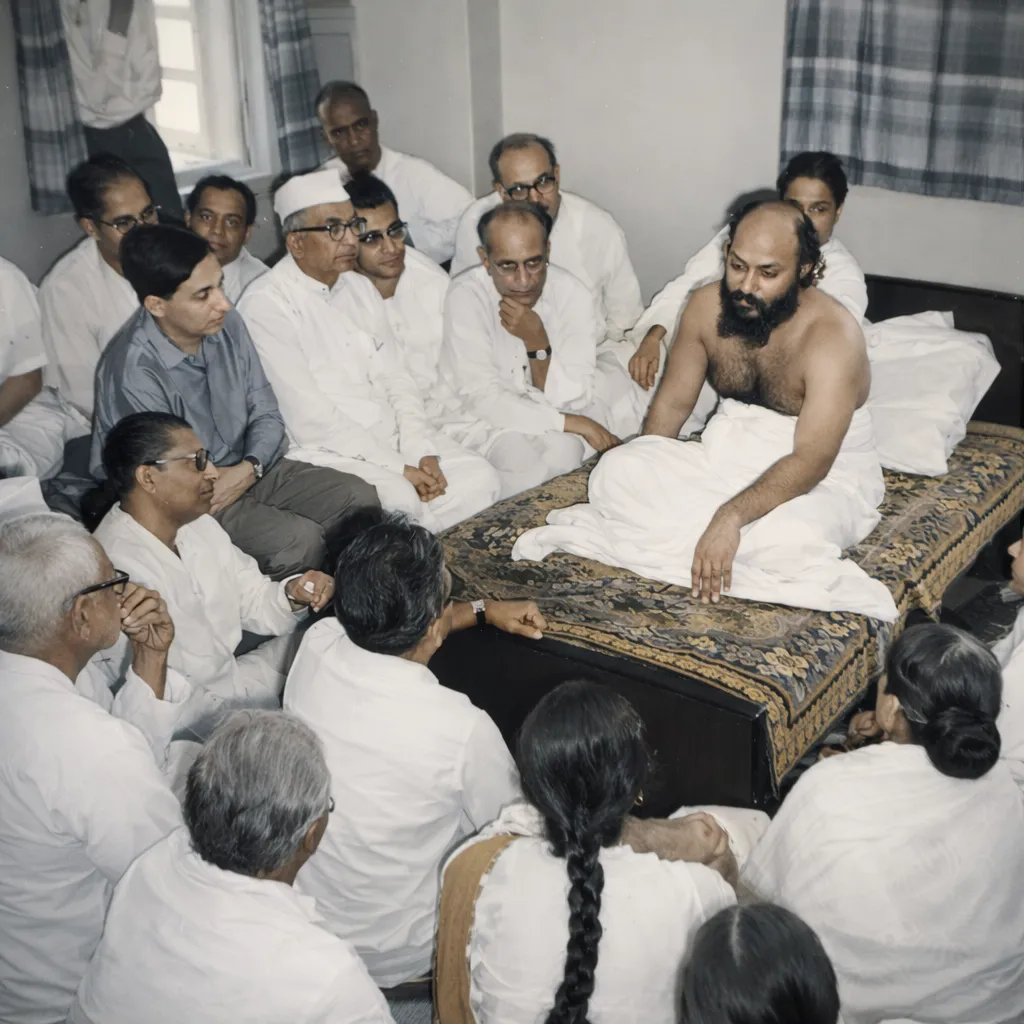
According to Osho, religion and truth are not beyond the ordinary person; they are available only to one who becomes truly ordinary—egoless, unambitious, non-doing. The urge to be extraordinary is the sole barrier; both achievement and renunciation used to feel special keep you from it. Drop the need to be exceptional, relax into simplicity, and truth reveals itself.
Truth comes when you stop trying to be special and just be simple and humble.
From the Discourses
Passages where Osho speaks to this question — each links to the complete discourse.
They are not different things but different aspects of the same phenomenon. One has to be utterly truthful about oneself. One need not hide, only cowards hide. The courageous person remains as he is, naked. He is ready to accept whatsoever the consequences, but he is not ready to compromise his truth. This is the only way to become an individual, this is the only way to have integrity. The world teaches people to be pseudo, to be compromising. The world makes people deceptive, false. All your so-called morality, character, respectability, is nothing but an effort to create a facade so you can hide your reality, you can hide and you can go on showing a false face to the world. Whatsoever is expected from you, you can show it to the world.
A friend has asked, Osho, why should we be religious when neither the beginning nor the end is known, and there is no trace of God or soul? The enlightened ones speak of truth—if that truth is real, why can’t they make everyone experience it?
No one is telling you to be religious—at least Lao Tzu would not. The so-called religious people have created so much disturbance that it is better you do not become one of them. Lao Tzu does not say, “Be religious.” He simply says: be what you are. You may ask, why should I be what I am? Because that is the only thing you can be. There is no way to be anything else. Yes, you can try to be something else—and in that trying your life can be wasted. You may then say, why not waste life? No one can stop you. And precisely for this reason even the enlightened ones are defeated and cannot give you the knowledge of truth—because you say, why should we know the truth? What can the enlightened do? They can speak. They can try to awaken in you the thirst for the joy…
truth cannot be achieved by human efforts because all human efforts are bound to originate in the mind and mind is the barrier between truth and consciousness the mind has to be put aside that's what man is capable of doing not using the mind, putting the mind aside by-passing the mind, transcending the mind and the moment the mind is not functioning consciousness immediately becomes connected with the truth the barrier is no more there hence the bridge happens and that is the greatest blessing in existence when truth showers on you only with the experience of truth life becomes meaningful, significant a celebration a man without truth is a beggar a man without truth is not yet really alive he is simply living in a kind of dream he is not awakened not awakened to the tremendous beauty of existence to the immense ecstasy of life not aware…
Osho, what is truth? Is it possible to attain it partially? And if not, what can one do to attain it? Because not every person can be a saint. This is the question.
First of all, becoming a saint is a possibility for every human being. That someone does not turn a possibility into actuality is another matter. It is another matter that a seed may not become a tree, but every seed is inwardly destined to be a tree. That is, every seed has this possibility, this potentiality, to become a tree. If it does not, that is quite another matter. If it does not get manure and soil, and water and light, the seed may die—this can happen—but the seed certainly had the possibility. Sainthood is the possibility of every human being. So first, remove from your mind the notion that saintliness is a special privilege of a few. Saintliness is not the right of a select few. And those who have popularized this notion have done so only to nourish their ego. The ego is gratified by declaring that sainthood…
First of all I want to mention one thing. If you really wish to reach some level in religion or in religious life, you must begin by not taking any belief or idea for granted. If you wish to know the truth do not hold on to any preconceived notions about it. You must approach truth in perfect calm and emptiness, and without any dogmas. Preconceived notions and biases dim and distort your vision. What you know then is not the truth but a projection of your own thinking. That way, truth does not descend in you. On the contrary, you impose yourself on truth. Hold no theory or particular view about truth. Use your own judgment. Only then will you know what is true. Otherwise you won't be able to get out of the web of the mind. What you know won't be knowledge, it will be imagination.