
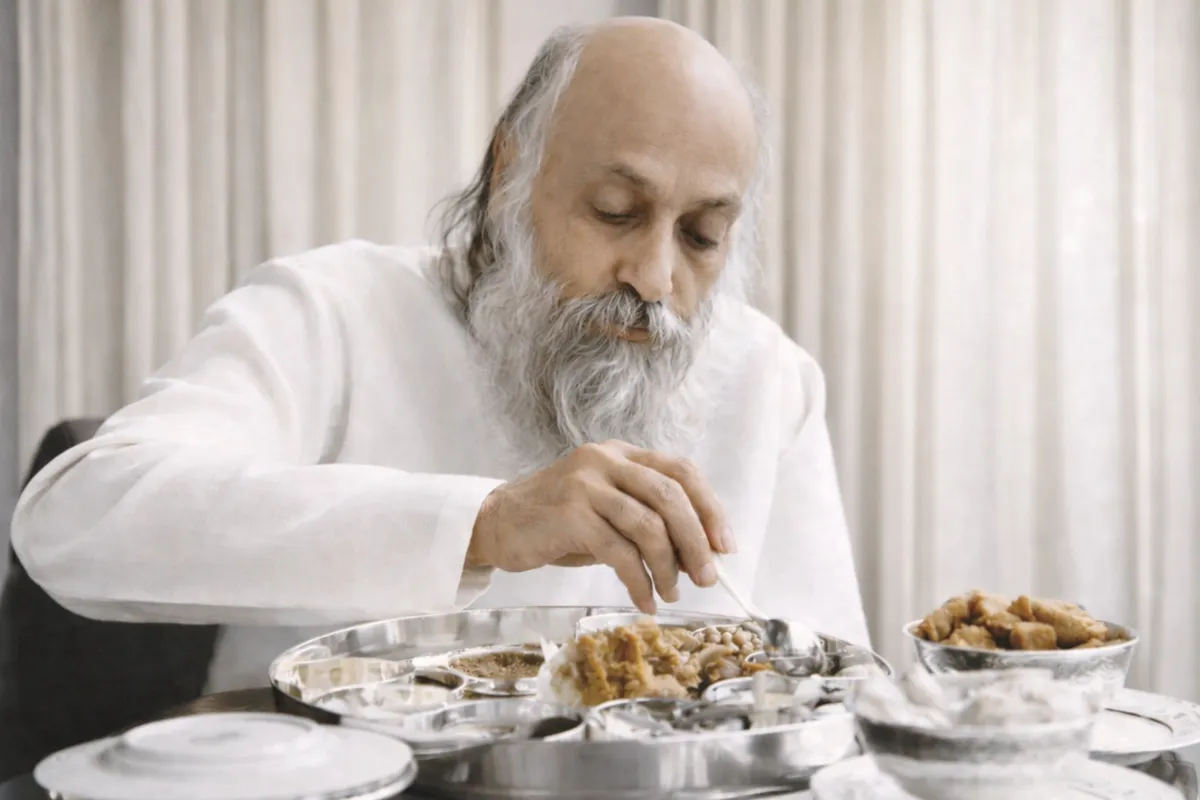
According to Osho, meditation itself is simple and timeless; what takes long is the vehicle you use. Ancient 'bullock-cart' techniques made it seem hard, but with scientific understanding and wholehearted intensity, the shift can happen in minutes—or an instant. The destination doesn't demand time; only your method and total engagement do. Update methods, increase intensity, and it becomes immediate.
Meditation isn’t hard; slow, old methods are—use a better way and give it your whole heart, and it can happen fast.
From the Discourses
Passages where Osho speaks to this question — each links to the complete discourse.
A friend has asked: Osho, monks, renunciates, yogis have attained meditation by sitting in caves for years. And you say that meditation is possible even in forty minutes. Is meditation really that simple?
After the three stages, the last ten minutes are only waiting. We can do nothing more. A man can only leave himself open for the divine. Can we drag “Him” in? How? Can we grasp “Him” in our fist? At most we can send an invitation and wait. The sun rises outside the door; we can leave our door open and say, “Come in”—we cannot bring the sun in. If the door is open, the sun comes. Note a strange fact. We cannot bring the sun in—but we can keep it out. Close the door. Not only that; we carry a small pair of doors in our pocket—our eyelids. The door may be open, but if we close our eyes, what can the sun do? Close these tiny shutters and the sun is helpless. Negativity we have in abundance. Negatively, we can block the divine; positively, we cannot compel it.…
Osho, what happened in a split second—the “I” is gone, the mind is gone! My veil says, listen, O breeze, the monsoon has come this time, beloved. Again and again, thank you, Osho!
Hansa, in this world everything else takes time to happen, but meditation is timeless. It doesn’t even take a moment. The gap between two moments—that is the realm of meditation. When meditation happens, it happens in such a way that not even a moment is needed. Meditation is not a process in time. Meditation has no steps. Meditation is revolution, not evolution. And why is it so? Because the whole arrangement of the mind is fundamentally an arrangement of time. Mind means: past and future—with a tiny present squeezed in between. The mind lives in the past, in what has already happened; it keeps digging there, searching there, rummaging through memories. Or it lives in their reflections, the echoes projected into the future: what happened yesterday should happen again tomorrow—it was sweet, it was delightful; or what happened yesterday was very bitter—let it never happen again. The mind wants to…
In 1969 followers of the Maharishi Mahesh Yogi invited Osho to talk to them. This was the first occasion on which Osho addressed a western audience, and the first time he talked publicly at length in English. The discourse has been published in OTI January 1 & 16, 1991; and February 1, 1991. Osho: Really, there can be no method as far as meditation is concerned. Meditation is not a method. Through technique, through method, you cannot go beyond mind. When you leave all methods, all techniques, you transcend mind. So meditation itself is not a method. Truth cannot be achieved through method. Method is our own invention. We, who are ignorant, have achieved knowledge through methods constructed, created, projected, in our ignorance. Through method you can achieve a sort of self-hypnosis, a sort of auto-hypnosis. Any method, whatsoever it's name, can only give you an illusory kind of peace.
just being silent -- watching, waiting, seeing the more you become a seer, the less a thinker the closer you are to the truth, to the light the moment your seeing is absolute you have arrived home meditation is an inward journey on the outside there are challenges there are adventures but they are nothing compared to the inner challenges and inner adventures there are enemies on the outside but the inner enemies are far bigger only one thing is different, and that is that the inner enemies are our own creation so the moment we decide to destroy them in that very moment they can be destroyed they are our make-believe mind, ego, greed, anger, jealousy, possessiveness all these enemies are there but we have been feeding them, nourishing them we can chop off their heads in a single blow a whole army can be uprooted in a single…
Osho, what is meditation?
The monk said, "You are even more stupid than the first man. My cow? A Buddhist monk possesses nothing. And why should I look for somebody else's cow? I don't possess any cow." The man looked really embarrassed, what to do? The third man thought, "Now, the only possibility is what I have said." He said, "I can see that you are meditating." The monk said, "Nonsense! Meditation is not some activity. One does not meditate, one is meditation. To tell you the truth so that all you fellows don't get confused, I am simply doing nothing. Standing here, doing nothing -- is it objectionable?" They said, "No, it is not objectionable, it just does not make sense to us -- standing here, doing nothing." "But," he said, "this is what meditation is: Sitting and doing nothing -- not with your body, not with your mind. Once you start doing…