
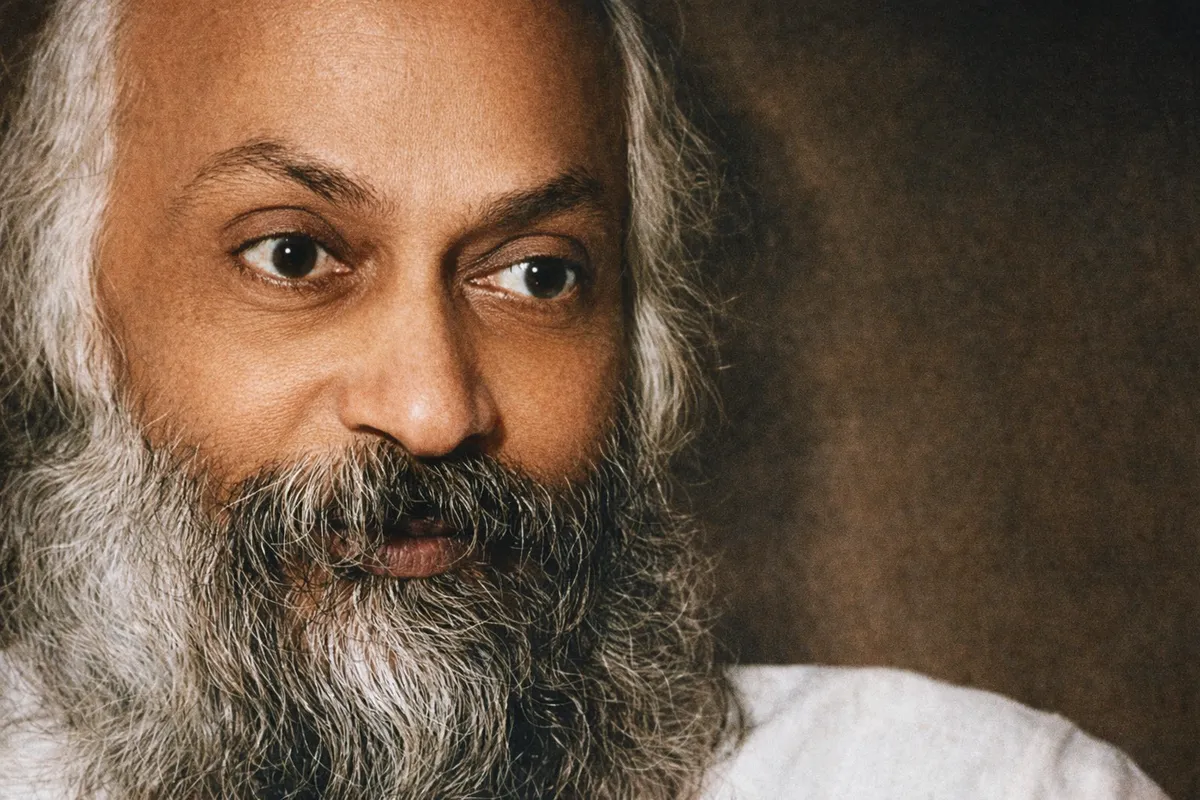
According to Osho, Mahavira’s ahimsa is not something that develops or evolves beyond him; it is the timeless flowering of the same inner realization—the oneness of life. When that unity is seen, nonviolence naturally appears, neither more nor less, just as a circle simply is or water becomes steam. Different people may approach it differently, but the essence is complete whenever realized.
Ahimsa isn’t upgraded over time; once you truly see all life as one, nonviolence simply happens and can’t be “more” or “less.”
From the Discourses
Passages where Osho speaks to this question — each links to the complete discourse.
Osho, is Mahavira’s ahimsa fully developed? Has there been no progressive evolution of ahimsa beyond Mahavira? In the Gita and the Bible there seem to be even subtler forms.
Ignorance has degrees; knowledge has none. Though we hand out “degrees in knowledge,” only ignorance admits of degrees. One person is less ignorant, another more ignorant—that is meaningful. But “less knowledgeable” and “more knowledgeable” is absurd. Knowledge does not come in quantities. Yes, ignorance can be more or less—and all we really mean by that is: the one with more information appears “less ignorant,” and the one with less information “more ignorant.” For knowledge itself cannot be more or less. Even among the ignorant, the difference is of information, not of knowing. One person returns from university with a heap of information; his brother, who remained in the village, did not gather such information. They meet: one seems knowing, the other ignorant. Both are ignorant. One carries a pile of facts; the other does not. At best we can say: this one is less ignorant, that one more. But this…
Mahavira is not calling for self-violence. Therefore Mahavira is not merely calling for the abandonment of violence. Someone asked Mahavira: What is ahimsa? Mahavira said: The Self is ahimsa. He gave a most wondrous answer. No deeper answer has ever been given on this earth. Strange, it may even seem discordant. We ask: What is ahimsa? Mahavira says: The Self is ahimsa! What does it mean? It means: the person established in his Atman—that person attains ahimsa. And the person who is not established in his Atman can only restrain violence; he cannot attain ahimsa. To drop violence is one thing; to attain ahimsa is entirely another. Ahimsa is deeply positive, deeply creative. And because it is creative, I said—it is love. So Mahavira’s sadhana is divided into two words: truth and ahimsa. If truth is to be attained, Mahavira says: Abandon all and enter within.
This is Ahimsa. Ahimsa means the deepest absence. That is why I said: Buddha’s spirit of tathata is the spirit of Mahavira’s Ahimsa. Tathata means: whatsoever is, is acceptable. Ahimsa also means this: we shall not make even the slightest effort to transform. Whatever happens is right; whatever will happen is right. If life remains—good; if death comes—good. From what does our violence arise? From this: that what is happening is not what we want; we want what we want—then violence arises. What is violence? Therefore the more the craving for change increases in an age, the more violent the age becomes. The more man wants ‘such to happen’, the more violence will increase. If we open the depth of Mahavira’s Ahimsa, it means: we are content with what is. There is no question of violence; no change is to be made. If you slap me—fine.
Had you gone to Mahavira, you would have known. As their eyes fell upon you, joy would surge within you. In their presence you would find yourself becoming fresh, new — a resurrection happening. You would return carrying the message of life. You would return dancing. Going you may have limped; returning, you would dance — the cripple climbs the mountain. From them you would return blessed with the glory of life, with benediction. Wherever you are condemned — there, violence is afoot. All condemnation is violent. By putting fingers into your sins and scratching your wounds, Ahimsa does not happen. By awakening the virtue sleeping within your sin, by uncovering the light hidden in your darkness, Ahimsa happens. By reminding you of your Paramatman within, Ahimsa happens.
Whoever is established in his own nature—whatever he does—ahimsa will flow through it. Ahimsa is not a change of doing but a transformation of being. When being is transformed and the shore changes, ahimsa blossoms effortlessly in life. Ahimsa is not a discipline to be cultivated. No one can practice ahimsa. Sadhana belongs to self-knowledge. Ahimsa comes by itself—like flowers appearing on plants. Ahimsa is a natural consequence, not a sadhana. The meaning of ahimsa as the supreme dharma is precisely this: when self-knowledge is attained, then at the final fruition, as the supreme flowering, ahimsa arrives. It is not to be brought; it comes. What is to be brought is self-establishment—one’s own state. The most widespread misconception about ahimsa is that we take it as a moral instrument, a moral practice. Ahimsa is not a moral practice.