
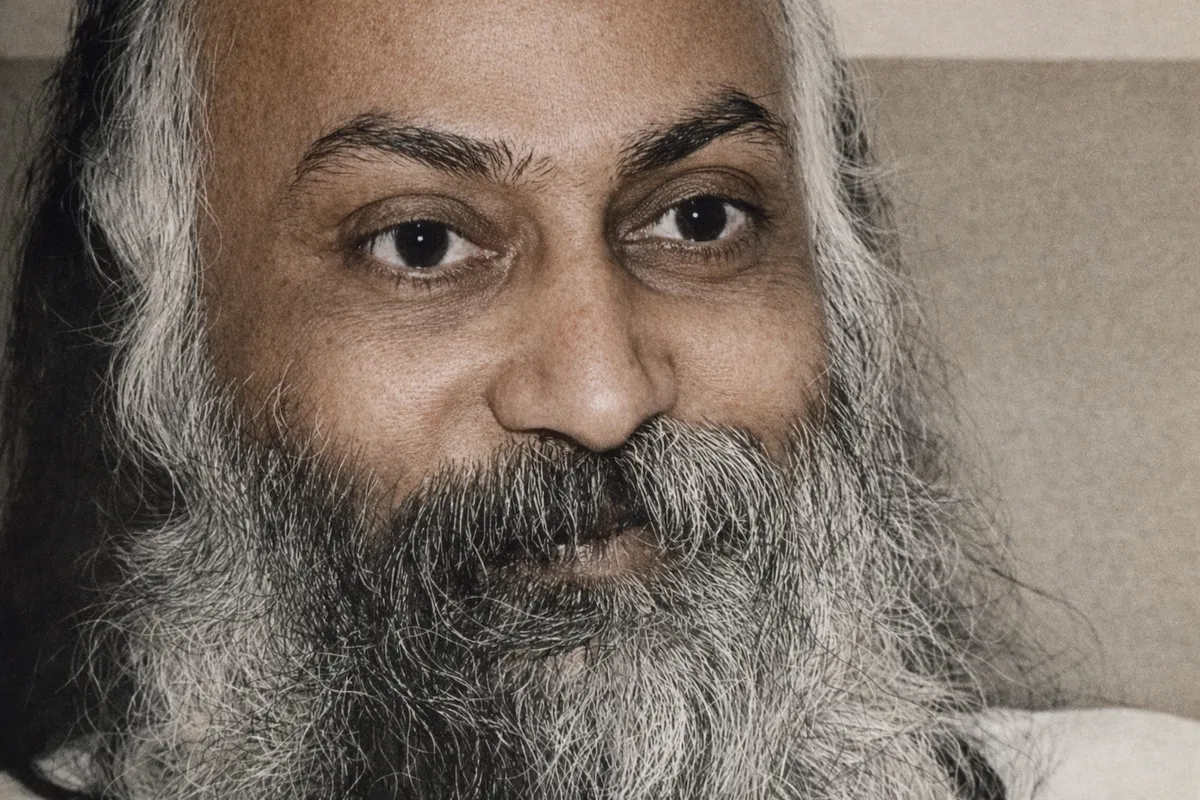
You're the quiet watcher, like the sky, while life and death are passing clouds.
From the Discourses
Passages where Osho speaks to this question — each links to the complete discourse.
Please explain. Is life an observer and death observed?
No, both are the observed -- life and death. Beyond both is the observer. You cannot call that observer 'life' because life contains death in it. You cannot call that observer 'death' because death presupposes life. That observer is just transcendence. That which you are is neither life nor death. You pass through life, you pass through death, but you are neither. You are just a witness to it all. You pass through happiness, you pass through misery, you pass through disease, you pass through health, you pass through success, you pass through failure -- but you are none of these. You remain the watcher, you remain the witness. That witnessing is beyond all dualities. So don't try to make it identified with one part of the polarity. Life is one part of the same circle in which the other half, death, exists. Death and life are not apart, they…
Osho, in the Chandogya Upanishad there is a sutra: na pashyato mṛtyuṁ pashyati na rogaṁ noto duḥkhatām, sarvaṁ ha paśyaḥ paśyati sarvam āpnoti sarvaśa iti. That is, the knower does not see death, nor disease, nor sorrow; he sees all as the Self and attains everything. You are a witness—does a buddha truly see even death, disease, and sorrow as the very Self? Kindly give us direction on this sutra.
Buddha uses nirvana in exactly this sense. When the flickering lamp of ego is extinguished, the whole sky is yours. The moons and stars are yours. When you are not, everything is yours. Understand this paradox well—here lies the secret of religion, the distilled essence of the mystics and seers. The sutra of the Chandogya is profound—very profound. Let the ego dissolve; you are no more; then all is yours. When you are not, nothing is “other.” It is the “I” that creates the “you,” the division. When the line of “I” disappears, the courtyard becomes the sky. Demolish the walls you have drawn around your yard—your courtyard is the open heavens. Na pashyato mṛtyum... To the knower death is not seen—he does not know death, he does not die—because whatever could die he let die in advance. Ego could die—and what is unreal alone can die. What is, is…
पहला प्रश्न: ओशो, छान्दोग्य उपनिषद में एक सूत्र इस प्रकार है: न पश्यतो मृत्युं पश्यति न रोगं नोत दुखतां सर्वं ह पश्यः पश्यति सर्वमाप्नोति सर्वश इति। अर्थात ज्ञानी न मृत्यु को देखता है, न रोग को और न दुख को; वह सबको आत्मरूप देखता है। और सब कुछ प्राप्त कर लेता है। आप तो गवाह हैं, क्या सच ही बुद्धपुरुष को मृत्यु, रोग और दुख में भी आत्मरूप ही दिखाई पड़ता है? इस सूत्र पर हमें दिशा-बोध देने की कृपा करें।
ठीक बुद्ध ने इसी अर्थों में निर्वाण कहा है। अहंकार का टिमटिमाता दीया बुझ जाए, तो यह सारा आकाश तुम्हारा है। ये सारे चांद-तारे तुम्हारे हैं। तुम नहीं हो तो सब तुम्हारा है। इस विरोधाभास को ठीक से समझ लेना, क्योंकि इसमें ही सारे धर्म का राज, सारी अनुभूतियों का निचोड़ है। जैसे कोई हजार-हजार गुलाब के फूलों को निचोड़ कर इत्र बनाए, ऐसा इसमें सारा निचोड़ है रहस्यवादियों का, ऋषियों का। छांदोग्य का यह सूत्र गहरा है। बहुत गहरा है। अहंकार मिट जाए, तुम न रहो, तो सब तुम्हारा है। तुम न रहे, तो कुछ पराया न रहा। यह मैं ही है जो तू को खड़ा कर देता है। यह मैं ही है जो विभाजित कर देता है। यह मैं का विभाजन गिर गया, यह रेखा हट गई, तो आंगन मिट कर आकाश हो जाता है। आंगन के चारों तरफ तुमने जो दीवाल खींच रखी है, उसे गिरा दो, तो तुम्हारा आंगन आकाश है। न पश्यतो मृत्युं... ज्ञानी को मृत्यु दिखाई ही नहीं पड़ती। ज्ञानी मृत्यु को जानता ही नहीं। ज्ञानी मरता ही नहीं। …
Osho, what is the essence of Gorakhnath’s teaching?
Very small, concise— Laugh, play, live in color. Do not keep company with lust and anger. Laugh, play, sing songs. Keep your heart-mind steady and firm. This is my teaching too: Laugh, play, live in color. Live in color! In delight, in merriment, in joy. So much has the Divine given—dance, hum, sing! A song of gratitude should rise from your heart; that is prayer. Laugh, play, live in color. Laugh. If you cannot laugh, understand that you can never be religious. Your so‑called sadhus and saints have forgotten how to laugh. They simply cannot; to laugh is a sin, a transgression. That’s why you can’t stay long with them. You go, quickly touch their feet, bow, and leave. If you stay a full day, you’ll see the difficulty—your own laughter will be snatched away. People become grave around sadhus and saints. They stiffen up—dry, solemn, ultra‑serious! Laughter will feel…
छठवां प्रश्न: ओशो, गोरखनाथ की मूल शिक्षा क्या है?
यही मेरी शिक्षा भी है: हंसिबा खेलिबा रहिबा रंग। रंग से रहो! मस्ती में, मौज में, आनंद में। इतना परमात्मा ने दिया है, नाचो, गुनगुनाओ, गाओ! धन्यवाद का गीत उठना चाहिए तुम्हारे हृदय से; वही प्रार्थना है। हंसो। अगर न हंस सको तो समझना तुम कभी धार्मिक न हो सकोगे। तुम्हारे तथाकथित साधु-संत तो हंसी भूल कर बैठे हैं। हंस ही नहीं सकते, हंसने में गुनाह है, पाप है। इसलिए तुम अपने साधु-संतों के साथ ज्यादा देर नहीं रह सकते। बस गये, जल्दी से पैर छुए, नमस्कार किए, चले। चौबीस घंटे रह जाओ तो तुम्हें कठिनाई पता चले। तुम्हारी भी हंसी छिन जाये। साधु-संतों के पास जाकर लोग गंभीर हो जाते हैं। साधु-संतों के पास जाकर लोग अकड़ जाते हैं--रूखे हो जाते हैं, गंभीर, अति गंभीर! हंसी तो गुनाह मालूम होगी।
Someone asked Osho's views on death and dying.
There is nothing as sure as death. Where there is life, there is bound to be death. He who bears not this fact in mind, wastes life, whereas he who knows this truth, obtains that which is immortal. I do not feel depressed at anybody's death, because there is no need to feel anything about it. However, it is a matter of sorrow, no doubt, if I see a life wasted. We have not to grieve after a dead body, but over a wasted life. You know, King Janak was called 'videh', i.e., without or beyond the body. Once, a young minister of his asked him, 'Your Excellency! How can you be considered without a body, when you do have a physical body? The king smiled but said nothing. After a few days, however, the king invited the minister for lunch. Such an invitation from the king himself was a…
Osho, do you feel that life and death are just two moments of the same thing—the same aspect?
Such a person will be miserable, in pain, because what he wants is impossible. All dualities are linked; you cannot save the half. One who sees this attains bliss—because now there is no sorrow left, no pleasure left. Whatever comes is accepted; whatever does not come is also accepted. If a friend arrives—there is joy. If a friend departs—there is joy. Joy here means: in both situations he does not choose. He has become choiceless. There is no preference, no alternative; all is okay, all is okay. Even yes and no have become equal. As one slowly comes to this total acceptance, trust arises. A theist accepts even atheism—that things are such that someone may say, “God is not.” A supreme theist will not even quarrel with an atheist, because he will say, “Fine—this too can be, that a person may say God is not. Where there are those who…
ओशो, डू यू फील दैट लाइफ एण्ड डेथ, दे आर जस्ट दि टु मोमेंट्स ऑफ दि सेम, आई मीन आस्पेक्ट?
ऐसा आदमी दुखी होगा, पीड़ित होगा क्योंकि जो वह चाह रहा है, वह असंभव है। सब द्वैत जुड़े हुए हैं, आधा नहीं बचाया जा सकता है। ऐसा जिसको दिखाई पड़ गया, वह आनंद को उपलब्ध हो गया, क्योंकि अब उसे कोई दुख न रहा, कोई सुख न रहा। जो आया स्वीकार किया, जो नहीं आया, तो भी स्वीकार किया। तब मित्र आए तो सुख है, मित्र जाए तो सुख है। सुख का मतलब यह कि अब दोनों ही स्थितियों में वह कोई चुनाव नहीं करता। अब वह च्वाइसलेस हुआ, अब उसका कोई चुनाव नहीं, कोई विकल्प नहीं है, सब ठीक है, सब ही ठीक है। अब हां और ना में भी उसे कोई जरूरत न रही। अब हां और ना भी बराबर हो गए। ऐसा धीरे-धीरे जब कोई व्यक्ति पूर्ण स्वीकार को उपलब्ध होता है तो आस्तिकता पैदा होती है। यानी आस्तिक नास्तिकता को भी स्वीकार करता है, कि चीजें ऐसी हैं कि कोई कह सकता है कि ईश्वर नहीं है। परम आस्तिक नास्तिक से भी नहीं लड़ने जाएगा; क्योंकि वह यह कहेगा कि ठीक है, यह भी हो सकता है कि एक आदमी यह कह सकता है कि ईश्वर नहीं है। …