
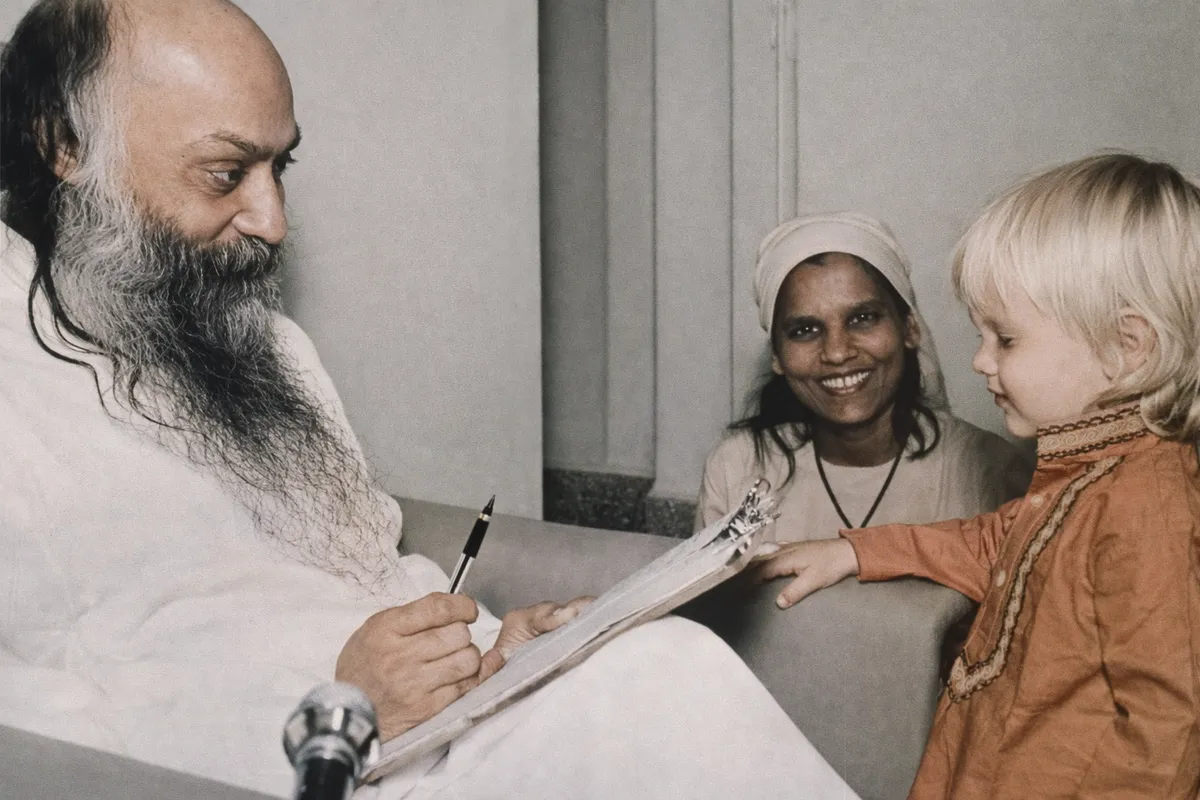
A living person has awareness—the inner light that feels and responds—while a corpse is just the body without that light.
From the Discourses
Passages where Osho speaks to this question — each links to the complete discourse.
Osho, deep down, what is the difference between plant life and animal life?
But not all human beings act. Very few are truly worthy of the name ‘human.’ Most only react. Someone loves you, and you love in return—that is reaction. If someone abuses you and you still love, that is action. When someone loves you and you love back, it is reaction—just like a dog wagging its tail when you throw it bread; there is no fundamental difference. But if someone abuses you and you can love, then it is action. So I am saying: some plants have begun to move; they are entering the direction of the animal. Some animals even act a little—very little; such animals are moving toward the human. Some human beings truly act; they are moving toward higher planes of consciousness. The difference is in freedom. The lower we go, the more dependent it is: stone the most dependent, plant less, animal less than that, the so-called…
प्रश्न: ओशो, गहरे में प्लांट-लाइफ और पशु-लाइफ में क्या अंतर है?
लेकिन सभी आदमी कर्म भी नहीं करते। इसलिए बहुत कम आदमी आदमी की हैसियत में हैं। अधिकतम आदमी प्रतिकर्म ही करते हैं। यानी किसी ने आपको प्रेम किया तो आप प्रेम करते हैं। और किसी ने गाली दी, फिर आप प्रेम करें तो कर्म हुआ। किसी ने आपको प्रेम किया और आपने प्रेम किया तो यह प्रतिकर्म हुआ। यह वैसे ही है, जैसे कुत्ता पूंछ हिलाता है उसको रोटी डालो तो; इसमें उसमें कोई बुनियादी फर्क नहीं है। हां, कोई आदमी आपको गाली देता, और आप प्रेम कर सकें, तो कर्म हुआ। तो मैं यह कह रहा हूं कि कुछ पौधे सरकने लगे हैं, वे जानवर की दिशा में प्रवेश कर रहे हैं। कुछ जानवर भी थोड़ा-बहुत रिएक्ट करते हैं--बहुत थोड़ा, कुछ जानवर-- वे आदमी की दिशा में सरक रहे हैं। कुछ आदमी भी कर्म करते हैं, वे और ऊपर के चेतना लोकों की तरफ सरक रहे हैं। फर्क है स्वतंत्रता का। जितने हम नीचे जाते हैं, पत्थर सबसे ज्यादा परतंत्र है, पौधा उससे कम, पशु उससे कम, तथाकथित मनुष्य उससे कम, महावीर-बुद्ध जैसे लोग बिलकुल कम। …
Osho, before discussing the process of entering a conscious death, I would like to ask: what is the difference between stupor and awakening? What do we call the state of unconsciousness? In other words, in wakefulness and in unconsciousness, what is the state of the jivatma’s consciousness?
Religion is a search for attention; so, in their own way, are gambling, battle, hunting. The man who enters the forest to hunt a lion is also seeking attention; so is the yogi in a cave striving at the ajna chakra. The search may be noble or ignoble, desirable or undesirable, successful or futile—but the underlying hunger is one. Attention means: the knowing power within me becomes fully manifest—no part left potential or dormant. Whatever capacity to know I carry turns from potential into actual. In the moment a person is fully awake, in that very moment he fully is. Awakening and being happen together. Think of a seed: the tree is hidden in the seed, but only potentially. The seed can die without becoming a tree; the tree is not a necessity, only a possibility. When the tree manifests, it is the seed in its expressed form. Sleep is…
ओशो, सजग मृत्यु में प्रवेश की प्रक्रिया पर चर्चा करने के पहले मैं पूछना चाहूंगा कि मूर्च्छा और जागृति में क्या भेद है? बेहोशी चेतना की किस स्थिति को कहते हैं? अर्थात होश और बेहोशी में जीवात्मा की चेतना की कौन-सी स्थिति होती है?
धर्म भी ध्यान की तलाश है और जुआ भी। और जो आदमी युद्ध के मैदान पर तलवार लेकर लड़ने गया है, वह भी ध्यान की तलाश में गया है। और जो आदमी जंगल में शेर का शिकार करने चला गया है, वह भी ध्यान की तलाश में गया है। और जो आदमी गुफा में बैठकर आंख बंद करके आज्ञा चक्र पर श्रम कर रहा है, वह भी ध्यान की तलाश में गया हुआ है। यह तलाश शुभ और अशुभ हो सकती है, लेकिन यह तलाश एक है। कोई तलाश वांछनीय और कोई अवांछनीय हो सकती है, लेकिन तलाश एक है। और कोई तलाश असफल हो सकती है और कोई सफल हो सकती है, लेकिन तलाश की आकांक्षा एक है। ध्यान का अर्थ है कि मेरे भीतर जो जानने की शक्ति है, वह पूरी प्रकट हो। उसमें कोई भी हिस्सा मेरे भीतर पोटेंट न रह जाए, बीज-रूप न रह जाए। मेरे भीतर जितनी भी क्षमता है जानने की, वह पोटेंशियल न रह जाए, एक्चुअल हो जाए, वास्तविक हो जाए। तो जिस क्षण में कोई व्यक्ति पूरी तरह जागता है, उस क्षण में वह पूरी तरह होता भी है। दोनों एक साथ घटनाएं घटती हैं। जैसे एक बीज है। …
Osho, the life I am living, and the way I am living—Is this what life is?
He didn’t listen. He came just now, greatly repentant—didn’t become chief minister, and is no longer even a minister. He said, Now tell me meditation. I said: Now come again—when the chance to become chief minister arises once more in your life. People want meditation free—without giving up anything. And meditation is the most precious thing in life. There is no gem greater than it. Even if you give up everything for it—you have lost nothing. Take to meditation, Madhukar! Your very name is sweet—Madhukar, honeybee! Within, the true flower is in bloom. Come inside. Hum its song there. There is the real nectar. Whoever has drunk it is satisfied forever. If to the blossoming mangoes the maddened bees do not come, how am I to know that springtime has arrived? Granted, the sky seems open now and washed, wide-spread, blue upon blue, the frost-burned lawn turns yellow-green again on…
पहला प्रश्न: ओशो, मैं जो जी रहा हूं, और जैसा जी रहा हूं, क्या यही जीवन है?
… क्योंकि मुख्यमंत्री तो हुए ही नहीं, मंत्री भी नहीं रह गए। कहने लगे, अब बता दें ध्यान! मैंने कहा: अब फिर आना! जब मुख्यमंत्री बनने का फिर मौका कभी जीवन में आ जाए, तब आना। ध्यान लोग मुफ्त चाहते हैं। कुछ भी गंवाना न पड़े। और ध्यान इस जीवन में सबसे मूल्यवान वस्तु है। उससे बड़ा कोई हीरा नहीं। उसके लिए सब भी गंवाओ तो कुछ भी नहीं गंवाया। ध्यान में लगो, मधुकर! नाम तुम्हारा प्यारा है! भीतर खिला है असली फूल। चलो भीतर। गुनगुनाओ वहां। वहां है असली रस। जिसने पीआ, वह सदा के लिए तृप्त हो गया। …
Before discussing the process of entering death consciously, I would like to ask you: what is the difference between the state of unconsciousness and the state of awareness? What state of mind is called the unconscious state? In other words, what is the individual soul's consciousness like in its conscious and unconscious states?
The mind is unable to find the answer to any question. In fact, it raises a number of questions from each answer it finds. No matter how significant the answer is, the mind will immediately raise dozens of questions -- but it can never find an answer to anything. There is a reason for this: the answer lies in the wholeness. But the mind is helpless. It can't function without making divisions. For example, I am sitting here talking to you. You are listening to me and you are also looking at me. The one you are looking at and the one you are listening to are not two different individuals. However, as far as you are concerned, you are looking with your eyes and hearing with your ears. You have divided me into two parts. If you were to sit close to me and smell my body, you would…
What difference does it make whether death is seven days away or seventy years? Death is—that should make the difference. It does not matter when death is; that it is, should matter. And why does the fact of death frighten us? Because we do not know life. The fact of death frightens because life is unknown. Otherwise why would death frighten? The one who knows life is not frightened by death. Here is the test: the one whom death does not frighten has known life. There is no other test for knowing life. The one whom death becomes meaningless to—he has recognized life. The one in whom death dissolves—he is related to life; he is alive. The one whose death is not—that one is alive. The one who has known that “I have no death”—he has related to life.
परीक्षा यही है ः जिसे मौत न घबड़ाए उसने जीवन को जाना। जीवन को जानने की और कोई परीक्षा नहीं है। जिसे मौत न घबड़ाए, उसने जीवन को जाना। जिसे मौत अर्थहीन हो जाए, उसने जीवन को पहचाना। जिसे मौत विलीन हो जाए, वह जीवन से संबंधित हुआ, वह जीवित हुआ। जिसकी मौत नहीं है, वह जीवित हुआ। जिसने जाना कि मेरी मौत नहीं है, वह जीवित हुआ। उसने जीवन से संबंध स्थापित किया।